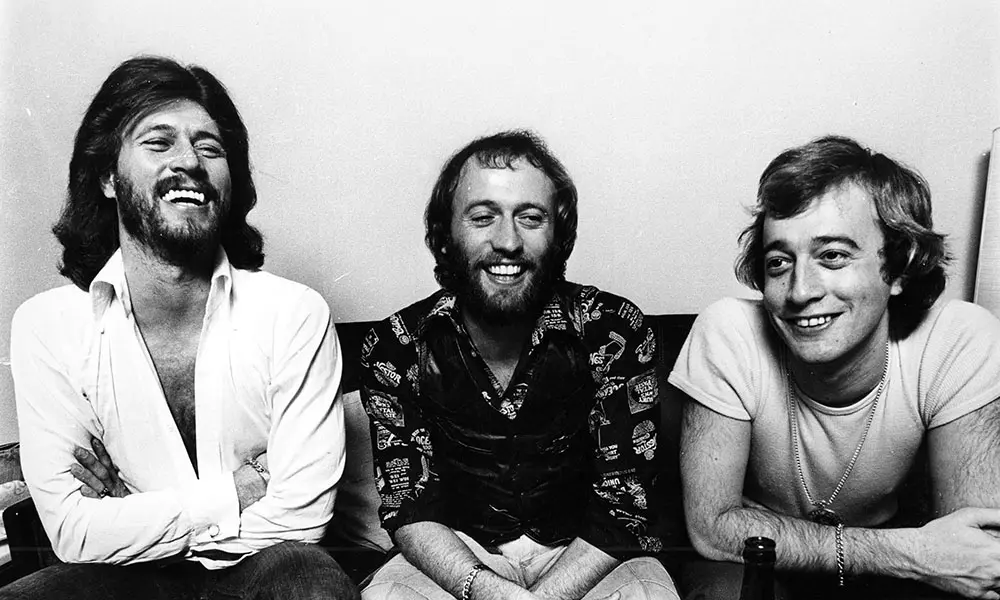
Before disco made them global giants, Bee Gees found their first American chart summit with a ballad of fracture, regret, and reunion: How Can You Mend a Broken Heart.
In the long and remarkable story of the Bee Gees, few milestones feel as emotionally loaded as “How Can You Mend a Broken Heart” in 1971. This was not simply another hit single. It was the group’s first U.S. No. 1 on the Billboard Hot 100, and it arrived after a period when the bond between the Gibb brothers had already been tested in public. After the painful split that saw Robin Gibb leave the group in 1969, the reunion of Barry, Robin, and Maurice Gibb brought relief to fans, but no one could know immediately whether the old chemistry could truly be restored. With this song, listeners heard the answer.
Released in 1971 and later included on the album Trafalgar, “How Can You Mend a Broken Heart” gave the reunited brothers something more meaningful than a comeback headline. It gave them proof. In America, where the Bee Gees had already enjoyed major success in the late 1960s with songs such as “Massachusetts”, “To Love Somebody”, and “I Started a Joke”, they had somehow never quite reached the top of the main singles chart. This song finally changed that. It climbed all the way to No. 1 in the United States in 1971, while also becoming a Top 5 hit in the UK. That chart achievement matters because it did not come from novelty, trend, or reinvention. It came from raw feeling, melodic elegance, and a performance that sounded bruised but dignified.
Musically, the record belongs to a very particular moment in the Bee Gees catalog. This is not the tight, glittering pulse of their later dance-era classics. It is slower, grander, more inward. The arrangement moves with a stately sadness, built on piano, measured rhythm, and orchestral texture. Barry Gibb carries much of the emotional weight in the lead vocal, while the unmistakable family blend deepens the ache around him. The brothers do not oversing it. They let the melody do the work. That restraint is one reason the song still lands so powerfully. It does not plead for sympathy. It simply opens the wound and lets the listener sit with it.
The writing of “How Can You Mend a Broken Heart” is credited to Barry and Robin Gibb, and that fact alone gives the song a special place in the reunion story. The lyric is framed as a romantic lament, of course, but it is hard not to hear something larger in it. “How can you mend this broken man?” is one of those lines that seems to rise beyond a failed love affair and touch something more universal: pride after damage, tenderness after distance, and the stubborn human hope that what is broken might still be repaired. It would be too simple to say the song is literally about the brothers’ separation and return, yet many listeners have heard that emotional echo in it for decades. The timing makes that reading almost impossible to ignore.
The Trafalgar era is often overshadowed by what the Bee Gees would later become, but that is exactly why this period deserves attention. Before the stadium lights, before the white suits, before Saturday Night Fever turned them into defining voices of a generation, they were still masters of reflective pop craftsmanship. Trafalgar captured a group rebuilding its center. There is maturity in the album, but also melancholy. “How Can You Mend a Broken Heart” stands at the center of that mood, not only as its most famous track but as its emotional key. The song carries the weary wisdom of men who had already learned that talent alone does not protect anyone from fracture.
That is also why the chart milestone mattered so much. A first American No. 1 always looks impressive on paper, but this one feels deeply personal. It came not at the start of the group’s journey, but after turbulence, ego, distance, and uncertainty. The public heard a polished record; underneath it was the sound of a family putting its voice back together. That is part of what gives the single its lasting gravity. It was a commercial triumph, yes, but it was also a statement of survival.
There is another reason the song has lasted. It speaks to heartbreak without youth’s exaggeration. The sadness here is adult sadness: thoughtful, steady, almost formal in the way it carries itself. The questions in the lyric do not really expect easy answers. That is what makes them endure. In lesser hands, a title like “How Can You Mend a Broken Heart” could have become sentimental. In the hands of the Bee Gees, it became something more unsettling and more beautiful: a quiet admission that some kinds of pain cannot be solved, only sung through.
Looking back now, the single feels like a hinge point in the career of the Bee Gees. It connected the ornate emotionality of their late-1960s work to the wider, even more astonishing success that still lay ahead. But in 1971, none of that future was guaranteed. All anyone knew was that the brothers were together again, and suddenly they had made the biggest American hit of their career so far. For fans who followed the group through the uncertainty, that mattered enormously. It meant the reunion was not just official. It was musically real.
So when people remember “How Can You Mend a Broken Heart”, they should remember more than a beautiful melody and a famous title. They should remember the moment it arrived: the Bee Gees reunited, the Trafalgar period in full emotional bloom, and a song of sorrow becoming the record that finally carried them to the top of the American charts. Sometimes the biggest victories do not sound triumphant. Sometimes they sound like three brothers singing softly, carefully, as if they know exactly how much it costs to find harmony again.
