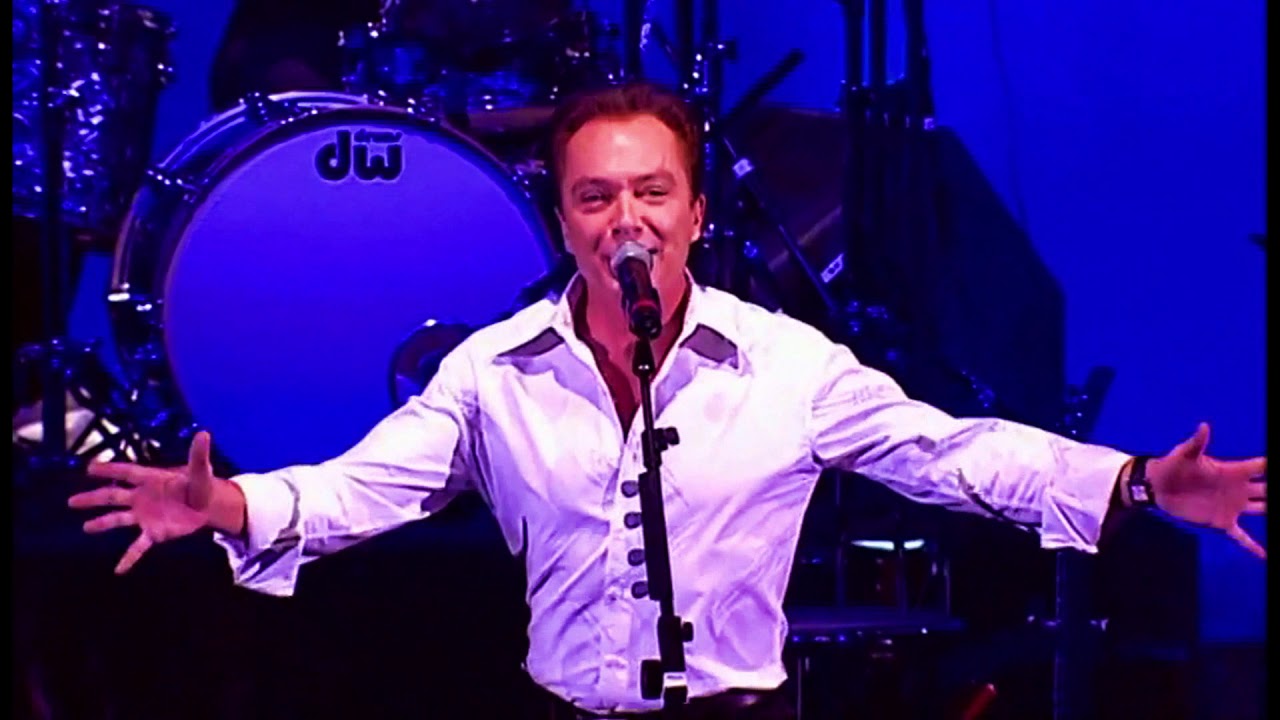
On “Love, Love the Lady”, David Cassidy stepped away from teen-idol brightness and into a more grown, self-directed pop voice.
“Love, Love the Lady” belongs to a revealing chapter in David Cassidy’s career: the 1976 album Gettin’ It in the Street, a record made after the roar of The Partridge Family had begun to recede and Cassidy was working to be heard not as a television phenomenon, but as an adult musician with his own instincts, collaborators, and ambitions. Co-written with Gerry Beckley of America, the song sits inside that transition with a quiet kind of importance. It is not merely a track title in a catalog; it is evidence of an artist trying to change the conversation around his name.
By 1976, Cassidy was carrying a complicated public image. To millions, he was still the face from lunchboxes, fan magazines, arena screams, and Saturday-night living rooms. Yet behind that image was a working musician who had been paying attention: to harmony, to studio craft, to West Coast songwriting, to the difference between being adored and being taken seriously. Gettin’ It in the Street arrived during that post-superstardom stretch when many former teen idols either disappeared into nostalgia or tried to harden themselves into something unrecognizable. Cassidy chose a more difficult path. He did not entirely abandon melody, charm, or emotional directness. Instead, he tried to reshape them.
That is part of what makes “Love, Love the Lady” interesting. Its connection to Gerry Beckley matters because Beckley brought with him the melodic intelligence associated with America, a group known for clear vocal lines, acoustic polish, and songs that could feel sunny on the surface while carrying a private undertow. Cassidy’s collaboration with him placed the song in a different musical neighborhood than the bubblegum assumptions that still followed his name. It suggested kinship with the softer, more reflective side of mid-1970s pop: music built not on spectacle, but on tone, arrangement, and restraint.
The title itself has a directness that feels almost deliberately plain. “Love, Love the Lady” does not hide behind elaborate metaphor. It sounds like an adult pop phrase from an era when affection could be sung with sincerity without needing to announce itself as confession. In Cassidy’s hands, that kind of song becomes more than a romantic statement. It becomes part of a larger artistic statement: listen past the old posters, past the remembered screaming, past the easy jokes about fame, and there is a singer still reaching for nuance.
What gives this period of Cassidy’s music its emotional charge is the tension between memory and intention. Listeners who came to him through television may have expected the familiar glow: the open-faced sweetness, the neatly produced pop optimism, the voice associated with youth and mass affection. But Gettin’ It in the Street came from a different place. Its very title implied motion, contact, and a desire to be out in the world rather than sealed inside an image. The album was part of Cassidy’s attempt to stand in the open as a musician shaped by the 1970s rock and pop landscape, not just by the machinery that had made him famous.
In that context, “Love, Love the Lady” feels like a small but telling doorway. The song’s importance is not that it overturned popular music or erased the past. Its importance is more intimate than that. It shows Cassidy working in the company of a respected songwriter, placing himself within a mature pop vocabulary, and trusting that a song could carry its point without theatrical overstatement. There is dignity in that kind of move, especially for an artist whose image had once been amplified beyond human scale.
To hear the song now is to hear more than its melody. It carries the sound of a performer negotiating with his own history. Cassidy was not the first young star to discover that public affection can become a kind of cage, and he would not be the last. But in recordings like this one, there is a particular poignancy: he is not rejecting the audience that loved him; he is asking to be heard with a little more room around him. The adult statement is not loud. It does not arrive as a manifesto. It arrives in the choice of collaborator, the choice of material, the tone of a voice trying to live beyond its most famous frame.
That may be why “Love, Love the Lady” still rewards attention. It asks the listener to put aside the easiest version of David Cassidy and meet the artist in the middle of a complicated decade, when the bright glare of teen fame had softened into something more uncertain and more human. In the space between celebrity memory and musical intention, the song finds its quiet strength. It is the sound of a man who had already been heard everywhere, still hoping to be listened to closely.
