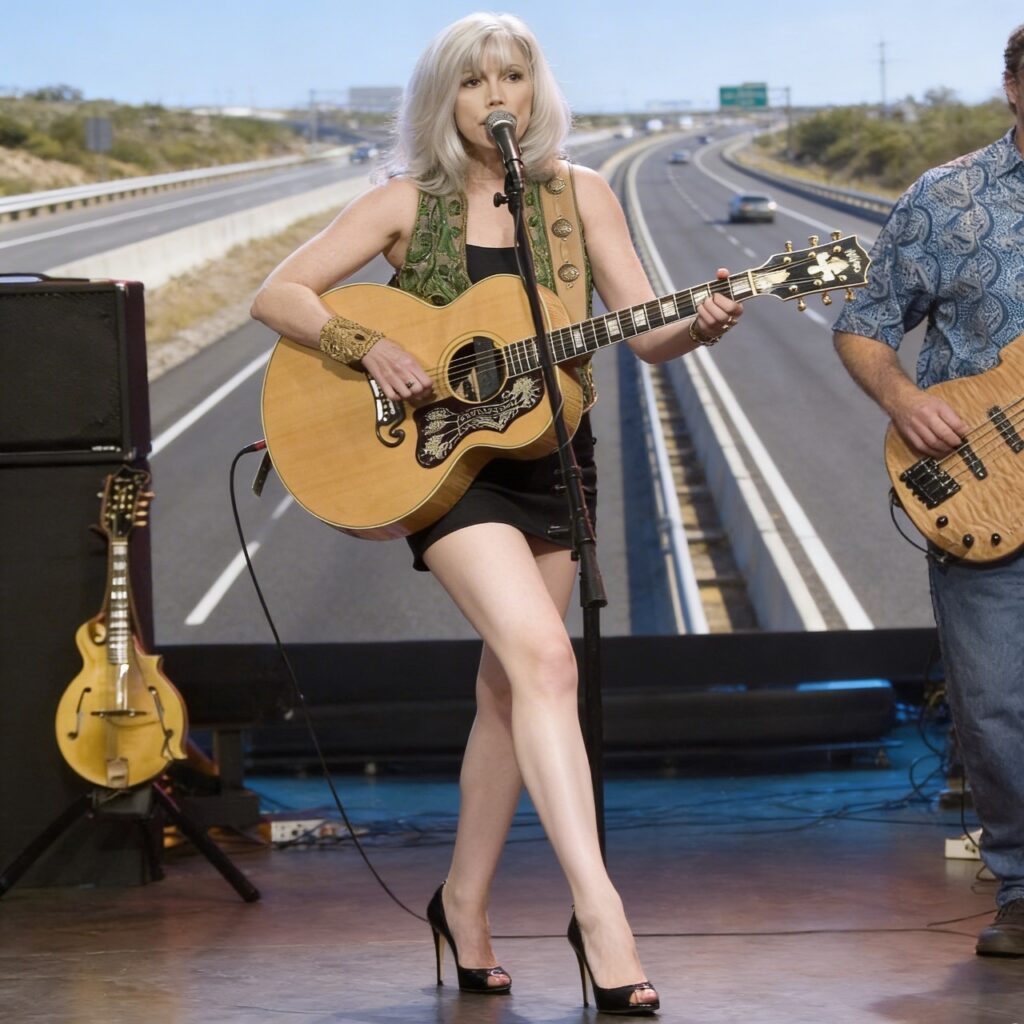
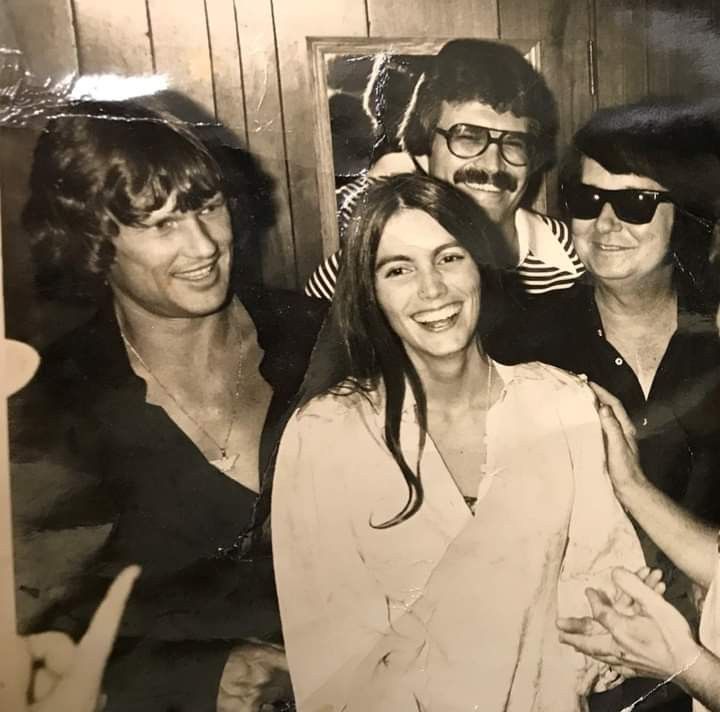
Wheels is a song about motion that never quite becomes freedom; in Emmylou Harris‘s voice, it turns into a tender meditation on longing, memory, and the roads we keep hearing long after the journey should have ended.
Emmylou Harris recorded Wheels for her 1975 album Elite Hotel, and that placement matters. The song itself was not issued as one of the album’s main charting singles, so it did not earn a separate Billboard hit position of its own. But Elite Hotel reached No. 1 on Billboard’s country album chart, confirming that Harris was no longer simply an emerging talent with exquisite taste. She had become a major force in American roots music, a singer able to bring refinement, ache, and historical depth to everything she touched. While the broader public often came to that album through the hit sides Together Again and Sweet Dreams, many listeners eventually found that Wheels held one of the record’s deepest emotional truths.
The story behind the song reaches back before Harris made it her own. Wheels was written by Gram Parsons and Chris Hillman, and it first appeared in 1969 on The Flying Burrito Brothers landmark album The Gilded Palace of Sin. That original version already carried the grammar of country-rock at its most human: a little worn, a little wandering, deeply aware that movement and loneliness often travel together. By the time Harris recorded it, the song carried even more weight. She had worked closely with Parsons on GP and Grievous Angel, and after his passing in 1973, she became one of the most graceful stewards of the musical world he had helped imagine. So when she sang Wheels, it did not feel like a routine cover. It felt like inheritance, remembrance, and quiet continuation.
That is one reason the performance still lingers. Harris never treated songs as museum pieces. She sang them as living things. In her hands, Wheels becomes softer than the Burritos’ version, but never weaker. The arrangement on Elite Hotel, shaped within the polished but never overdecorated sound of her mid-1970s work, gives the melody room to breathe. There is space around the vocal, and that space is part of the song’s power. You hear not just the road, but the stillness around it. You hear the distance between where a life is and where the heart wishes it might have remained.
What does the song mean? At its core, Wheels is about restlessness, but not the romantic kind that popular music often celebrates. This is not simply a song about adventure. It is about the sorrow that can hide inside motion. Country music has always understood that wheels can symbolize more than travel. They can mean leaving home, outrunning regret, chasing dignity, or admitting that some people are never fully at ease once life begins to turn. In Harris’s reading, that meaning becomes even more tender. She sounds less like someone boasting about freedom and more like someone accepting a truth that costs something.
That emotional shading is why the song fits so beautifully into the arc of Elite Hotel. The album is filled with material that balances classic country feeling with the cleaner, shimmering edge of 1970s country-rock. Harris could honor older traditions without sounding trapped inside them. On Wheels, she does exactly that. She preserves the song’s connection to Parsons and Hillman’s vision, but she also pulls it toward her own sensibility: poised, luminous, and emotionally exact. She does not imitate Parsons’s phrasing, and that is crucial. Instead, she answers it from the other side of experience, almost as if the song had traveled further down the road and returned changed.
There is also something quietly brave in the choice itself. After Parsons, Harris could easily have been reduced in the public imagination to a supporting figure in someone else’s legend. But songs like Wheels prove the opposite. Yes, she carried his influence. Yes, she believed in his writing and in the country-rock bridge he and Hillman helped build. But she also had her own artistic authority, and Elite Hotel made that plain. By the mid-1970s, she was not just preserving a legacy. She was shaping one. Her version of Wheels stands as evidence of that transition: respectful of the past, yet unmistakably her own.
It is also one of those recordings that seems to deepen with time. In younger years, a listener may hear only beauty in it: the lovely phrasing, the unforced grace, the clean emotional line. Later, another dimension emerges. The song begins to sound like a conversation with all the departures life has required. Not every goodbye announces itself dramatically. Sometimes it is hidden in a schedule, in a highway, in a choice that once seemed necessary. Wheels understands that. Harris sings it with the wisdom of someone who knows that movement can be both survival and sadness.
That is why the song still matters, even without a hit-single chart story of its own. Its legacy was never built on radio numbers alone. It lives because Emmylou Harris found the human center inside it and let that center speak plainly. She took a song born from the first great wave of country-rock and gave it a second life full of warmth, ache, and hard-earned serenity. For listeners who care about the long thread connecting Gram Parsons, Chris Hillman, The Flying Burrito Brothers, and Harris’s own golden run, Wheels is more than an album track. It is a hinge between eras. And every time that melody turns, it reminds us that some songs do not merely describe the road. They become part of it.
