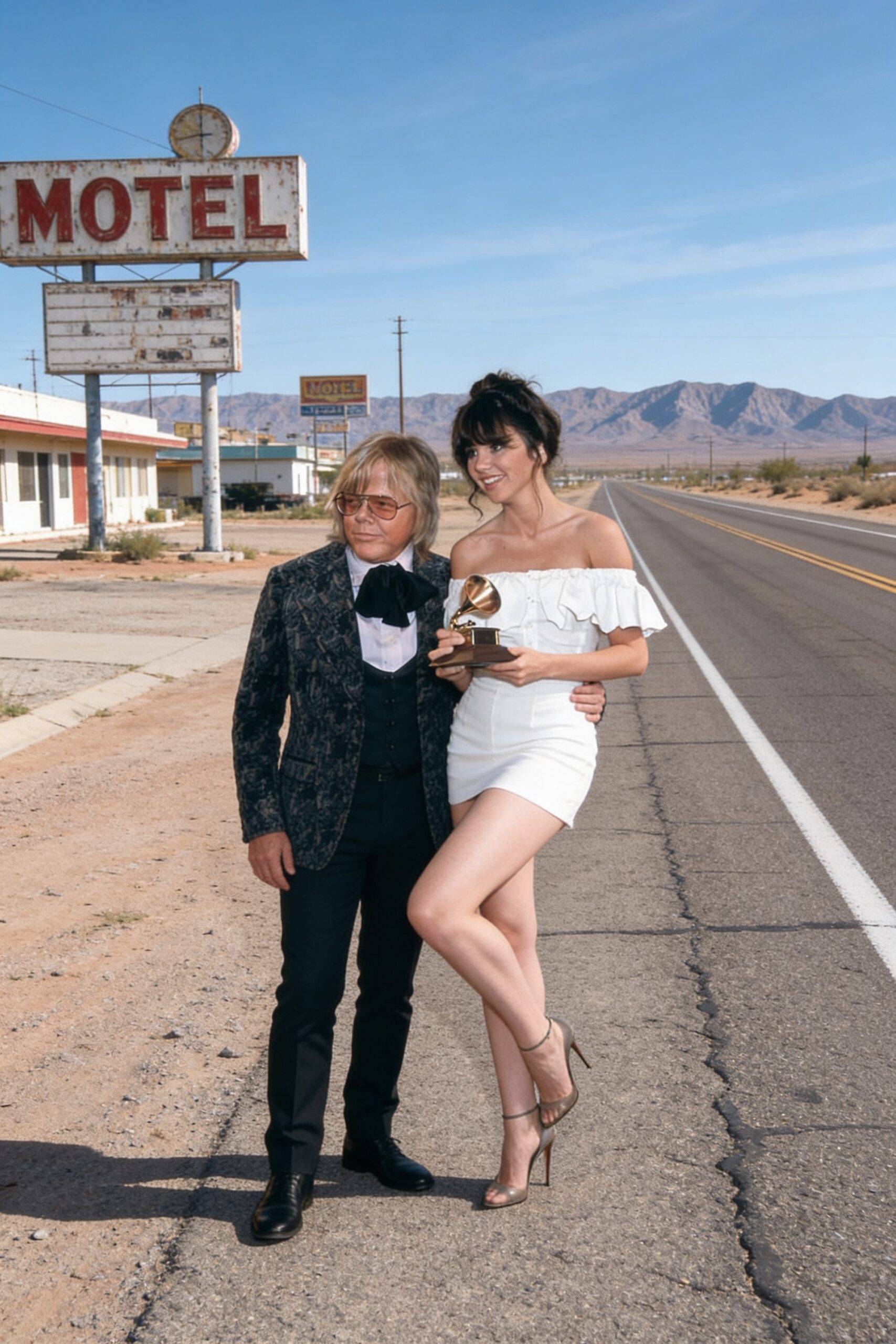
A playful old pop dream became a country-chart surprise when three of the finest voices of their generation met inside one gleaming harmony.
When Emmylou Harris released Evangeline in 1981, one of its most immediately charming moments was Mr. Sandman, often listed in music catalogs as Mister Sandman. The song itself was already part of American popular memory, written by Pat Ballard and made famous in the 1950s by The Chordettes. But Harris’s version carried a different kind of spark because it placed her voice beside Linda Ronstadt and Dolly Parton, creating a close-harmony performance that felt at once playful, precise, and strangely important.
The chart milestone matters because this was not an obvious country-radio bet in 1981. Mr. Sandman was a bright pre-rock-and-roll standard, full of dreamland imagery and barbershop-pop sweetness. Yet Harris’s recording found fresh life in the country world, with the single becoming a Top 10 hit on the Billboard Hot Country Singles chart. That success showed how wide Harris’s musical doorway had become. She could take a song associated with another era, surround it with acoustic grace and vocal intelligence, and make it sound neither like museum nostalgia nor novelty. It sounded like musicians enjoying the past without being trapped by it.
There is an added layer to the story because the Evangeline album cut belongs to the long, winding prehistory of the Harris-Ronstadt-Parton collaboration that fans would later know through Trio. Years before that celebrated 1987 album finally appeared, the three women had already discovered a rare blend. Their voices did not simply stack on top of one another; they seemed to brighten different edges of the same melody. Harris brought a clear, plaintive center. Ronstadt added a powerful, polished warmth. Parton’s high, silvery tone could lift a phrase as if it had suddenly caught light. On Mr. Sandman, that blend turns a familiar pop tune into a small showcase of vocal architecture.
The arrangement understands the song’s original charm but does not merely imitate it. The swing is light, the delivery crisp, and the harmonies have the tidy snap of old vocal-group pop. Still, there is a country musician’s sense of touch underneath it. Harris had built much of her reputation by treating older material with unusual respect, whether it came from country, folk, bluegrass, gospel, or early rock and roll. She was never just covering songs; she was placing them in conversation with one another. On Evangeline, Mr. Sandman becomes part of that conversation, a reminder that American music is often less divided than the record-store bins suggest.
What makes the performance so satisfying is the balance between innocence and craft. The lyric asks for a dream lover with a wink and a smile, but the singing is anything but casual. Every entrance has to land cleanly. Every syllable has to fit. The three voices move with the discipline of singers who understand that lightness can be harder to achieve than grandeur. There is no need for dramatic pleading or emotional thunder. The pleasure is in the precision, the lift, the way the voices meet and separate like polished ribbons in the air.
By 1981, Harris was already one of country music’s most respected interpreters, a bridge between the Gram Parsons country-rock legacy and older rural traditions. Ronstadt had become one of the biggest American singers of the 1970s, equally comfortable with rock, country, pop, and standards. Parton, already a songwriting force and a country star, was moving through one of the most visible crossover periods of her career. Hearing them together on Mr. Sandman now feels like catching a bright early glimpse of a partnership that would later be understood as historic. At the time, though, it arrived tucked into an album, sparkling almost modestly, as if it did not need to announce how special it was.
The country-chart success also reveals something about listeners. They did not require the song to be new in order to feel alive. They responded to the freshness of the interpretation, to Harris’s curatorial instinct, and to the sheer delight of voices fitting together with almost weightless assurance. In an era when country music was negotiating pop polish, traditional memory, and crossover ambition, Mr. Sandman offered a gentle answer: a song could look backward and still move forward.
That is why this Evangeline moment still carries such affection. It is not the loudest achievement in the careers of Emmylou Harris, Linda Ronstadt, or Dolly Parton. It is not a grand confession or a sweeping ballad. It is something smaller and more delicate: three great singers entering a familiar dream and leaving their fingerprints on it. The chart position gives the story its public proof, but the harmony gives it its lasting glow. Decades later, Mr. Sandman still sounds like a door opening briefly onto a room where talent, friendship, timing, and musical memory all happened to meet in tune.
