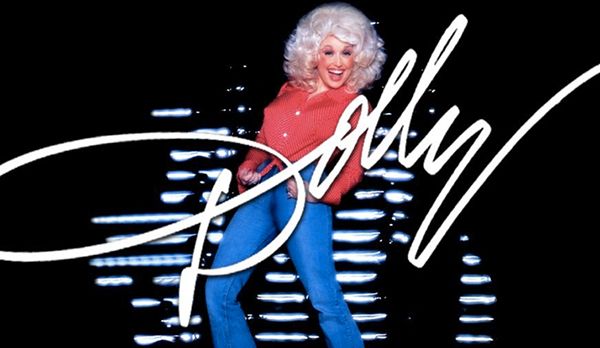
Dolly Parton made the office clock sound like a country-pop engine of defiance.
Dolly Parton released “9 to 5” in 1980 as the title song for the film 9 to 5, a workplace comedy starring Jane Fonda, Lily Tomlin, and Parton herself in her film debut. The song belonged to a movie soundtrack, but it did not behave like a mere companion piece. It arrived with its own momentum: brisk, funny, sharp, and instantly legible to anyone who had ever watched a clock move too slowly.
The film gave the record its frame. 9 to 5 sat in a moment when office culture, women’s labor, and the everyday indignities of working life were becoming part of mainstream conversation. Parton’s song did not lecture that world into view. It opened the door with rhythm. The famous clattering pulse, often associated with the sound of typing, made the workplace audible before a single lyric had fully landed. It was not a heavy sound. It was quick, bright, almost playful. That was part of its strength. The song understood that exhaustion and wit can live in the same body.
Parton wrote the song herself, and the performance carries the precision of someone who knows how to make a lyric move. The opening image of tumbling out of bed and stumbling toward the kitchen is plainspoken, almost conversational. Then the arrangement lifts it into motion. The beat suggests routine, but the melody refuses to sound trapped. It rises with a grin, as if the singer is pushing against the workday simply by naming it. That balance is central to the record’s crossover force: it keeps the storytelling clarity of country while borrowing the polish and immediacy that pop radio could carry across formats.
As a country-pop record, “9 to 5” does not blur Parton’s identity so much as expand the room around it. The vocal is unmistakably hers: crisp, bright, agile, and full of character. She leans into consonants, lets the phrasing bounce, and turns complaint into propulsion. The band supports that approach with clean lines and forward drive. There is no unnecessary heaviness in the production. The sound is busy enough to suggest desks, phones, schedules, and pressure, but open enough for Parton’s voice to remain the center of the story.
The lyric’s brilliance lies in how directly it speaks without becoming flat. It describes being underpaid, underestimated, and worn down by a system that asks for more than it gives. Yet the record does not sink into bitterness. Parton’s delivery turns frustration into shared recognition. She sings as if the unfairness is obvious, but also as if naming it can create a little room to breathe. The chorus is built for collective memory because it is both specific and broad: a workday, a paycheck, a dream deferred, a hope that something might eventually shift.
That dual quality helped the song travel far beyond the film. “9 to 5” became a major crossover success, reaching listeners in country and pop spaces and earning Parton two Grammy Awards, including Best Country Song and Best Country Vocal Performance, Female. It was also nominated for the Academy Award for Best Original Song. Those recognitions matter less as decoration than as evidence of how fluently the record moved between worlds. It could belong to a Hollywood comedy, a country radio playlist, a pop chart countdown, and a real-life morning commute without changing its shape.
The timing also mattered for Parton. By 1980, she was already a major country artist who had been reaching toward wider pop audiences throughout the late 1970s. 9 to 5 placed her on movie screens and gave her a song that translated her gifts for a broader public without smoothing away her humor or accent. The record is polished, but it is not anonymous. Its crossover energy comes from personality, not disguise. Parton sounds completely at home inside the pop machinery because she brings her own architecture with her.
What makes the soundtrack recording endure is its refusal to separate joy from critique. Many protest songs announce themselves with solemnity; “9 to 5” does something slyer. It lets the listener dance inside the problem. The brightness is not denial. It is strategy. The song’s tempo, hooks, and buoyant vocal performance give everyday frustration a public rhythm, allowing private irritation to become communal release. In that sense, its country-pop crossover was not only a matter of charts or genre. It was emotional translation.
Decades later, the record still feels unusually exact because the workday it describes has not vanished. The tools have changed, the offices have changed, the language of labor has changed, but the feeling of giving too much for too little remains familiar. Parton’s achievement was to make that feeling singable without making it small. She turned the clock, the commute, the coffee cup, and the paycheck into a bright engine of recognition. In “9 to 5”, the ordinary workday does not become glamorous. It becomes visible, rhythmic, and briefly, wonderfully, shared.
