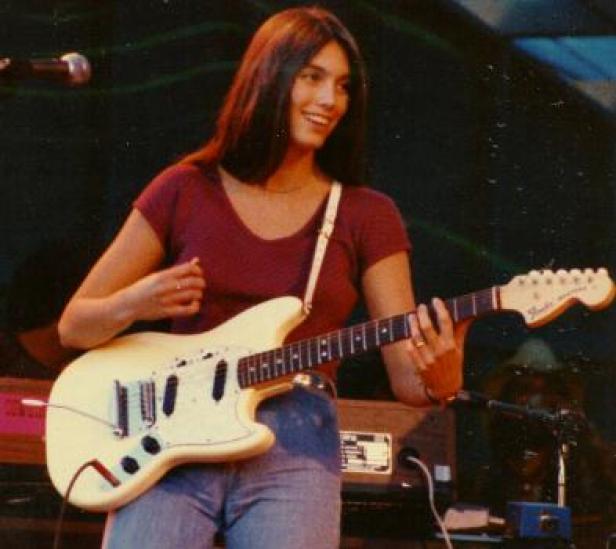
“Wild Mountain Thyme” becomes, with Emmylou Harris, a shared breath across oceans—an old folk vow that turns longing into a place you can almost step into.
Emmylou Harris’ most beloved “Wild Mountain Thyme” isn’t a studio single chasing radio—it’s a gathering. A moment captured in the original Transatlantic Sessions: recorded in 1995 at Montgreenan Mansion House Hotel in Ayrshire, Scotland, with Harris singing alongside Dick Gaughan, Kate & Anna McGarrigle, and a young Rufus Wainwright. That detail matters because it explains the feeling the performance carries: not spotlight and applause, but a circle of voices leaning toward the same fire, each one adding a different shade of memory.
The track later reached listeners in “official” form through the Whirlie Records release Transatlantic Sessions – Series 1: Volume Three (released December 1, 2009), where it appears as “Wild Mountain Thyme” credited to this exact ensemble. In other words: if you’re searching for a chart debut or a Billboard peak, this isn’t that kind of story. It’s something older and, in its own way, rarer—a performance preserved because it felt true.
And the song itself is built from truth that predates all of them. “Wild Mountain Thyme” (also known as “Will Ye Go, Lassie, Go?” or “Purple Heather”) is widely associated with Belfast musician Francis McPeake, who adapted it from Robert Tannahill’s earlier song “The Braes of Balquhither.” The McPeake family’s version took shape in the mid-20th century, with an early recording history commonly dated to the 1950s (including a 1957 BBC-related recording credited in many sources). Like all great folk songs, it’s less a single “composition” than a doorway passed hand to hand—each singer carrying it a little differently, like a pressed flower in a book.
That folk lineage is exactly why Emmylou Harris fits it so naturally. Harris has always been a singer of thresholds—between country and folk, between stage and prayer, between public legend and private ache. In the Transatlantic Sessions setting—designed explicitly to bring together artists from both sides of the Atlantic under the musical direction of Aly Bain and Jerry Douglas—the song becomes what it was always meant to be: communal. You can practically hear the room: seasoned voices, attentive silence, instruments breathing rather than posing.
The lyric is simple, almost childlike in its directness: summertime coming, heather blooming, a lover inviting another to “go together.” Yet beneath that simplicity sits a deeper meaning that grows more potent the older you get: love as a shared return. Not return to a person only, but return to a time when the world felt fragrant and possible—when a walk into the hills could stand in for a whole life lived faithfully. The refrain—“And we’ll all go together”—is the song’s hidden miracle. It refuses the loneliness that adulthood tries to normalize. It insists that beauty is better when it is witnessed side by side.
In Harris’s performance, that insistence turns tender rather than triumphant. She doesn’t sing it like an ornamented Celtic postcard. She sings it like someone who understands that “home” isn’t always a fixed address; sometimes it’s a harmony you recognize in your bones. With Dick Gaughan’s grit, the McGarrigles’ lyrical warmth, and Rufus Wainwright’s unmistakable, youthful intensity, the song feels like a small bridge laid over deep water—old world and new world meeting in one steady melody.
That’s why “Wild Mountain Thyme” endures in this particular Emmylou form. It doesn’t try to modernize the song. It simply reminds you what the song has always been: a promise spoken softly, a hand offered without conditions, a vision of “green”—not just in color, but in spirit. And when the last harmony fades, what remains is that rare kind of comfort that isn’t sentimental at all: the feeling that somewhere—through distance, through years, through all the noise—there is still a place where the heather blooms, and the heart can breathe in time with someone else.
