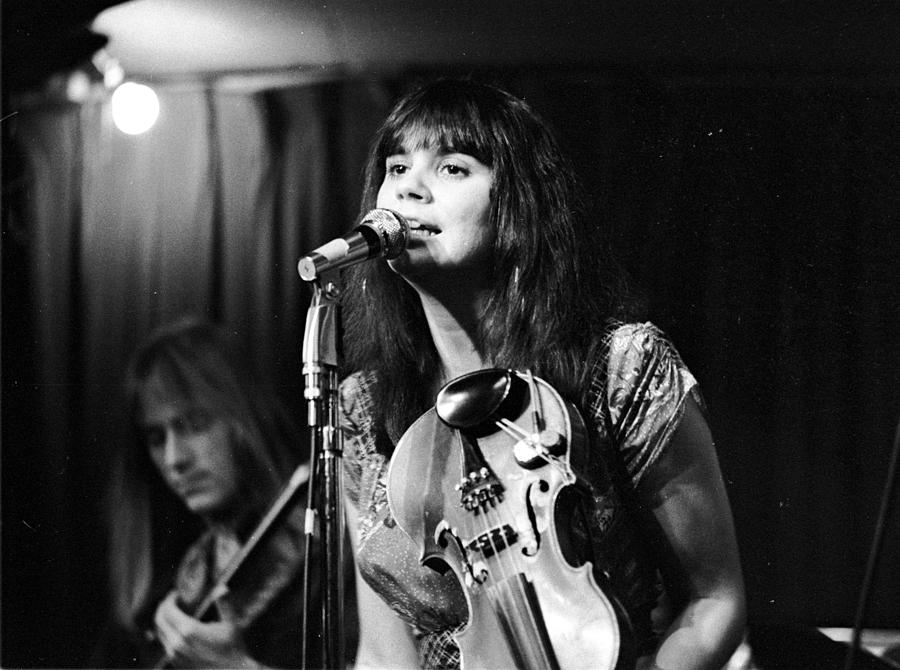
“You Can Close Your Eyes” is a lullaby with adult courage—Linda Ronstadt singing permission to rest when the world won’t stop turning.
When Linda Ronstadt closes Heart Like a Wheel with “You Can Close Your Eyes,” she isn’t trying to “cover” James Taylor so much as she is trying to hold him—hold the song’s hush, its tenderness, its soft insistence that love can be a shelter rather than a storm. Her version appears as the album’s final track, timed like the last light left on in a hallway: the day’s noise behind you, the night’s doubts ahead, and this one small, steady voice saying, in effect, I’m here—rest now.
The essential facts are beautifully simple. Taylor wrote “You Can Close Your Eyes” and released it on his 1971 album Mud Slide Slim and the Blue Horizon; it was also issued as the B-side to his No. 1 single “You’ve Got a Friend.” He regarded it as “a secular hymn,” and the song has long been described as a lullaby—an intimate promise set to folk-rock calm. Producer Peter Asher connects the two worlds: he produced Taylor’s Mud Slide Slim and also produced Ronstadt’s Heart Like a Wheel, and writers have noted that Asher “reinvented” the song for Ronstadt’s setting.
And what a setting it was. Heart Like a Wheel was released November 19, 1974, and it became Ronstadt’s first album to reach No. 1 on the Billboard 200, while also spending four weeks at No. 1 on Billboard’s Country Albums chart in early 1975. Against that backdrop—hit singles, crossover glory, a career tipping into superstardom—choosing to end with a quiet lullaby is an artistic decision with its own kind of confidence. It says: the spectacle is not the point. The point is the human voice at the edge of the bed, telling the truth softly.
The “story behind” the song itself is pure Taylor-era Americana: sources describe it as written around the time he was filming Two-Lane Blacktop, while staying in Tucumcari, New Mexico, and Taylor has connected the song to Joni Mitchell, who he performed it with in the early 1970s. That matters because the lyric feels like travel fatigue turning into tenderness—two people out on the road, trying to protect each other from the darkness that can creep in when the lights go out.
So what changes when Linda Ronstadt sings it?
The temperature shifts from a private journal entry to something wider—still intimate, but somehow more communal, as if she’s singing not only to a lover, but to anyone who has ever lain awake with the mind spinning. Ronstadt’s great gift was always clarity: she could sing powerfully without pushing, tenderly without going soft, directly without becoming cold. On “You Can Close Your Eyes,” that clarity becomes a kind of mercy. She doesn’t decorate the lullaby; she honors it—letting its words remain plain enough to be believed.
The meaning of the song is deceptively gentle. It isn’t only “go to sleep.” It’s the deeper offer beneath sleep: you don’t have to stay on guard tonight. The world can make vigilance feel like virtue—always alert, always braced, always preparing for the next disappointment. This song quietly refuses that posture. It treats rest as something sacred, almost moral: the right to be held, the right to stop performing strength for a while.
And placing it as the final track on Heart Like a Wheel gives it even more resonance. That album is full of hard-earned emotional weather—songs about betrayal, resilience, desire, and the ache of wanting what won’t stay. Ending with “You Can Close Your Eyes” feels like closing a book with a hand still on the page, not ready to let go of the warmth. It’s Ronstadt, at the peak of the loudest part of her ascent, choosing to whisper instead—because whispering is sometimes the strongest form of certainty.
That’s why her “You Can Close Your Eyes” lasts. It doesn’t chase the listener. It simply waits—like a familiar chair in a quiet room—until you need it. And when you do, it doesn’t promise that everything will be fine. It promises something more believable: that for this moment, in this song, you are not alone.
