A song of swagger, surrender, and old-country tension, Only Daddy That’ll Walk the Line endures because its boast hides a deeper truth: the man singing sounds tough, but the woman in the song still holds the real power.
When Randy Travis took on Only Daddy That’ll Walk the Line, he was not simply reviving an old hit. He was stepping into a piece of country music history already marked by one of the genre’s most commanding voices. The song was written by Jimmy Bryant and became famous through Waylon Jennings, whose 1968 recording climbed to No. 2 on Billboard’s Hot Country Singles chart. That chart fact matters, because this was never just another country single. It was one of the records that helped define a harder, leaner, more defiant strain of country music, long before the word outlaw became a permanent part of the conversation.
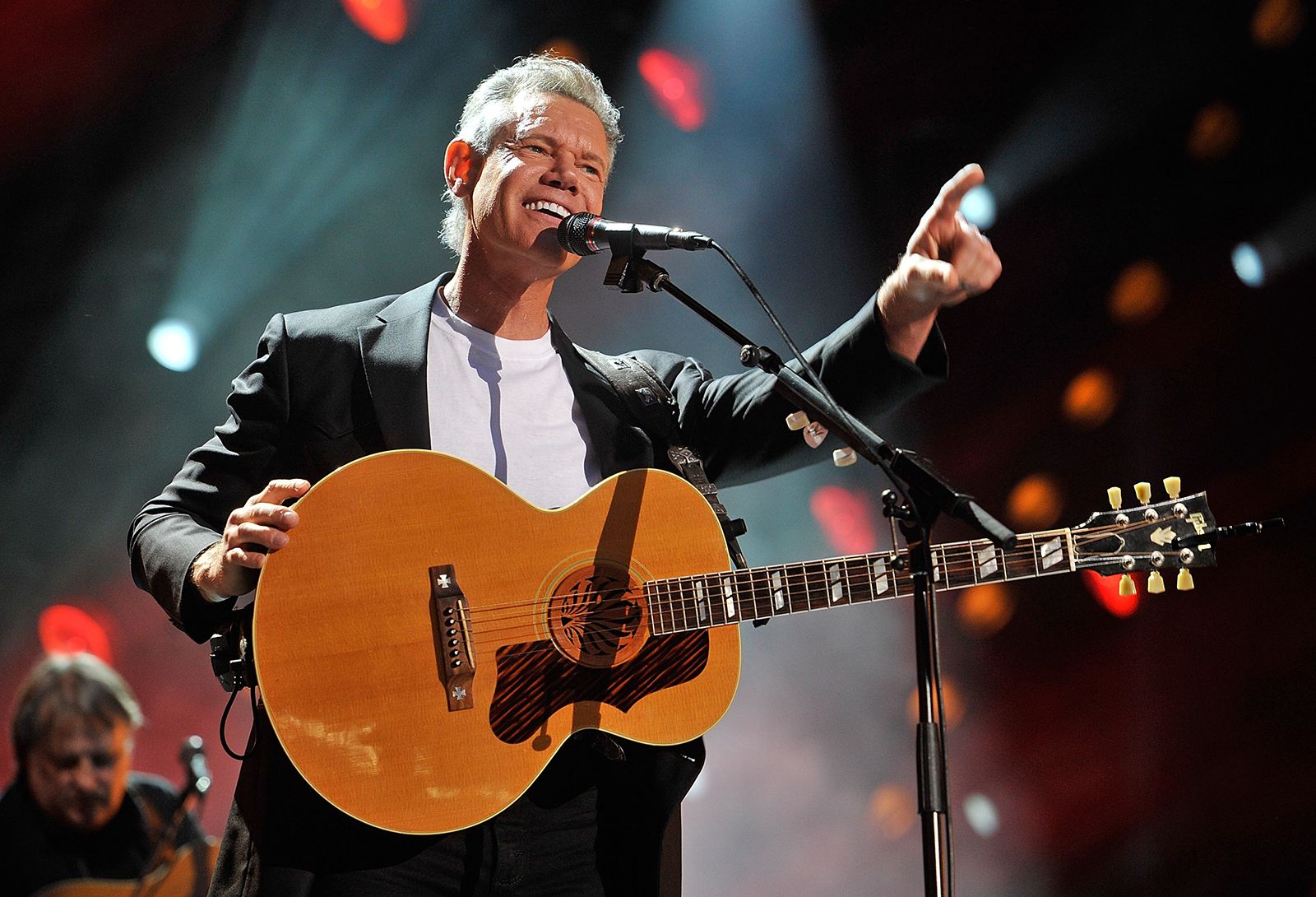
That is exactly why Randy Travis was such an interesting artist to sing it. Randy did not come from the same image as Waylon. His style was rooted in dignity, restraint, and a deep, almost timeless sense of traditional country feeling. His voice did not snarl. It settled. It carried weight without showing off. So when he approached Only Daddy That’ll Walk the Line, the song changed shape a little. The swagger was still there, but it felt less like open rebellion and more like a knowing nod to an older code of country manhood, one filled with pride, jealousy, devotion, and a kind of wounded humor.
Unlike Waylon’s original version, Randy Travis did not turn the song into one of his defining chart singles. In his catalog, it stands more as an interpretive statement than a commercial landmark. But that does not make it minor. If anything, it makes the performance more revealing. Artists often tell us as much through the songs they choose to honor as through the songs that made them famous. Randy’s choice showed his deep connection to the tradition that came before him. He understood that country music is not only about novelty or chart movement. It is also about inheritance.
On the surface, the song is built around a familiar country setup. The narrator brags that he is the only man who can handle this fiery woman, the only one willing to walk that dangerous line. It sounds like masculine confidence, and for a moment the song invites us to believe it. But the magic of Only Daddy That’ll Walk the Line is that the brag is never fully convincing. The woman at the center of the song remains larger than the narrator’s ego. She is the force in the room, the source of the trouble, the spark behind the attraction, and the one person he cannot quite master. That tension gives the song its staying power. What first sounds like dominance slowly reveals dependence.
That is one reason the song still feels alive decades later. Beneath its playful toughness is a portrait of emotional imbalance that country music has always understood well. The man acts as if he has control, but the song quietly tells us otherwise. He is drawn in too deeply. He is irritated, fascinated, proud, and trapped all at once. Country music, at its best, has never been afraid of these contradictions. It knows that love rarely arrives in neat language. It comes mixed with vanity, longing, resentment, desire, and surrender. Only Daddy That’ll Walk the Line wraps all of that inside a sharply memorable hook.
What Randy Travis brings to the song is a different emotional temperature. Where Waylon Jennings gave it grit and edge, Randy gives it gravity. His baritone has a steadier center, and that steadiness makes the lyric feel older somehow, more reflective, even when the words still flash with bravado. He does not erase the song’s outlaw roots. He reframes them. In his hands, the performance becomes a bridge between two proud streams of country music: the rebellious strain that Waylon embodied and the neotraditional revival that Randy helped lead in the 1980s. That connection is important. Randy Travis was one of the artists who reminded mainstream country that its soul still lived in plainspoken songs, steel guitar feeling, and voices that sounded lived-in rather than manufactured.
There is also something wonderfully unpolished in the song’s emotional logic, and that may be why it lingers. It does not try to be noble. It does not clean itself up. It lives in a world of flirtation, ego, heat, and consequence. Many country songs have tried to imitate that energy, but few do it with such economy. The title alone feels like a challenge tossed across a crowded room. And once the song begins, the listener already knows that nobody in this story is entirely safe from heartache or humiliation.
For listeners who came to Randy Travis through songs of tenderness, faith, and quiet heartbreak, hearing him on Only Daddy That’ll Walk the Line offers another shade of his artistry. It reminds us that traditional country singing is not about one emotion. It is about command. It is about knowing when to hold a line straight, when to lean into a lyric, and when to let an old song speak with its own inherited authority. Randy understood that. He never had to oversing to make a point. He trusted the bones of the song.
And perhaps that is the lasting beauty of this performance. It does not ask to replace the memory of Waylon Jennings. It honors it. At the same time, it lets us hear how a great song can travel across voices, decades, and eras without losing its sting. That is the quiet miracle of country music. One singer lights the fire. Another carries the flame forward. In that sense, Only Daddy That’ll Walk the Line is more than a tough, clever country number. It is a living thread between legends, and Randy Travis holds it with the kind of respect only a true traditionalist could bring.
