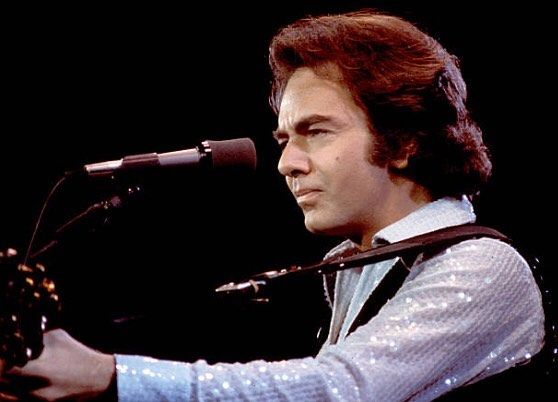
Some late-career songs do not arrive with fanfare. They step into the room softly, carrying the weight of time, memory, and everything an artist no longer needs to overstate.
When Neil Diamond opened his 2008 album Home Before Dark with “If I Don’t See You Again”, he was not trying to recreate the bright, declarative force of his younger hits. He was doing something more difficult and, in some ways, more revealing. Working with producer Rick Rubin, Diamond began the record with a song that sounded unguarded, patient, and deeply aware of passing time. That choice mattered. Home Before Dark was not just another album in a long career. It was the follow-up to 12 Songs, another Rubin-produced project, and it arrived during a late period in which Diamond’s writing seemed to lean toward stillness instead of spectacle. As the opening track, “If I Don’t See You Again” sets the emotional terms immediately.
The song feels like a greeting and a farewell at once. That tension is part of what makes it such a striking curtain-raiser. Many opening tracks are built to announce themselves. This one seems to exhale. Diamond sings with a restraint that gives every phrase more room, and Rubin’s production understands the power of that restraint. The arrangement is spare by Diamond standards, letting the voice carry the message without too much ornament around it. There is no need to push for drama. The song already contains enough of it in the title alone.
That title is crucial. “If I Don’t See You Again” does not sound like a grand statement of romantic collapse. It sounds more mature than that, and more complicated. It holds uncertainty, tenderness, and realism in the same breath. In younger hands, a line like that might have been turned into a theatrical plea. In Diamond’s 2008 voice, it becomes something quieter and more durable: an acknowledgment that love, memory, and human connection are often shaped by what remains unfinished. He does not force the sentiment. He lets it settle.
By the time Home Before Dark appeared, Diamond had been part of American popular music for decades. He had already written and recorded songs that lived loudly in the culture, songs built for radio, crowds, and communal singing. But this album came from another place. Rubin had a gift for hearing veteran artists not as monuments, but as living performers whose later work could reveal fresh depths when stripped of habit and expectation. That sensibility serves “If I Don’t See You Again” beautifully. The production never overwhelms the song’s intimate scale. Instead, it frames Diamond as a storyteller standing close to the microphone, trusting the grain of his own voice.
And that voice is one of the real subjects here. On this recording, Diamond sounds seasoned in a way that changes the meaning of every line. There is warmth in the performance, but also wear, reflection, and a kind of emotional economy. He is not trying to sound young. He is singing from where he is, and that honesty becomes the song’s strength. Late-career records often succeed when an artist stops arguing with time and starts using it. “If I Don’t See You Again” understands that completely.
It also works perfectly as the entry point into the album’s atmosphere. Home Before Dark went on to become a major late-career milestone for Diamond, reaching the top of the Billboard 200. Yet the album’s importance is not only commercial. Its deeper achievement lies in how it presented an artist long associated with scale and certainty in a more inward light. The opening track prepares the listener for that shift. It says, in effect, that this record will not be built on volume or nostalgia alone. It will be built on closeness, phrasing, and the emotional intelligence that comes from having lived long enough to leave some things unresolved.
Musically, the song lives in that unresolved space. Its movement is gentle, but it never feels shapeless. The melody carries a measured sadness without collapsing into self-pity. Rubin’s touch keeps the performance grounded, and Diamond’s writing avoids easy closure. That matters because the song’s emotional force comes from what it refuses to simplify. It is not only about parting. It is about the strange dignity of speaking honestly when certainty is no longer available.
There is something especially moving about hearing an artist of Diamond’s stature begin an album this way. No big entrance. No oversized gesture. Just a thoughtful song, carefully sung, opening the door to a late chapter with calm authority. In that sense, “If I Don’t See You Again” is more than a track listing choice. It is a statement of artistic confidence. Only a performer secure in his own history can afford to begin so quietly.
Years later, that is what lingers. Not just the melody, and not just the title, but the feeling of a great public voice choosing intimacy over display. Neil Diamond had nothing left to prove in 2008. On Home Before Dark, and especially in its opening moments, he chose instead to reveal. “If I Don’t See You Again” remains one of those later songs that does not ask for attention by force. It earns it by sounding like a man who knows that time changes the voice, but can deepen the truth inside it.
