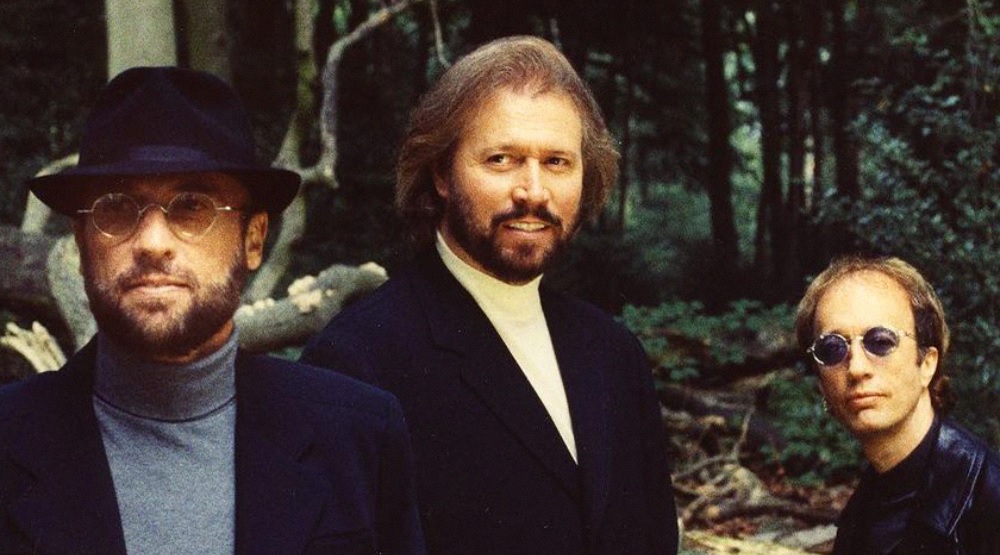
At a quiet crossroads in 1974, Charade caught the Bee Gees leaving behind ornate pop and moving toward a warmer, deeper kind of soul.
On the Bee Gees‘ 1974 album Mr. Natural, Charade arrived not as a hit single built for instant recognition, but as one of those revealing album tracks that tells you more about an artist’s future than a dozen better-known songs. Produced by Arif Mardin, Mr. Natural stands at a crucial point in the group’s history, and Charade is one of its clearest emotional signals. It is an overlooked blue-eyed soul ballad, understated on the surface, but full of the kind of musical rethinking that would soon reshape the brothers’ sound.
That matters because Mr. Natural came before the public narrative of the Bee Gees became fixed in brighter lights. Before Main Course, before the sharpened groove of their mid-1970s reinvention, before the run of songs that turned them into one of the defining acts of the decade, there was a period of transition. Their late-1960s work had been full of chamber-pop melancholy, layered harmonies, and richly arranged drama. By the early 1970s, the certainty of that identity had loosened. What makes Charade so interesting is that it does not sound like a group trying on a costume. It sounds like a group listening more carefully to rhythm, to space, and to the emotional grain of soul music.
Arif Mardin was a crucial part of that shift. His reputation rested on elegance, discipline, and a deep feel for groove without excess. He did not flatten the Bee Gees‘ instincts for melody and harmony; he gave those instincts a different frame. On Mr. Natural, and especially on a song like Charade, the arrangements breathe differently. The music feels less decorated for its own sake and more guided by texture and pulse. There is a softness in the way the song moves, but it is not fragile. It has the inward poise of soul balladry, where the emotional force comes not from grand gestures but from control.
That is why Charade lingers. The title itself suggests performance, disguise, emotional misdirection, and the slow ache of realizing that something beautiful may also be evasive. The Bee Gees had always understood romantic complexity, but earlier songs often framed it with a kind of theatrical sweep. Here, the feeling is more intimate. The arrangement does not push toward melodrama. Soft keyboards, a restrained rhythm section, and gentle orchestral shading give the song a late-night atmosphere, as if it were unfolding in half-light rather than center stage. The emotional tension is carried in the phrasing, in the pauses, in the sense that the song knows more than it wants to say out loud.
The vocal approach is part of what makes the track so quietly revealing. Instead of reaching for the ornate sadness that marked some of their earlier work, the brothers lean into maturity and understatement. The performance feels more conversational, more aware of phrasing as rhythm, more grounded in the subtle pull of R&B. That is where Charade becomes more than a forgotten ballad from a transitional album. It becomes evidence of the Bee Gees learning how to inhabit a groove-based emotional world without giving up their melodic identity. The harmonies are still unmistakably theirs, but the atmosphere around them has changed.
In hindsight, listeners often hear the Bee Gees‘ transformation as something that suddenly became obvious on later records. But transitions rarely happen in one clean public moment. They happen in album tracks, in experiments, in songs that only make full sense after the next chapter arrives. Charade belongs to that kind of history. It lets you hear the band in motion. The old sensibility has not vanished, yet the new one is already present: the smoother rhythmic confidence, the soul inflection, the feeling that the songs are beginning to sit differently in the body, not just in the mind.
That is also what gives Mr. Natural its special place in the catalog. It is sometimes treated mainly as a stepping stone, and in one sense it is. But stepping stones are where the balance shifts. Without albums like this, later triumphs can seem inevitable, and they never are. On Charade, you can hear uncertainty being turned into style. You can hear a famous group resisting self-imitation. You can hear them moving away from the ornate architecture of their past and toward a more fluid, soulful language that would soon open new possibilities.
There is something moving about that kind of record. It does not arrive with the force of a career-defining anthem, and it does not need to. Its importance lies in how honestly it captures a band between identities. Charade sounds like twilight between eras: not the end of one story, not yet the full brightness of the next, but the hour when the outlines begin to change. For anyone who thinks the Bee Gees can be reduced to a few familiar phases, this song offers a finer truth. It reminds us that reinvention is often quiet at first, and that some of the most revealing music in a career is made just before the world realizes something has changed.
That is why Charade still deserves to be heard closely. Not as a curiosity, and not merely as a prelude, but as a beautifully measured recording in its own right. In its calm surface and shaded feeling, it captures the Bee Gees at the moment they began to sound less like who they had been and more like who they were becoming.
