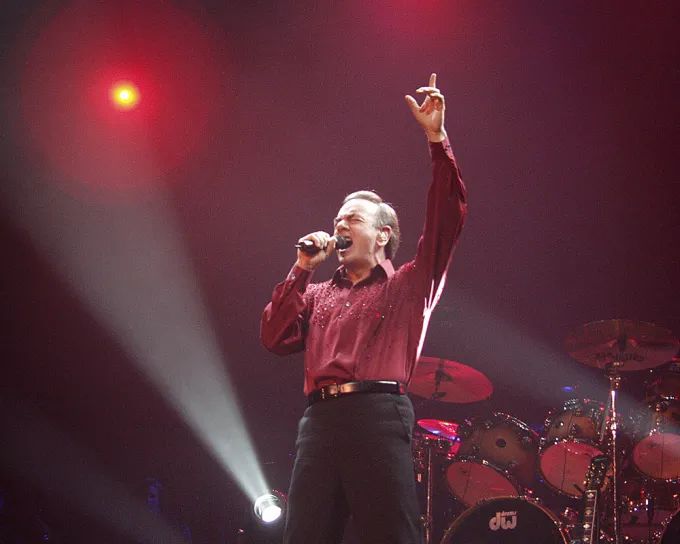
Play Me became something deeper at the Greek Theatre in 1972: a love song, a confession, and a live memory suspended in the warm air of Hot August Night.
There are songs that succeed on the radio, and then there are songs that seem to find their true home only when they are sung in front of an audience. Neil Diamond’s Play Me belongs to that second category. Already a hit in 1972, the song had reached No. 11 on the Billboard Hot 100 after first appearing on Diamond’s studio album Moods. But for many listeners, the version that lingers longest is the one performed live at the Greek Theatre in Los Angeles and preserved on the landmark live album Hot August Night.
That setting matters. The subject here is not simply the song in the abstract, but the 1972 performance atmosphere surrounding it. Hot August Night, recorded during Diamond’s celebrated run at the Greek, captured him at a moment when his popularity, confidence, and emotional connection with an audience were all meeting at once. Released later in 1972, the album became one of the defining live records of its era, and songs like Play Me helped explain why. In the open air of the Greek Theatre, under California night skies, Diamond did not merely sing the song. He seemed to lean into it, soften it, and let its tenderness breathe.
On paper, Play Me is elegantly simple. The lyric is built around the language of music, but it is really speaking the language of intimacy. This is not a song about performance in the public sense. It is about surrender, trust, and the strange, almost sacred closeness two people can create when words are not enough. Diamond later made clear that beneath the musical imagery, Play Me was one of his most sensual songs. Yet what gives it lasting beauty is that it never sounds crude or over-explained. It remains suggestive, graceful, and warmly human.
That is part of what makes the Hot August Night version so memorable. In the studio, the song already carried emotional weight. Live, it acquires a different kind of truth. The Greek Theatre performance lets the pauses matter. It lets the band support rather than crowd the melody. It lets Diamond’s phrasing do the real work. He had always known how to project power, but here he shows something just as important: restraint. And that restraint is what makes the performance so affecting. Instead of pushing the emotion outward, he draws the listener inward.
There is also something unmistakably of its time in this rendition, and that is meant in the best possible way. The early 1970s were filled with singer-songwriters trying to sound honest, but Diamond had a different gift. He could be theatrical without becoming artificial. He could fill a large venue while still sounding as though he were confiding in one person. At the Greek Theatre, that balance becomes almost magical. The audience is present, of course, but never intrusive. You can feel the scale of the night and the intimacy of the song at the same time. Few live recordings manage that balance so well.
The story behind Play Me is also the story of a songwriter entering a richer, more mature phase. By 1972, Neil Diamond was no longer simply a hitmaker with a gift for catchy hooks. He was writing songs that carried adult longing, ambiguity, and emotional risk. Moods as an album reflected that broadening sensibility, and Play Me stood out immediately because it sounded both accessible and quietly daring. It asked for closeness without disguising vulnerability. That is one reason the song has endured.
Then the live setting gave it a second life. On Hot August Night, the song is wrapped in the atmosphere that made the album legendary: the crowd’s anticipation, the warmth of the arrangements, the confidence of a performer fully in command of his moment. Diamond had played major stages before, but these Greek Theatre shows helped define his image as a live artist. The venue itself, with its classical shape and open-air elegance, adds a kind of romance that studio walls simply cannot provide. When Play Me unfolds there, it feels less like a number in a set list and more like a private chapter inside a public triumph.
What still moves people about this performance is not just nostalgia, though nostalgia certainly has its place. It is the sense that the song means what it says. The invitation inside Play Me is not flashy. It is not guarded by irony. It is open-hearted, but spoken softly. In that way, it captures something that many great songs spend a lifetime chasing: emotional directness without losing mystery.
And perhaps that is why the 1972 Greek Theatre performance remains so cherished. It catches Neil Diamond in the act of turning a hit into a memory. The charts tell us Play Me was successful. The live recording tells us something more valuable: why it mattered. In the glow of Hot August Night, the song becomes a reminder that some performances do not simply revisit a familiar tune. They reveal its heart.
