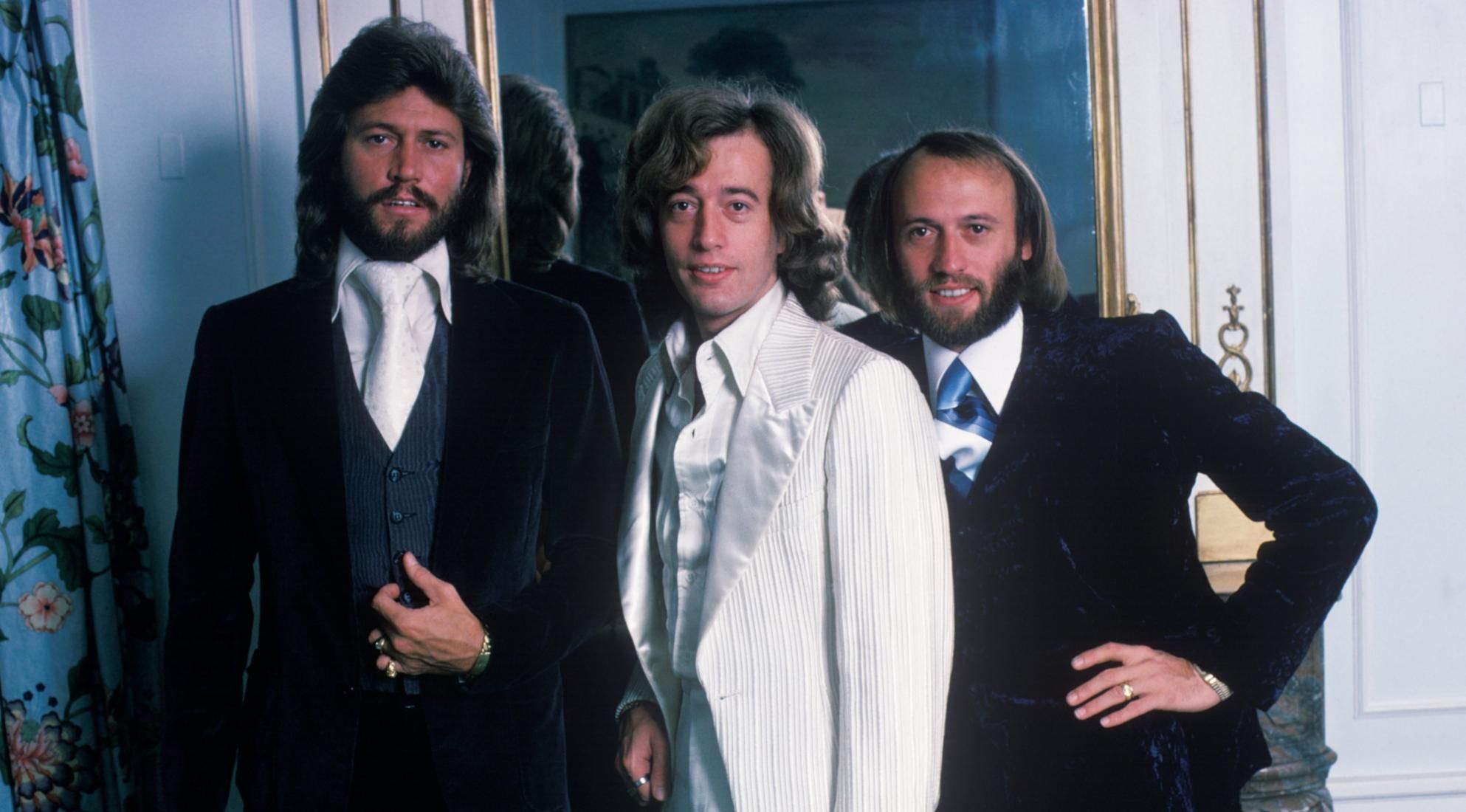
Before disco changed their public image, Holiday showed that the Bee Gees could turn restraint, atmosphere, and unusual song form into a real American hit in 1967.
In the United States, Holiday was released in 1967 as a single from Bee Gees’ 1st, and it climbed to No. 16 on the Billboard Hot 100. That chart peak still stands out because the record does not behave like the average pop hit of its time. It does not build around a conventional chorus, and it does not push itself forward with the obvious stop-and-start mechanics that radio usually rewarded. Instead, it moves in a more patient arc, letting the melody widen, the voices gather, and the arrangement do its work slowly. For a song with that kind of structure to reach the American Top 20, it says something important about both the Bee Gees and the listening climate of late 1967.
The album title Bee Gees’ 1st can be slightly misleading if taken literally. The Gibb brothers had already been recording in Australia, but this was the record that introduced them on an international scale after their return to Britain. In other words, it was the beginning of their global story, not the beginning of the group itself. That context matters, because Holiday belongs to the moment when Barry Gibb, Robin Gibb, and Maurice Gibb were establishing their identity for a wider audience. They were not yet the arena-sized pop phenomenon of the 1970s. They were a songwriting and harmony group with a gift for melancholy color, ornate pop detail, and songs that could sound both intimate and carefully staged.
From a chart-history standpoint, Holiday is fascinating because it succeeded without leaning on the most dependable commercial device in popular music: the repeated chorus. The song feels more like an unfolding scene than a verse-chorus single. Its momentum comes from mood, phrasing, and gradual lift. That kind of design can be risky on pop radio, where the listener is often expected to catch the hook quickly and remember it after one pass. Yet Holiday proved memorable in another way. It did not hammer its point home. It invited listeners into a feeling and trusted that feeling to stay with them.
Musically, the record belongs to the late-1960s world of baroque pop, where strings, measured pacing, and careful arrangement could sit comfortably beside mainstream chart ambition. There is space in Holiday, and the Bee Gees use that space beautifully. The piano and orchestral textures do not rush to fill every second. They leave room for suspension, for expectation, for the vocal lines to linger just a little longer than expected. That is one reason the song still feels distinctive. It is not built like a slogan. It is built like atmosphere turning into form.
The voices, of course, are central. Early Bee Gees records often lived or died on the tension between fragility and precision, and Holiday captures that balance especially well. The brothers do not sound casual here. They sound deliberate, as if each phrase has been placed with care. Yet the performance never feels cold. There is a softness at the center of it, a sense that the emotion is being controlled rather than displayed. That restraint becomes the song’s strength. In a louder or more aggressively structured single, the drama would have been obvious. Here, it arrives by accumulation.
The chart run also helped confirm that the Bee Gees were not a one-song curiosity in America. By 1967, they were already building an impressive early run with records such as New York Mining Disaster 1941 and To Love Somebody. Holiday added another dimension to that picture. It showed that the group could place a quiet, structurally unusual ballad into the same commercial conversation as more straightforward pop singles. Reaching No. 16 on the Billboard Hot 100 was not simply a respectable showing. It was evidence that the Gibb brothers’ songwriting craft could bridge the gap between artful arrangement and mainstream appeal.
That matters even more in retrospect because the later image of the Bee Gees can overshadow their earlier work. Once the 1970s arrived, their place in pop culture changed dramatically. The rhythmic confidence, falsetto drive, and dance-floor brilliance of the later era became so dominant that many casual listeners forgot how literary, reflective, and composition-minded the group had been in the 1960s. Holiday belongs to that earlier chapter, when their records often carried a chamber-like sense of drama. Listening to it now, one can hear a band unafraid of elegance, unafraid of slowness, and confident enough to let a song make its case without shouting.
It also tells us something about 1967 itself. That year is often remembered for experimentation, but chart records still needed a path into ordinary listening life. Holiday found that path not by abandoning sophistication, but by making sophistication feel emotionally immediate. The song’s lack of a standard chorus did not make it distant. If anything, it made the experience more immersive. Each section pulls the listener forward because there is no easy release, no familiar landing pad. The ear stays engaged, waiting for the next turn, and the result is a hit that feels almost improbable until one hears it again and understands how gracefully it works.
That may be the quiet lesson of Holiday in the Bee Gees catalog. Some songs reach the chart by arriving with a clear command. This one reached it by creating a mood so complete that people stayed with it. Its No. 16 peak on the American chart is not just a statistic from a busy pop year. It is a reminder that sometimes a record can succeed by trusting listeners more than the rulebook does. Holiday did not need a conventional chorus to leave a mark. It only needed the right voices, the right arrangement, and a time when radio was still open enough to let a beautifully shaped oddity become a hit.
