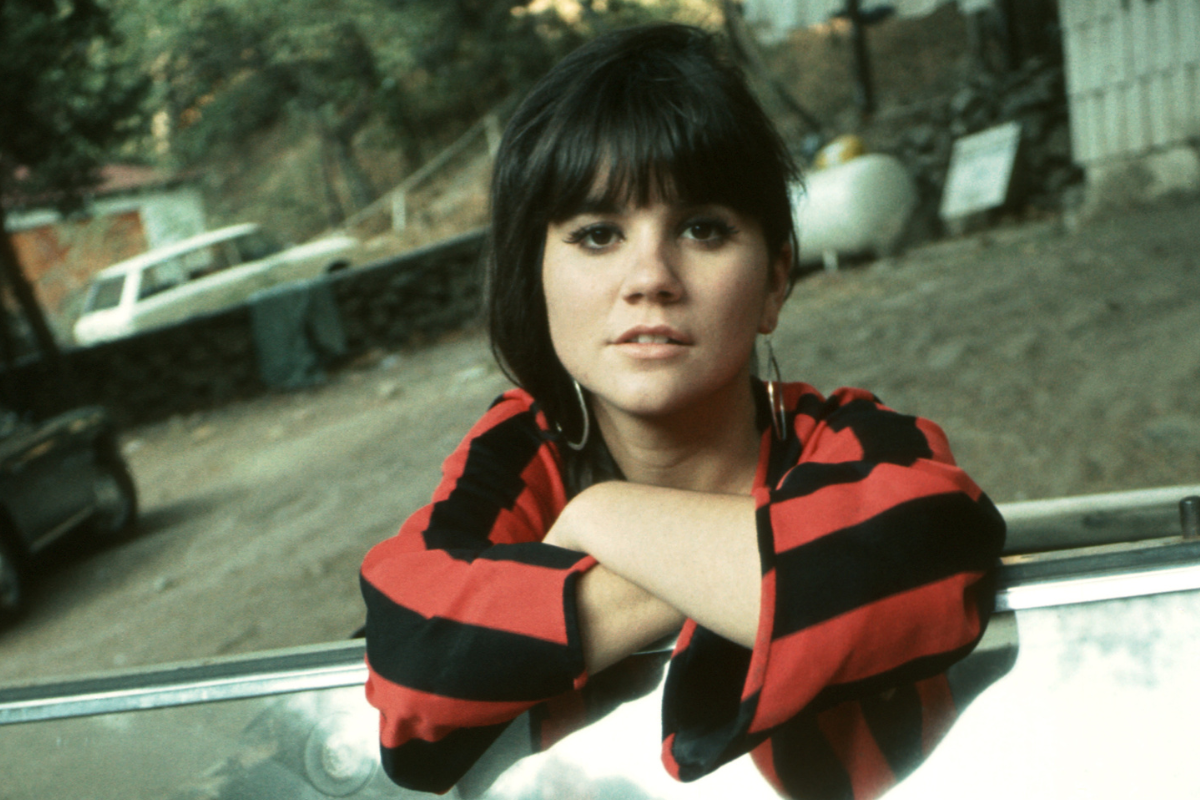
“Y Ándale (Get on with it)” is a mischievous burst of Mexican tradition—a playful nudge to stop hesitating and let love (and laughter) take the lead.
When Linda Ronstadt sings “Y Ándale”, you can hear more than a performance—you can hear a return. Not merely to the Spanish language, but to the family kitchen-table memories and borderland musical inheritance that shaped her long before the pop charts ever did. The song appears as track 6 on her landmark mariachi album Canciones de Mi Padre, released November 24, 1987, produced by Peter Asher and Rubén Fuentes, and recorded at The Complex in Los Angeles.
This is crucial context, because Canciones de Mi Padre was never a “side project” in spirit, even if it surprised parts of the mainstream at the time. It went on to peak at No. 42 on the Billboard 200, and its legacy only deepened with time—later being inducted into the Grammy Hall of Fame (announced in 2021) and selected by the Library of Congress for the National Recording Registry (2022). Those honors are the kind that arrive after the noise of the moment fades, when only the truly enduring work remains.
Inside that album, “Y Ándale” is a flash of cheeky life: fast-moving, slyly suggestive, and built to make a room smile. On the official track listing, it’s credited to songwriter Minerva Elizondo and runs 2:32. Importantly for “ranking at release,” the song itself was not released as a standalone charting single, so it has no individual chart peak—its public “position” is as part of an album that became one of the most beloved Spanish-language statements ever made by an American pop star.
The story behind “Y Ándale” is one of those delightful reminders that tradition isn’t always solemn. Ronstadt later described it, with characteristic candor, as a “naughty” song—its humor and innuendo softened, perhaps, by the fact that it’s sung in Spanish, where cheek can sound like poetry when it’s carried by the right cadence. The title itself—“Y ándale”—has that irresistible conversational electricity: come on then, get on with it, don’t just stand there thinking. In other words, it’s the opposite of romantic grandstanding. It’s romance with rolled-up sleeves: stop circling the truth and step into it.
Part of what makes Ronstadt’s version so affecting is how Canciones de Mi Padre frames these songs with respect rather than novelty. Wikipedia notes that the album’s accompanying materials paired Spanish lyrics with English translations and discussed each song’s background and significance for her—an approach that treats the repertoire as living heritage, not exotic decoration. Rubén Fuentes served as musical director/bandleader, and the album drew on elite mariachi forces (including Mariachi Vargas, Mariachi Los Camperos, and Mariachi Los Galleros de Pedro Rey). That grandeur of musicianship is why even the playful numbers feel dignified: the jokes are never cheap, because the craft is never casual.
And then there’s the family warmth around the edges. Ronstadt has spoken about the joy of involving relatives in these recordings—evoking a “family chorus” feeling that turns the album into something like a living photograph album with harmonies. The album’s personnel credits also reflect family participation across multiple tracks, reinforcing that sense of bloodline and belonging in the sound itself.
Ultimately, “Y Ándale (Get on with it)” means exactly what the best traditional songs mean: it carries human nature forward in a form sturdy enough to outlive its first era. It’s flirtation, yes—but also impatience with fear. A reminder that life is short, pride is slow, and love rarely rewards the ones who wait too long to speak. In Ronstadt’s voice—clear, bright, and emotionally grounded—it becomes something more than a wink. It becomes a little piece of courage, dressed as a laugh.
