
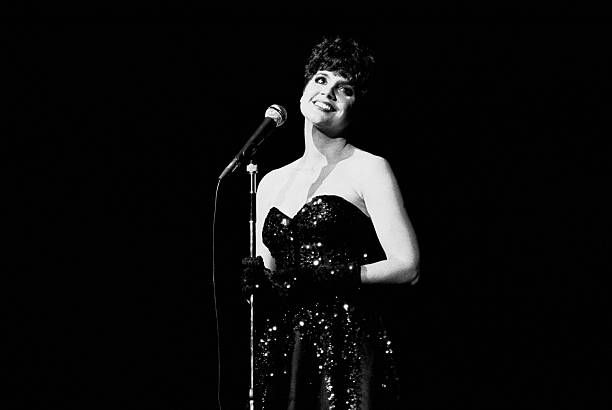
He Dark the Sun captures an early Linda Ronstadt at her most mysterious, turning a shadowy folk song into a quiet meditation on unease, beauty, and the strange darkness that can fall over the heart.
There are songs that become hits, and then there are songs that become whispers in a career story, pieces that loyal listeners carry with them long after the radio has moved on. He Dark the Sun belongs to that second category. Recorded by Linda Ronstadt during her years with The Stone Poneys, the song appeared on the 1968 album Linda Ronstadt, Stone Poneys and Friends, Vol. III. It was never a chart single in its own right, and that is part of its strange fate. At the time, the public conversation was naturally dominated by Different Drum, the group’s breakthrough hit, which reached No. 13 on the Billboard Hot 100. Yet tucked deeper inside that same period was this haunting, almost otherworldly performance, one that now feels like an early sign of everything Ronstadt would later become.
He Dark the Sun was written by Bonnie Dobson, the admired Canadian folk singer-songwriter best known for bringing a poetic, often unsettled emotional depth to her work. That background matters, because this is not a conventional pop song and never tried to be one. Even the title carries an old-world, almost biblical phrasing. It sounds less like a product of the charts and more like something carried by the wind from an older century. That sense of age and mystery is exactly what gives the song its power.
What makes Linda Ronstadt’s version so striking is the way she resists the temptation to oversing it. In later years, listeners would come to know her as one of the most commanding interpreters in American popular music, equally believable in rock, country, folk, and standards. But here, in this earlier recording, one hears something especially affecting: a young singer already in possession of emotional instinct far beyond mere technique. Her voice does not force the song open. It lingers inside it. She lets the atmosphere do its work, and the result is unforgettable for anyone willing to listen closely.
The arrangement also matters. The production surrounding He Dark the Sun is restrained, but not empty. It carries that late-1960s folk-rock sensibility without drowning the song in trend or decoration. There is space in the recording, and in that space Ronstadt’s voice becomes the center of gravity. The effect is less theatrical than intimate. It feels like a twilight performance, the kind of track that comes alive not in a crowded room but in the quiet after everything else has settled down.
As for meaning, He Dark the Sun is one of those songs that works through mood as much as narrative. It evokes the feeling of a world dimming, of certainty slipping away, of nature itself reflecting an inward sorrow or spiritual disturbance. Folk music has always made room for that kind of language, where the landscape mirrors the soul. In Ronstadt’s hands, the song becomes less about literal explanation and more about emotional weather. It suggests loneliness, foreboding, and the ache of realizing that not all darkness arrives with noise. Sometimes it comes softly, almost beautifully.
That may be one reason the song has endured with listeners who return to the deeper corners of Ronstadt’s catalog. It reveals a side of her artistry that casual histories sometimes overlook. Before the blockbuster albums, before Heart Like a Wheel, before the long run of chart triumphs that made her one of the defining voices of the 1970s, she was already showing a rare gift: the ability to inhabit a song so completely that its emotional temperature seemed to change in her presence. He Dark the Sun may not have brought her chart glory, but it gave something just as important. It gave a glimpse of her seriousness.
There is also something deeply moving about hearing Linda Ronstadt in this stage of her journey. The famous confidence is not yet wrapped in superstardom. What we hear instead is hunger, sensitivity, and a natural elegance that had not yet been polished into legend. That is often where the deepest connection lives, in recordings made before history settles its verdict. A song like this reminds us that careers are not built only on obvious milestones. Sometimes they are built on hidden rooms, and this is one of the finest hidden rooms in Ronstadt’s early work.
For longtime admirers, He Dark the Sun remains an overlooked treasure from a formative era. For newer listeners, it can be a revelation. It shows that even before the great commercial successes, Linda Ronstadt already knew how to bring tenderness, gravity, and mystery into a song that many singers might have treated as merely obscure. She understood that quiet songs can leave the longest echo. And decades later, that is exactly what this one still does.
