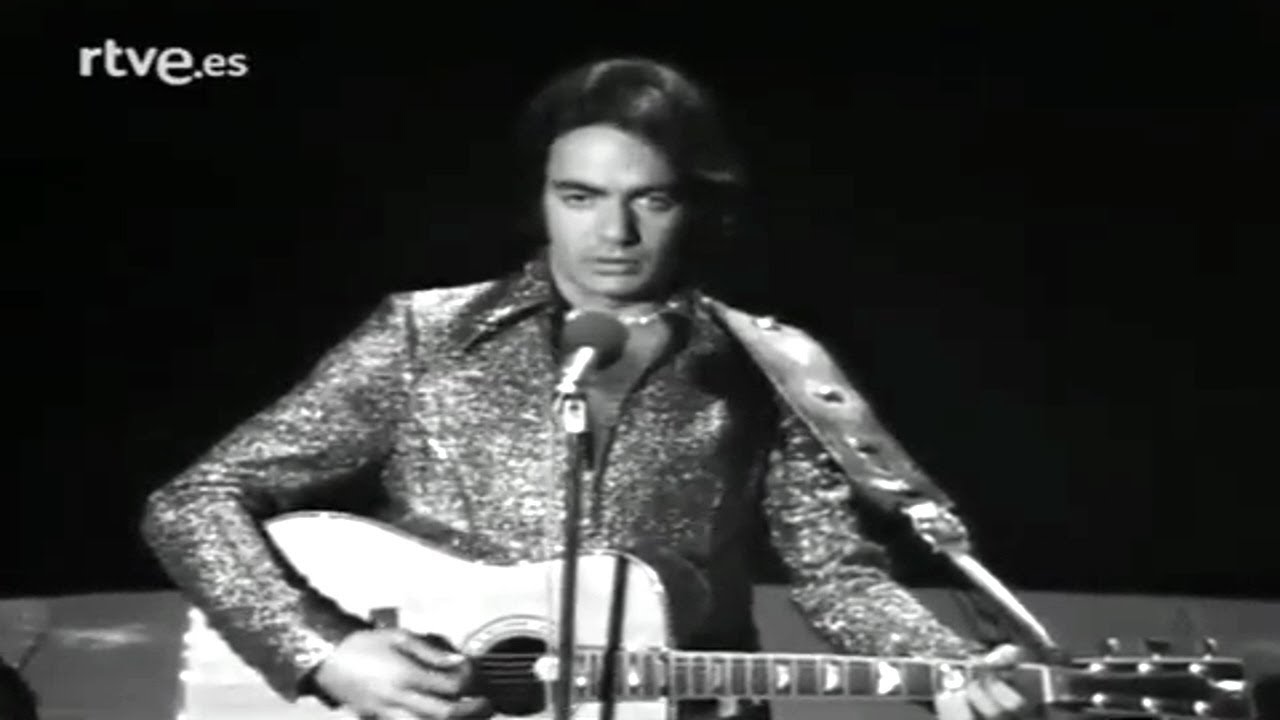
Before the arenas, before the grand singalongs, Glory Road caught Neil Diamond in motion—restless, searching, and already leaning toward the larger American canvas that would define so much of what came next.
On Neil Diamond’s 1969 album Brother Love’s Travelling Salvation Show, Glory Road is not the track that usually gets pulled into the spotlight first. It was an album cut, not the kind of song built around instant recognition or easy shorthand. But heard in the full atmosphere of that record and that moment in Diamond’s career, it becomes something especially revealing. This was the period when he was moving beyond the tight, efficient brilliance of his earlier hitmaking and into a fuller, more expansive style—one that could hold gospel fervor, folk storytelling, pop craft, and a very American sense of distance and longing all at once.
That makes Glory Road more than a forgotten side path in the catalog. It feels like a working sketch for the emotional scale Diamond would later command so effortlessly. By 1969, he had already written and recorded songs that proved his instincts for memorable hooks and emotional clarity. But the Brother Love’s Travelling Salvation Show era shows him stretching the frame. Even the album title suggests movement, spectacle, belief, and performance rolled together. In that setting, Glory Road fits naturally. It carries the pull of travel and striving, the sense that the road in the song is not only a place but a state of mind—part hope, part hunger, part self-invention.
What gives the track its lasting pull is the way it lives between earthiness and uplift. Diamond was always a disciplined songwriter, but one of his great strengths was making carefully built songs feel personal and immediate. On Glory Road, that quality matters. The record does not rush to overwhelm the listener. Instead, it opens a little wider with each phrase, letting the feeling gather. There is a strong sense of forward motion in the writing, and the arrangement supports that feeling without turning it into bombast. You can hear the late-1960s blend that suited Diamond so well at the time: part pop, part folk-rock, part country-soul, with just enough gospel color to make the horizon seem a little larger than everyday life.
It is also important to hear the song in relation to the album around it. Brother Love’s Travelling Salvation Show belongs to a fascinating turn in Diamond’s recording life, when his work was becoming broader in mood and richer in image. He was no longer simply delivering concise radio statements. He was building worlds—small American scenes filled with dust, faith, travel, memory, and performance. In that world, Glory Road feels less like a leftover and more like connective tissue. It helps explain the emotional grammar of the album. The song deepens the record’s sense of movement, its fascination with what lies beyond the next bend, and its belief that yearning itself can become a melody.
There is something especially compelling about Diamond’s voice here. Later, audiences would come to associate him with a commanding public presence, with songs built to fill large rooms and stay there. But on a track like Glory Road, you hear an earlier tension that is just as powerful: the sound of a singer reaching toward size without losing intimacy. He does not sound distant from the material. He sounds inside it, pushing through it, testing how much feeling a line can carry before it spills over. That balance—control and yearning held together—is one of the reasons this album era remains so rewarding to revisit.
The year 1969 matters too. Popular music was opening in many directions at once, and songwriters were finding new ways to merge personal feeling with larger landscapes. Diamond, who came out of a background shaped by craft and structure, was uniquely good at translating that shift into songs that still felt durable and direct. In the same broad era that brought him some of his most enduring work, Glory Road shows the less public side of the evolution. It is not a breakthrough single announcing itself to the world. It is the sound of an artist broadening his language from the inside.
That may be why the song still rewards close listening. Its appeal is not built on novelty or nostalgia alone. It comes from hearing a major writer in the middle of becoming more fully himself. The road in the title suggests arrival, but the performance is more interesting than that. It is alive with motion, not conclusion. Diamond seems to understand that some songs matter because they resolve something, while others matter because they keep the search in view. Glory Road belongs to the second kind.
So if Brother Love’s Travelling Salvation Show is often remembered for its bold title track and for the widening horizon of Neil Diamond’s late-1960s work, Glory Road deserves its own quiet respect. It captures a writer and performer standing at an important threshold. The song is not reaching backward toward safety. It is looking ahead, hearing the sound grow larger, and trusting the road enough to follow it.
