
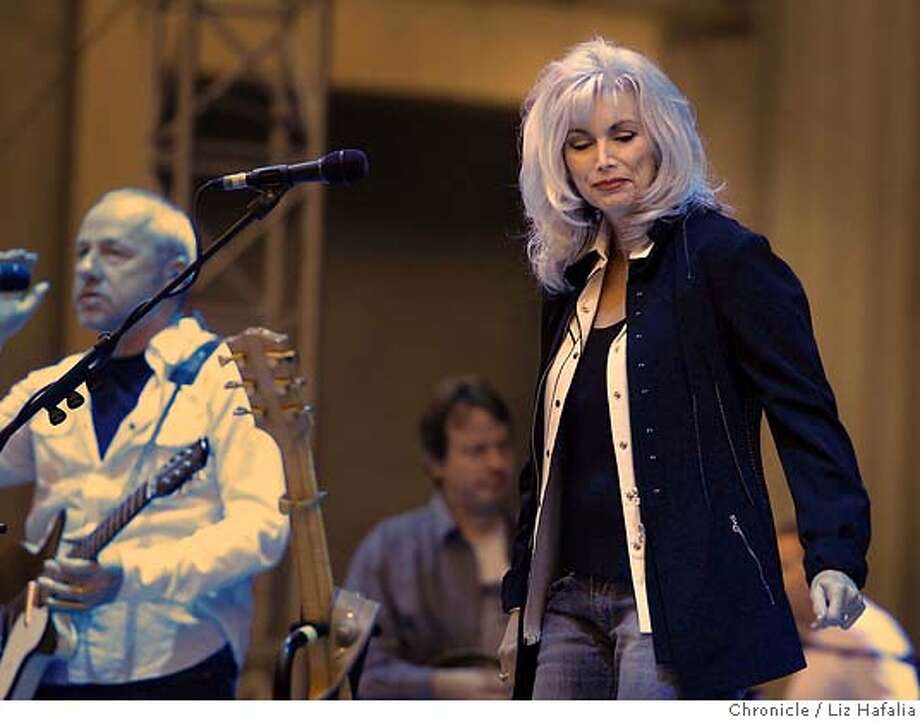
A River for Him shows how Emmylou Harris could turn tenderness, faith, and emotional surrender into something that feels less like a performance and more like a private prayer.
There are songs that arrive with fanfare, and there are songs that seem to drift into a listener’s life almost unnoticed, only to stay there for years. A River for Him belongs to that second kind. It is one of those deeply reflective recordings associated with Emmylou Harris that reveals its strength slowly, not through spectacle, but through atmosphere, restraint, and the emotional wisdom that has always set her apart.
One important point should be said plainly at the beginning: A River for Him is not remembered as a major chart single in the way some of Harris’s best-known recordings were. There is no widely cited standalone Billboard Hot Country Songs peak for the song, which strongly suggests it was never pushed as a major commercial radio release. In other words, this is not one of those songs whose reputation was built by countdowns or crossover ambition. Its legacy is quieter than that. It lives in the deeper current of the Emmylou Harris catalog, where feeling matters more than chart numbers.
And that, in truth, may be the best way to meet this song. Listeners who came to Emmylou Harris through the bright ache of Boulder to Birmingham, the elegance of Together Again, or the luminous sadness of Blue Kentucky Girl already know that her great gift was never simply vocal beauty. It was her ability to make a song feel inhabited. She never just sang words; she seemed to stand inside them. A River for Him carries that same gift. It feels lived in. It feels weathered by compassion.
The title itself is rich with symbolism. In American roots music, the image of a river has always carried spiritual weight. A river can mean time. It can mean sorrow passing through. It can mean cleansing, mercy, distance, longing, even the boundary between what can be held and what must be released. In A River for Him, that image seems to open outward in several directions at once. The song can be heard as an offering of devotion, as an act of care, or as a meditation on love that gives without demanding applause. That emotional ambiguity is part of what makes it linger. It never reduces itself to a single tidy message.
Detailed studio mythology around A River for Him is not documented in the public imagination the way some famous recording-session stories are. There is no heavily repeated legend attached to it, no endlessly quoted clash in the studio, no dramatic tale that overshadows the music itself. In a strange way, that absence feels fitting. The song does not come toward the listener with the force of myth. It comes with the hush of sincerity. It sounds like the kind of recording made by artists who trusted mood, space, and emotional truth more than commercial noise.
That approach has always been central to Emmylou Harris. Across decades, she built one of the most distinguished careers in American music not by chasing a single fashion, but by following songs that carried soul. Country, folk, gospel, Americana, and roots rock all found room in her work. What remained constant was her sense of emotional discipline. Even at her most heartbreaking, she rarely oversang. She understood that restraint can make a line hit harder than drama ever could. On A River for Him, that discipline becomes part of the song’s meaning. Nothing is forced. Nothing pleads. The feeling arrives with quiet authority.
What does the song mean? For many listeners, it feels like a portrait of selfless love, but not in a sentimental sense. This is not infatuation dressed up as poetry. It sounds closer to something older and steadier: the desire to be a place of comfort for another soul, to offer movement where there is stuckness, grace where there is pain, and endurance where life has gone dry. That is why the song can feel spiritual even when heard outside any formal religious frame. A river nourishes. A river carries. A river keeps moving. In that sense, A River for Him becomes a song about giving life back to someone who has been worn down by it.
There is also a lovely contrast at the center of the recording. The title suggests motion, yet the emotional effect is calm. The song speaks of flow, but its deepest power comes from stillness. That is classic Emmylou Harris: she often found ways to make movement and reflection coexist. Her music has always understood roads, distance, memory, and return. Here, those themes feel distilled into something especially gentle. It is less a declaration than a vow.
Perhaps that is why songs like this tend to age so well. They are not trapped inside the production trends of a single season. They do not depend on a catchy hook or a fashionable arrangement to survive. They endure because they tell the truth about human tenderness. In a catalog as rich as that of Emmylou Harris, the biggest hits will always draw the first wave of attention. But it is often the quieter pieces, the ones not built for radio victory, that reveal the deepest character of an artist.
A River for Him may not carry the public chart story that accompanies a major single, but it carries something else that matters just as much in the long life of music: emotional permanence. It reminds us that some songs are not meant to dominate the room. They are meant to stay with us when the room has gone quiet.
