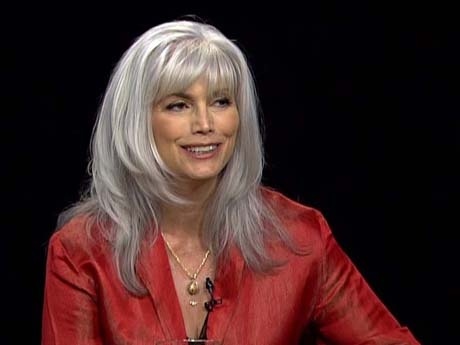
“Take That Ride” is Emmylou Harris in a quietly restless mood—a song about love grown tired, motion without rescue, and the weary knowledge that sometimes the heart keeps going not from hope, but from habit.
One of the most important facts to place right at the beginning is that “Take That Ride” comes from Emmylou Harris’s 2008 album All I Intended to Be, released that year as part of her late-career creative resurgence. The song appears in the official album sequence as track eight, and it was written by Emmylou Harris herself. It was not released as a major charting single, so it has no separate hit position of its own; its commercial context comes through the album, which reached No. 4 on Billboard’s Top Country Albums and entered the Billboard 200 at No. 22. That already tells us something important: “Take That Ride” belongs to a mature Emmylou Harris record that was heard and respected as a full artistic statement, not merely as a vehicle for radio singles.
That album setting matters a great deal. All I Intended to Be is one of those later Harris records that feels less concerned with chasing trends than with gathering truths. The official album page places “Take That Ride” among songs by Patty Griffin, Tracy Chapman, Billy Joe Shaver, and Merle Haggard, alongside Harris’s own writing. In that company, the song takes on added significance, because it shows how fully Harris had grown into her own songwriting voice by this period. She was no longer simply the supreme interpreter of other people’s pain and beauty; she was increasingly writing from her own inward weather.
The song’s deeper meaning seems to live in that phrase itself: “Take That Ride.” It suggests movement, yes, but not the romantic kind of movement people often celebrate in road songs. This does not feel like liberation. It feels more like continuation. A journey taken because standing still has become unbearable, or because staying no longer means what it once did. A thoughtful review of the album describes “Take That Ride” as a melody-driven mid-tempo tale of a flame burned out, with the narrator staying more out of lack of interest in leaving than love. That is a beautifully sharp insight, and it points to what makes the song so affecting. This is not a song about dramatic collapse. It is about emotional exhaustion—the sad middle ground where passion has faded, departure has not yet happened, and the soul drifts on in a state of muted resignation.
That emotional territory suited Emmylou Harris especially well. Few singers have ever understood better the difference between heartbreak and aftermath. Heartbreak is loud; aftermath is quieter, and in many ways more difficult to sing. On “Take That Ride,” Harris seems to inhabit exactly that quieter place. The sorrow is not fresh enough to wound openly, but neither is it gone. It has settled in. It travels with the singer. In that sense, the “ride” of the title may be literal, emotional, or spiritual all at once: a leaving, a carrying-on, a slow movement through a life that has already disappointed but has not completely stopped calling us forward.
There is also something revealing in the song’s placement on All I Intended to Be. By the time this album appeared in 2008, Harris had nothing left to prove commercially. That freedom gave her late work a special kind of grace. She could choose songs and subjects for their emotional truth rather than their obvious market value. On the same record that includes the starkly moving “Broken Man’s Lament” and the self-examining “Gold,” “Take That Ride” feels like part of a larger emotional map: songs about endurance, memory, worn loyalties, and the difficult dignity of continuing after the glamour has thinned.
Discogs release details also help sketch the sound-world around the track. They list Richard Bennett on acoustic guitar, Glen Worf on bass, and drums on the recording, part of the understated but deeply skilled ensemble Harris drew on for the album. Those details matter because “Take That Ride” does not survive on concept alone. It lives through atmosphere: the gentle forward motion, the unforced instrumental support, the sense that the arrangement is walking beside the lyric rather than trying to brighten it or dramatize it too heavily. This is one of the hallmarks of late-period Harris records. The production knows how to leave sorrow room to breathe.
So “Take That Ride” deserves to be heard as one of the quietly revealing songs from Emmylou Harris’s later years: a 2008 self-written track from All I Intended to Be, living on an album that reached No. 4 on the country chart and No. 22 on the Billboard 200, yet carrying no separate chart history of its own.
But beyond those facts lies the real reason the song lingers. It understands that not every ending arrives in thunder. Some loves simply cool. Some roads are taken without conviction. Some hearts keep moving because they have forgotten how to do anything else. And in Emmylou Harris’s voice, that kind of weariness becomes strangely beautiful—less a defeat than a hard-earned, softly spoken truth.
