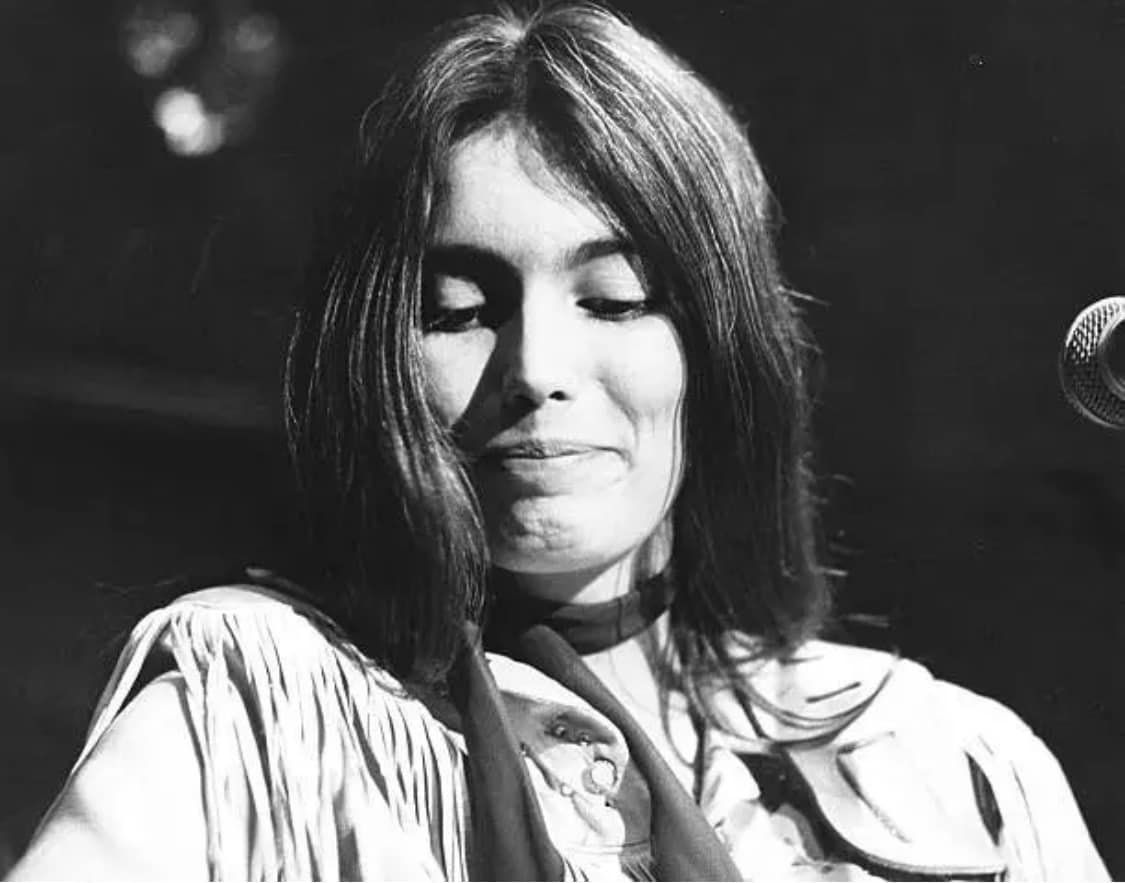
“J’ai Fait Tout” is the sound of a heart that has stopped bargaining—when love has been poured out to the last drop, and all that’s left is the quiet dignity of “I did everything I could.”
Emmylou Harris’ “J’ai Fait Tout” lives on her career-redefining album Red Dirt Girl, released September 12, 2000 on Nonesuch Records, produced by Malcolm Burn. It’s track 8, running about 5:29, and it arrives late in the record like a late-night truth you can’t postpone any longer. The album’s reception and impact were anything but late: Red Dirt Girl peaked at No. 3 on Billboard’s Top Country Albums and won the Grammy Award for Best Contemporary Folk Album (2001), confirming that Harris’ new, more personal songwriting voice wasn’t a detour—it was a homecoming.
The phrase at the center of the song is the key to its whole emotional architecture. Nonesuch’s own album notes quote Harris explaining that “J’ai fait tout” means “I did everything I could,” and that she latched onto the phrase first—hearing the song inside it—then built the track when co-writer Jill Cunniff brought a melody and groove that made the French refrain feel inevitable rather than decorative. Album credits list the song as written by Emmylou Harris and Jill Cunniff. (Some lyric databases also include Daryl Johnson among the writers; the most reliable anchor is the label’s credit line.)
What makes “J’ai Fait Tout” so striking is how it balances swagger and sorrow. The groove can almost trick you at first—there’s movement, a pulse, a faint sense of forward motion—yet the lyric is the opposite of carefree. It’s a record about giving yourself away to someone who keeps returning not because they’ve learned love, but because they’ve learned the convenience of being loved. The refrain—“J’ai fait tout”—isn’t a theatrical flourish in French; it’s a verdict. A line drawn with a steady hand: I have done my part. I have done more than my part. I will not rewrite the story to make your leaving look noble.
And that is classic late-era Emmylou: the ache is never just romantic, it’s moral. Not moralistic—she’s not scolding anyone from a pulpit—but moral in the old, human sense: what do we owe each other, and what happens to the soul when the answer becomes one-sided? Her voice here doesn’t beg for mercy. It offers a strange, bruised compassion—because she knows the other person’s flaws by heart, knows the “old secrets,” knows the pattern, and still admits the tenderness that kept her in it. That is a harder kind of honesty than anger.
The recording details deepen the mood. Kate McGarrigle’s accordion appears in the track’s personnel list, a color that can feel like memory itself—reedy, intimate, a little Old World—while the rhythm section keeps the song grounded rather than melodramatic. The album as a whole marked a shift for Harris: after decades as one of music’s greatest interpreters, she stepped forward as a songwriter—eleven of the twelve tracks on Red Dirt Girl were written or co-written by her—and that autobiographical gravity changes how “J’ai Fait Tout” lands. It doesn’t sound like a character study. It sounds like lived experience translated into art, polished only enough to be shareable.
There’s also something quietly devastating about the song’s title in the context of time. “I did everything I could” is a sentence people don’t say when they’re still hopeful. They say it when hope has been worked to exhaustion—when love has been measured not in poems but in errands, patience, forgiveness, silence swallowed, pride surrendered. And yet the song does not feel defeated. It feels clarified. The French gives the refrain a slight remove—like stepping back from the wreckage so you can finally name what happened without collapsing inside it.
That’s why “J’ai Fait Tout” remains one of the most emotionally modern songs in Harris’ catalogue. It understands a truth that many love songs dodge: sometimes the bravest thing is not holding on, but stopping the performance of “maybe.” Sometimes closure isn’t a conversation you get to have—it’s a sentence you finally allow yourself to believe. And when Emmylou Harris sings that sentence, she doesn’t dress it up as victory. She offers it as peace: a small, hard-earned light you carry out of the room when the romance has gone dark.
