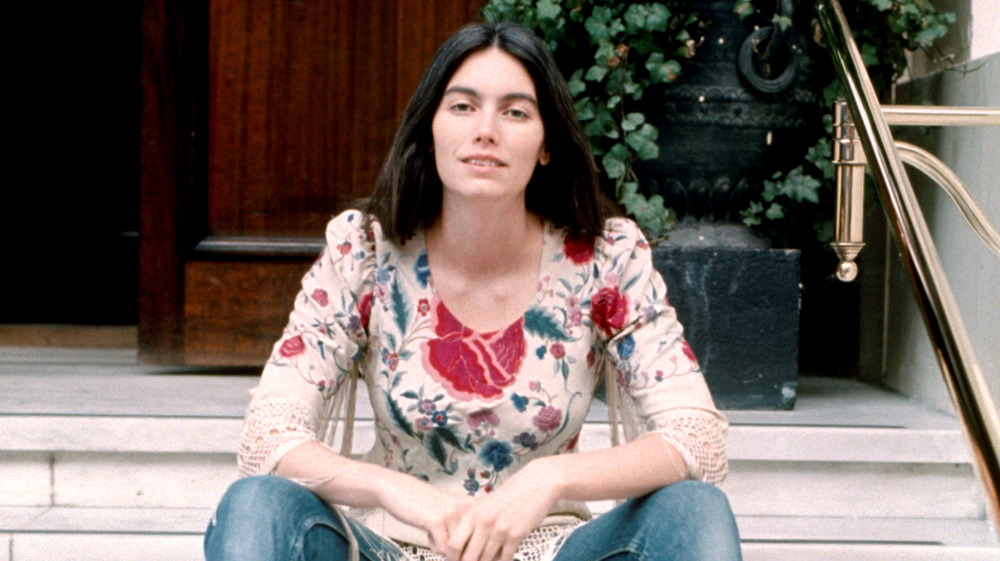
“My Baby Needs a Shepherd” is Emmylou Harris turning a lullaby into a lantern—singing tenderness into a world that feels too dark to protect the innocent.
By the time Emmylou Harris released Red Dirt Girl on September 12, 2000, she was no longer content to be praised only as the great interpreter. This album marked a profound shift: eleven of its twelve tracks were written or co-written by Harris, a decisive move into autobiography, memory, and moral weather. And right in the middle of that turn—placed as track 6—sits “My Baby Needs a Shepherd”, a song that doesn’t so much “perform” as keep watch.
The album’s public reception helps explain why this quiet, intimate track matters. Red Dirt Girl peaked at No. 3 on Billboard’s Top Country Albums and went on to win the Grammy Award for Best Contemporary Folk Album (2001)—recognition that Harris had not merely reinvented her sound, but deepened her purpose. This is crucial context: “My Baby Needs a Shepherd” was released into a moment when Harris’s songwriting voice was being newly heard, newly trusted, and newly framed as central rather than incidental.
On paper, the song’s credits are simple—written by Emmylou Harris. But the sound of the record tells a richer story. The performance is built from intimate textures and carefully chosen companions: Harris on acoustic guitar, Malcolm Burn (the album’s producer) adding electric guitar, percussion, dulcimer, and drum programming, and Patty Griffin lending harmony vocals—a detail that matters emotionally, because Griffin’s presence feels like a second candle in the room, not a guest star. The Nonesuch track listing places the song at 4:40, long enough to settle into its spell and let the imagery do its slow work.
The “story behind” “My Baby Needs a Shepherd” is, at its heart, the story behind Red Dirt Girl itself: Harris writing about the fragile places—inside families, inside memory, inside the country’s conscience—without dressing the truth in easy answers. The lyric (as reflected in published excerpts) is full of nighttime imagery and protective longing: she sings of darkness that can’t be chased away, of prayers that feel both desperate and tender, and of lullaby phrases that arrive like an old folk charm trying to hold back the storm. The recurring cradle-song syllables (“toora loora…”) are especially haunting here—not cute, not nostalgic decoration, but the sound of someone reaching for the oldest form of comfort when modern comfort has failed.
That’s the meaning that makes the song last: it treats love as vigilance. The word “shepherd” carries weight. A shepherd is not merely affectionate; a shepherd is responsible. A shepherd stays awake. A shepherd counts what might be lost. In this song, the “baby” feels less like a literal character in a neat storyline and more like the vulnerable part of life itself—innocence, the future, the tender thing we’re terrified we won’t be able to keep safe. Harris doesn’t preach this idea; she sings it as a private ache, the way worry sounds when it has nowhere left to go but into melody.
And yet, for all its shadow, the track never feels cold. That’s Harris’s particular gift: she can sing about fear without becoming theatrical, and she can sing about tenderness without becoming sentimental. The production choices—those soft acoustics, the careful atmosphere, the sense of a lullaby trying to remain steady—make the listener feel as if they’re sitting in the next room, overhearing a motherly prayer spoken under the breath.
In the end, “My Baby Needs a Shepherd” isn’t a song that resolves; it’s a song that holds. It holds the child, the worry, the night, and the fragile hope that love—if it stays awake long enough—can still guide something precious through the dark. And when you place it back into the larger arc of Red Dirt Girl—a Grammy-winning album, a chart success, a career turning point—it feels even more like what it truly is: Emmylou Harris choosing not just to sing beautifully, but to sing responsibly, as if a song itself could stand guard at the edge of the crib.
