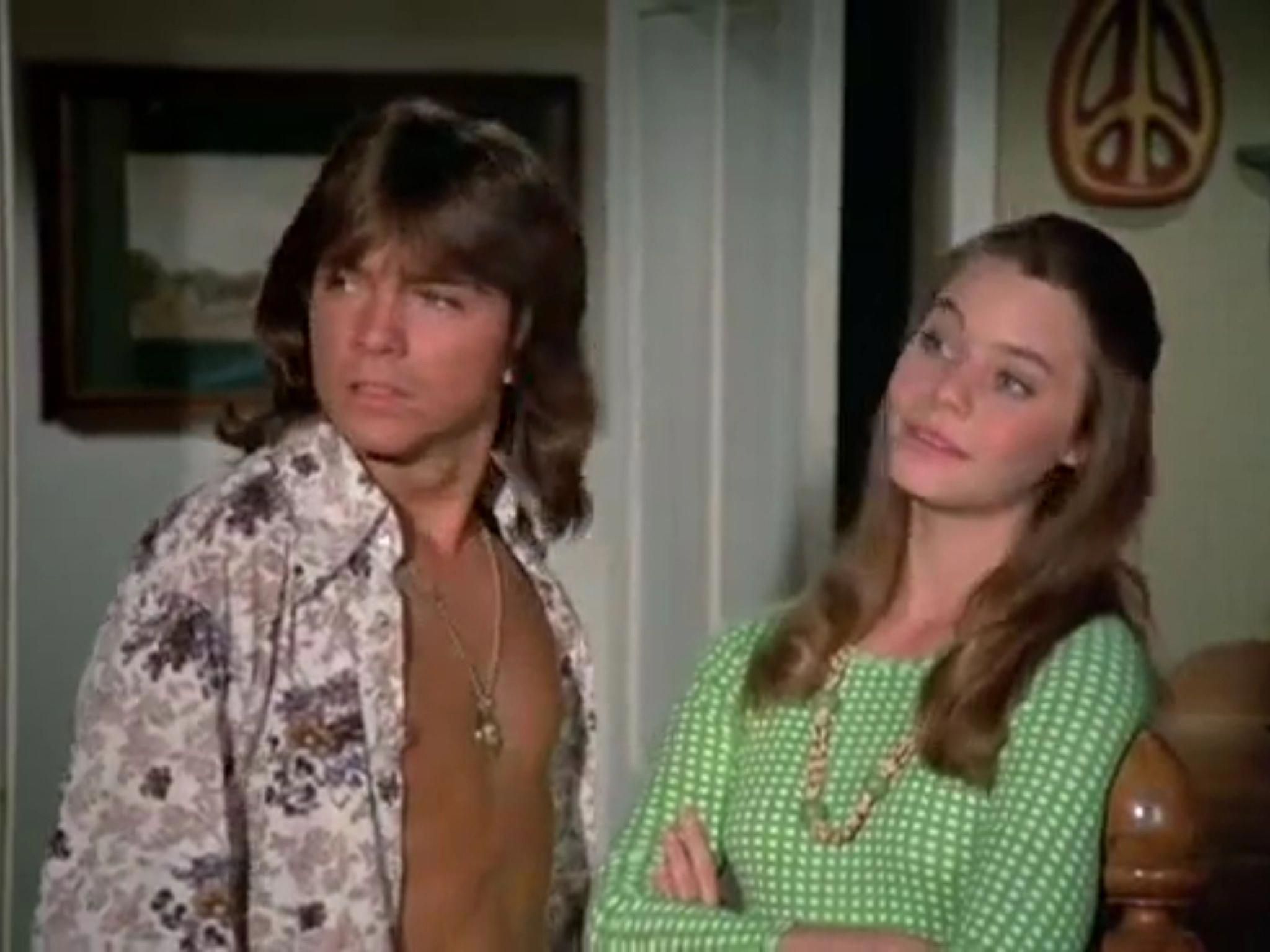
On Girl, You Make My Day, David Cassidy turns a bright Partridge Family album track into a quiet showcase for the voice that carried the fantasy beyond television.
The Partridge Family released Shopping Bag in 1972, during the high middle of the group’s unusual life as both a prime-time television creation and a real Bell Records pop presence. Within that world of scripted family warmth, studio polish, and teenage radio devotion, Girl, You Make My Day has a particular kind of charm. It was not simply another sunny album cut tucked inside a commercial package. It was a David Cassidy lead vocal on a composition by Tommy Boyce and Bobby Hart, two writers whose names already carried deep associations with the art of making television pop feel immediate, melodic, and real enough to survive outside the screen.
That context matters. Boyce and Hart had helped define a previous wave of made-for-television pop through their work with The Monkees, writing with the kind of clarity that could pass through a small speaker and still feel alive. By the time their song landed in the Partridge Family universe, they understood the balance required: the music had to be accessible at first contact, but it could not feel thin. It needed movement, hooks, an open-hearted lyric surface, and enough craft underneath to reward repeated listening. Girl, You Make My Day fits that tradition. It is clean, affectionate, and easy to enter, yet it also gives Cassidy room to show the discipline behind his appeal.
On Shopping Bag, the Partridge brand was already well established. The television series presented a family band traveling from gig to gig, while the records relied on professional songwriters, arrangers, producers, and seasoned Los Angeles studio players to create a sleek pop sound. David Cassidy, however, was the emotional bridge between those worlds. His face helped sell the television fantasy, but his voice was what made many listeners believe in the records. On Girl, You Make My Day, he does not sing as if trying to break free from the format. He works inside it, and that is part of the pleasure. He treats the song’s simple devotion with lightness, timing, and a kind of youthful confidence that never quite becomes arrogance.
The title itself suggests directness, almost the language of a note passed between two people who do not want to complicate happiness. In lesser hands, that sort of lyric could become disposable. Cassidy’s strength was that he could make a clean pop sentiment feel personal without weighing it down. His vocal style here is bright but not brittle, polished but not faceless. He brings forward the song’s optimism while still letting the melody breathe. There is a smile in the performance, but also concentration. He knows exactly how much pressure to put on a phrase, when to lean into a line, and when to let the arrangement carry the sparkle around him.
That is one reason Girl, You Make My Day remains interesting beyond its place in a television album. The track belongs to a very specific early-1970s pop environment, when youth culture, network television, fan magazines, AM radio, and studio professionalism could all meet inside a three-minute song. Yet the best of those records were not accidents. They were carefully built. Boyce and Hart knew how to shape a hook. Bell Records knew how to package bright emotional immediacy. Cassidy knew how to stand at the microphone and give the material a human center.
There is also a small tension in hearing it now. David Cassidy would spend much of his career negotiating the difference between being adored as a television idol and being respected as a musician. A track like Girl, You Make My Day does not solve that tension, but it helps explain it. The performance shows why the adoration happened in the first place. Beneath the merchandising, the sitcom glow, and the carefully arranged family-band image, there was a young singer with instinctive pop phrasing and a voice that could make even a modest love song feel like it had stepped closer to the listener.
In the larger story of The Partridge Family, Shopping Bag is often remembered through the bigger machinery around it: the show, the hits, the image, the rush of fame surrounding Cassidy. But Girl, You Make My Day invites a smaller kind of listening. It asks us to hear the craft in the background and the personality at the front. It reminds us that not every meaningful pop moment arrives as a grand statement. Sometimes it appears as a bright album track, written by craftsmen who understood the form, sung by an artist still learning how much of himself could be heard inside a manufactured dream.
What lingers is not spectacle. It is the ease of Cassidy’s voice moving through a melody built to shine. The song catches him at a moment when the Partridge fantasy was at full strength, but it also lets a real singer step through the frame. That is why Girl, You Make My Day still feels worth returning to: not because it demands to be treated as a monumental recording, but because it preserves a clear, graceful glimpse of David Cassidy doing what he did best, turning polished pop into something that felt warmly and unmistakably alive.
