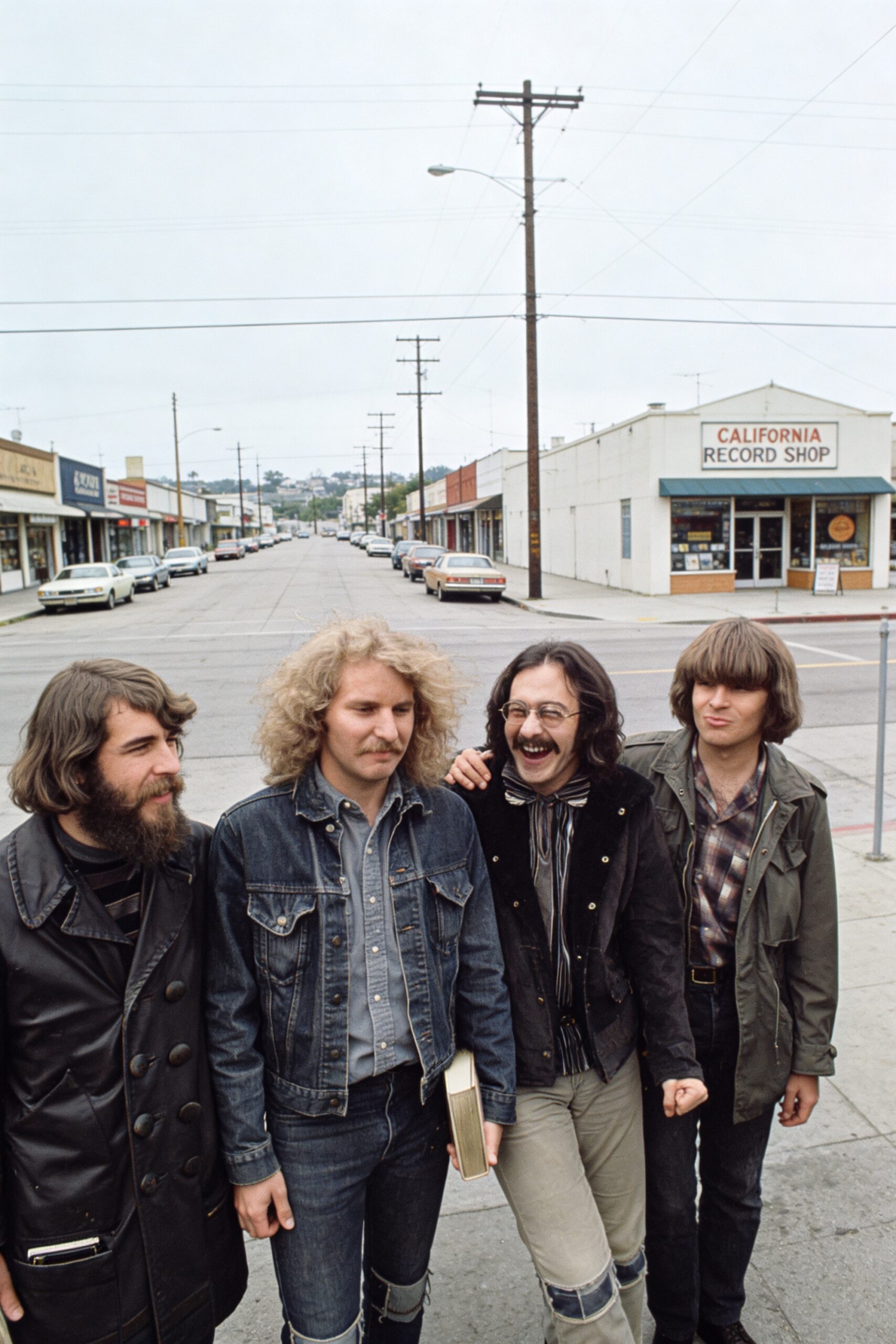
On their 1968 debut, Creedence Clearwater Revival used Wilson Pickett’s soul declaration as a proving ground, turning devotion into a thick, guitar-driven demand.
Creedence Clearwater Revival placed their cover of Wilson Pickett’s Ninety-Nine and a Half (Won’t Do) on their self-titled 1968 debut album, released on Fantasy Records, at a moment when the band was still finding the exact shape of its voice. The song had already carried the stamp of Southern soul through Pickett’s 1966 Atlantic recording, written by Wilson Pickett, Steve Cropper, and Eddie Floyd. In Pickett’s hands, it was a sharp-edged gospel-soul demand for complete commitment. In John Fogerty’s hands, it became something heavier, rougher, and more guitar-centered, a piece of R&B pulled through the humid machinery of a young rock band still defining itself.
That detail matters because the first Creedence Clearwater Revival album was not yet the fully formed world many listeners now associate with the group. This was before Proud Mary, before Bad Moon Rising, before the band’s swamp-rock identity became so fixed in popular memory that it almost seemed inevitable. The debut album was more like a declaration of ingredients: blues, rock and roll, R&B, folk feeling, garage-band grit, and the tight discipline of musicians who had spent years learning how to make a small ensemble sound larger than its size. Alongside their long, moody version of Suzie Q and their dramatic reading of I Put a Spell on You, Ninety-Nine and a Half (Won’t Do) showed how seriously they took Black American musical sources, not as museum pieces, but as living material that could be re-voiced through their own attack.
Fogerty’s arrangement is the center of the transformation. Where Pickett’s original thrives on the snap, urgency, and call-and-response energy of soul, Creedence leans into a denser R&B rock pressure. The guitar is not decoration. It acts almost like a second lead voice, pushing the song forward with a thick, insistent bite. The rhythm section of Stu Cook and Doug Clifford keeps the performance grounded, while Tom Fogerty helps hold the band’s compact shape. Nothing feels ornamental. The recording has the feel of a group working with limited space and making every corner count.
The lyric’s demand is simple: partial love is not enough. “Ninety-nine and a half” sounds close to complete, but the song rejects closeness as failure. That idea had deep roots in gospel language, where total surrender carried spiritual weight, and Pickett’s vocal style brought that urgency into secular soul. Creedence did not soften the message. Instead, John Fogerty’s voice gives it a different kind of strain. He does not sing it with the same church-fired elegance as Pickett; he pushes it through a rasp that sounds impatient, almost workmanlike, as if the emotional math has become physical labor. The result is less polished, but that roughness is part of its character.
Heard in the context of the 1968 debut, the cover also reveals how Creedence’s famous economy was already in place. The band rarely needed elaborate studio architecture to create atmosphere. Their power came from compression: a riff, a groove, a vocal edge, a sense that the song was being driven down a narrow road with no interest in turning back. On Ninety-Nine and a Half (Won’t Do), that compression makes the original soul plea feel more severe. The performance does not beg for devotion so much as test it.
There is also a historical tension inside the recording. Creedence Clearwater Revival were a California band drawing from Southern musical language, and their debut album made that exchange audible before the mythology around them grew larger. Their version of Pickett’s song is not the definitive reading; Pickett’s recording remains its own force, with a fire and lineage that Creedence could not duplicate. But CCR’s cover is valuable because it shows a young band listening closely, translating boldly, and discovering that the weight of R&B could become part of their own rock vocabulary.
More than a borrowed song, Ninety-Nine and a Half (Won’t Do) feels like a rehearsal for the Creedence sound that would soon become unmistakable. The moral directness, the hard rhythm, the plainspoken pressure, the refusal to dress emotion in luxury—all of it points forward. The band would later write songs that sounded as if they had risen from some half-imagined American riverbank, but here, on a Wilson Pickett cover, they were still showing the roots of that illusion. They were not yet myth. They were muscle, appetite, and conviction, hammering a soul standard into the shape of something they could carry into the future.
