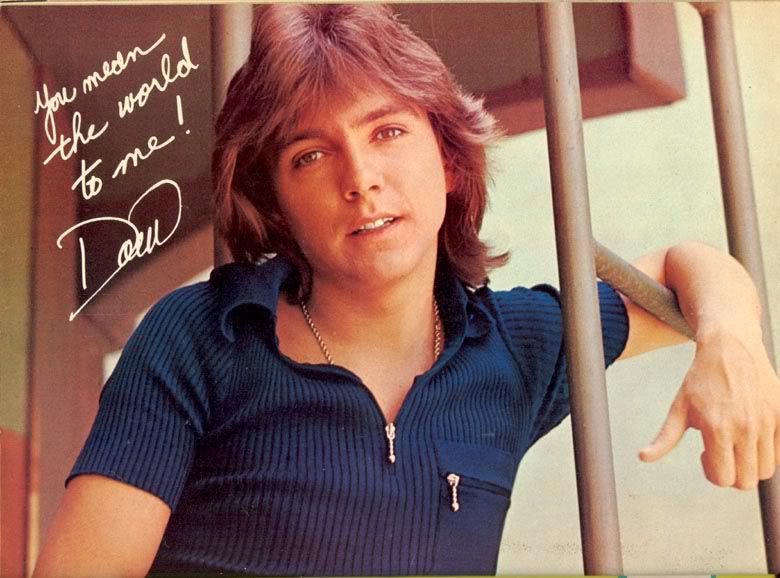
More than a teen-idol hit, David Cassidy turned Cherish into a tender confession, and that quiet sincerity is exactly why it still lingers.
When David Cassidy released Cherish in 1972, he was already one of the most recognizable young stars in the world. The screaming crowds were real, the magazine covers were everywhere, and the image of the bright, beautiful pop idol had become almost impossible to separate from the man himself. Yet this single told a more delicate story. Cassidy’s version of Cherish reached No. 9 on the Billboard Hot 100 in the United States and rose even higher to No. 2 on the UK Singles Chart, proving that its appeal went far beyond television fame. Underneath the polished early-1970s arrangement was a song about restraint, devotion, and the ache of loving someone with great care.
That emotional core was already built into the song. Cherish was first written by Terry Kirkman and recorded by The Association, whose original 1966 version went all the way to No. 1 in America. It was never a loud declaration of love. Quite the opposite. The song lives in hesitation. Its narrator is full of feeling, but he does not storm the gates or demand an answer. He treasures, admires, and waits. That distinction matters. To cherish someone is not merely to want them; it is to hold them gently in the mind and heart, almost with reverence. By the time David Cassidy stepped into it, that idea fit him in an unexpectedly powerful way.
Part of what makes Cassidy’s recording memorable is the tension between the public moment and the private mood of the song. In 1972, he was still carrying the enormous success of The Partridge Family, along with the burden that often comes with that sort of fame. Audiences saw a phenomenon. The machinery of pop stardom saw a bankable face, a commercial force, a voice that could move records. But on Cherish, Cassidy sounded less like an industry creation and more like a young man trying to protect something fragile. His phrasing is soft, almost conversational in places, and there is a vulnerability in the performance that gives the song its lasting warmth.
He did not try to overpower the original, and that was wise. Instead, he reintroduced it to a new generation with a smoother, more contemporary pop texture, one that sat naturally alongside the early-1970s radio sound while still respecting the tenderness of Kirkman’s writing. The arrangement is clean and melodic, never cluttered, leaving room for Cassidy’s voice to do what it did best on his finest recordings: sound earnest. That quality is easy to underestimate now because the mythology around David Cassidy often begins with the hysteria. But earnestness was one of his gifts. He could make a carefully produced pop record feel personal.
The meaning of Cherish has always rested in that quiet emotional contradiction. It is a love song, but it is also a song about distance. It speaks of affection, but also of limits. There is longing in it, certainly, yet there is dignity too. The singer does not seize the moment; he lives inside it. That is why the song has survived so well across different generations and different voices. It recognizes something many people learn with time: the deepest feelings are not always the loudest ones. Sometimes the most powerful kind of love is the one that remains careful, respectful, and heartbreakingly self-aware.
For David Cassidy, that made Cherish more than just another successful single. It became one of the records that helped reveal the emotional intelligence underneath the teen-idol packaging. Listeners who came for the familiar face found a performance of real sensitivity. And those who return to it now often hear even more than they did the first time around. They hear the contrast between celebrity and sincerity. They hear a young artist reaching for something honest inside a life that was becoming louder and faster by the day. They hear a song that refused to shout, and won anyway.
There is also something deeply nostalgic about the way Cassidy’s Cherish sits in memory. It belongs to an era of transistor radios, weekend countdowns, and records that seemed to arrive carrying not just melodies but whole seasons of life with them. Some songs take us back through sheer excitement. Others return us to a feeling we had forgotten how to name. This one does the latter. It reminds us that softness can endure, that gentleness can travel across decades, and that a voice wrapped in pop stardom can still tell the truth in a whisper.
That is why Cherish still matters in the story of David Cassidy. It was a hit, yes, and a substantial one. But more importantly, it was a moment when the audience could hear past the phenomenon and into the heart of the singer. Long after the charts moved on, that is the part that remains.
