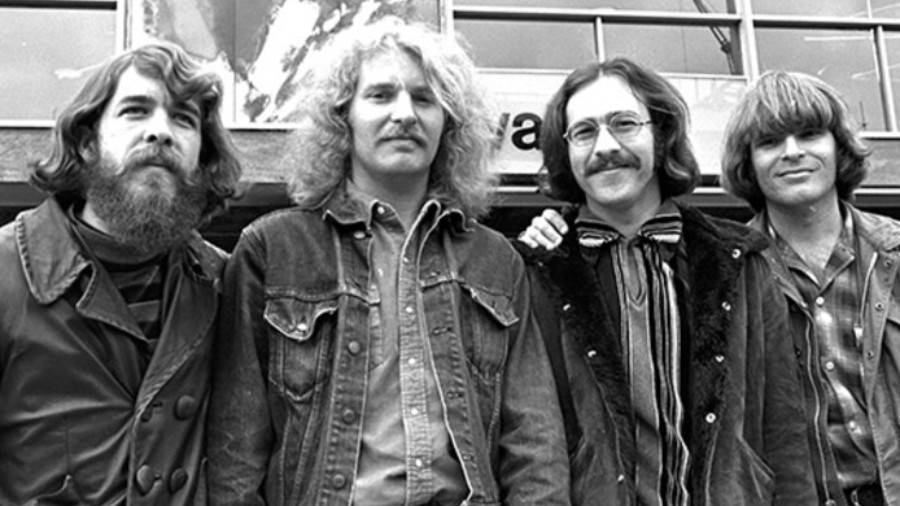
At Royal Albert Hall in April 1970, Midnight Special became more than a revival tune for Creedence Clearwater Revival; it sounded like hope, motion, and American memory shaking through a London room.
On April 14, 1970, Creedence Clearwater Revival stepped onto the stage at London’s Royal Albert Hall at the height of their remarkable run, and their performance of Midnight Special stands as a vivid reminder of what made the band so compelling in concert. There was no unnecessary showmanship, no grand theatrical gesture to distract from the music. What they brought instead was something harder to fake and much harder to forget: timing, force, and the uncanny ability to make even an old traditional song feel immediate.
This specific performance matters for historical reasons as well as musical ones. For years, fans and collectors knew of a famous live CCR tape that had long been mislabeled as a Royal Albert Hall recording when it was in fact a different 1970 concert from Oakland. The genuine London show from April 14, 1970 was eventually restored to its rightful identity and officially released as At the Royal Albert Hall, finally giving listeners the real document from that celebrated evening. That correction was more than a bit of archival housekeeping. It returned one of the great live recordings of the era to its proper place in the story of Creedence Clearwater Revival.
Originally, Midnight Special was not one of the band’s headline U.S. singles in the way that Proud Mary, Bad Moon Rising, or Fortunate Son were. The song appeared on the 1969 album Willy and the Poor Boys, and while it did not post a major standalone Billboard Hot 100 peak of its own, the album itself was a major success, climbing to No. 3 on the Billboard 200. That is worth remembering, because it says something essential about CCR. They were never just a singles machine. Deep inside those records were old songs, work songs, folk songs, and blues pieces that the band reshaped with fierce respect and startling clarity.
The roots of Midnight Special stretch back long before John Fogerty and company recorded it. It is a traditional American folk and prison song, closely associated with Lead Belly, built around the image of the midnight train and its light as a sign of release. In many tellings, the song carries the ache of confinement and the stubborn belief that something beyond the walls still moves, still shines, still promises change. That is why the song has endured. Beneath its easy swing lies a deeper emotional current: the dream that freedom may arrive not with fanfare, but with a far-off sound and a beam of light in the dark.
Creedence Clearwater Revival understood that balance beautifully. Their studio version on Willy and the Poor Boys already had warmth and drive, but the Royal Albert Hall performance gives the song an added sense of momentum. Doug Clifford keeps the beat moving with a firm, rolling pulse, Stu Cook anchors the low end without clutter, Tom Fogerty adds the indispensable rhythm texture, and John Fogerty sings with the kind of conviction that made CCR feel larger than four men on a stage. The arrangement is tight, economical, and full of purpose. Nothing is overplayed. That discipline is part of the power.
There is something especially striking about hearing this song in London. Here was an American band steeped in Southern myth, blues tradition, and working-class grit, carrying an old American song across the Atlantic and making it ring inside one of Britain’s most storied halls. By the spring of 1970, Creedence Clearwater Revival were already one of the biggest bands in the world, yet they never sounded remote from the earth beneath their music. Even in a grand setting, they kept the songs plainspoken and alive. They did not polish the dust off the material. They let the dust remain, and somehow that made it shine more.
What makes this performance linger is the emotional contradiction at its center. Midnight Special is, in one sense, a communal song, almost casual on the surface. But in CCR‘s hands it also becomes a song of yearning with real weight behind it. Hope is present, but it is not soft hope. It has rhythm section muscle behind it. It leans forward. It sounds earned. That was one of the most distinctive gifts in John Fogerty‘s art: he could sing with enough roughness to preserve a song’s history while still making it feel current, restless, and fiercely alive.
It is also impossible to hear this 1970 performance without sensing where the band stood in time. Commercially, they were near the summit. Artistically, they were still in that astonishing stretch where one great release seemed to follow another with almost impossible speed. Yet the classic era of Creedence Clearwater Revival would prove far shorter than anyone hearing them that night could have guessed. That is part of what makes the Royal Albert Hall recording so moving now. It captures the group before nostalgia froze them into legend, while they were still simply doing the work: showing up, plugging in, and turning songs into lived experience.
So this version of Midnight Special deserves to be heard not as a footnote, but as a moment when everything that mattered about CCR came into focus. Their respect for tradition. Their refusal to waste a note. Their gift for making old American language sound present tense. In that London hall on April 14, 1970, the song was not just revived. It was recharged. And for a few unforgettable minutes, the midnight light felt close enough to touch.
