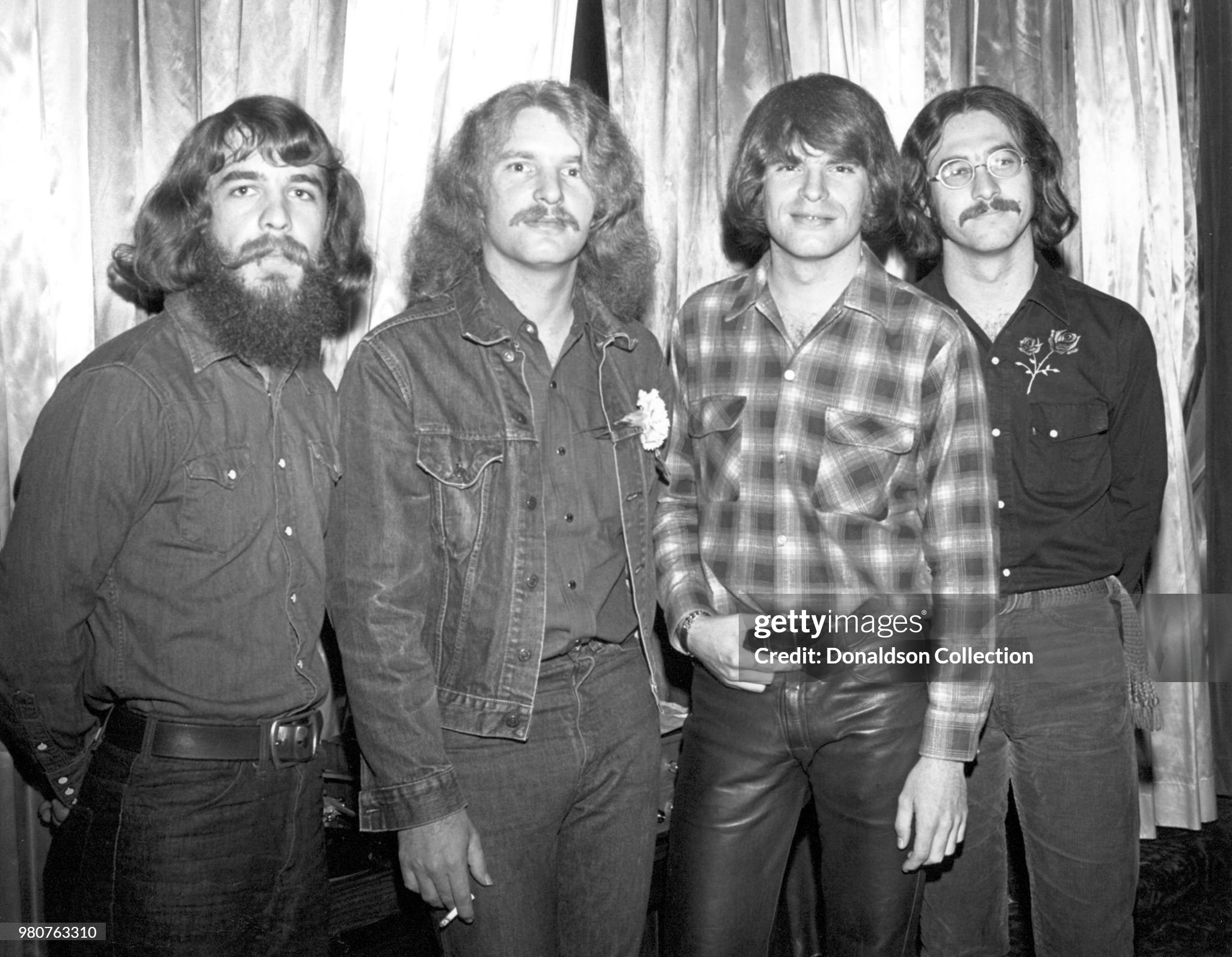
On the 1971 European stage, Proud Mary stopped sounding like a polished hit and started feeling like a weathered road song about freedom, fatigue, and the changing shape of Creedence Clearwater Revival.
If the subject is Creedence Clearwater Revival and Proud Mary – Live in Europe ’71, then it deserves to be treated as its own moment, not merely as a replay of a familiar favorite. This performance comes out of the band’s 1971 European tour, a tense and revealing period when CCR was no longer the four-man force that had cut its most famous records. Tom Fogerty had already left, and what remained was a trio still capable of enormous drive, but clearly carrying the strain of a band entering its final chapter. That alone changes how this version lands. The song is still triumphant, still immediately recognizable, but it now carries the feeling of miles traveled and something slipping away.
The historical weight of Proud Mary had already been secured long before that European tour. Released in early 1969 from the album Bayou Country, the single rose to No. 2 on the Billboard Hot 100 and helped confirm CCR as one of the defining American bands of the era. It sounded rooted in the South without being from the South, traditional without feeling old, and instantly memorable without ever seeming lightweight. Written by John Fogerty, it became one of those rare songs that felt like it had always existed. By the time the group was playing it across Europe in 1971, audiences were not hearing a new number. They were hearing a modern standard.
But the Live in Europe reading matters because it reveals how a classic changes when time gets hold of it. The live recording, later issued on the 1973 album Live in Europe, preserves a version of Proud Mary that is less polished than the studio original and, in some ways, more revealing. The famous opening guitar figure still arrives with authority, yet the mood is different. There is less of the studio’s clean, swampy mystique and more of the road in it. The rhythm feels tougher, the attack a little more direct, and the whole performance has the sound of musicians pushing a beloved song forward with muscle rather than mystery. That is not a flaw. It is the point.
What has always made Proud Mary endure is the elegance of its central image. Despite the title, Mary is not a woman in the usual pop-song sense. She is more like a vessel, a riverboat, a symbol of movement and release. The narrator leaves behind the grind of ordinary life and finds dignity in motion, in work, in the river itself. There is exhaustion in the lyric, but also liberation. The song does not promise fantasy in a childish sense. It offers something sturdier: the hope that life can be lighter once you cut yourself loose from what has worn you down. That idea was powerful in 1969, and it feels even deeper in the 1971 live version, where the singing and playing seem to know more about weariness than they once did.
John Fogerty does not treat the song like a museum piece here. He sings it with the urgency of someone who understands that a hit can only stay alive if it keeps breathing differently from night to night. His guitar work is sharp and unsentimental, and the trio format gives the performance a stripped-down force. Stu Cook and Doug Clifford do exactly what they so often did best: they hold the ground so firmly that the song can keep rolling without losing shape. In the studio, Proud Mary moves with an almost mythic confidence. In Europe in 1971, it feels more human. The confidence is still there, but it has been tested.
That is why some listeners return to this version not for perfection, but for truth. The studio recording from Bayou Country remains the definitive hit, and rightly so. Yet the live performance offers something the single cannot. It lets us hear Creedence Clearwater Revival carrying their own legend in real time. By 1971, the band had already given the world an astonishing run of songs, but the atmosphere around them was changing. In that context, Proud Mary becomes more than a crowd favorite. It becomes evidence of endurance. A song about leaving, moving, and pressing on is being played by a group that, knowingly or not, is nearing the end of its shared road.
There is also something quietly moving about the setting itself. An American song so full of river imagery, labor, and restless travel is being delivered to European crowds by a band whose very sound had come to represent a certain kind of American grit. That contrast gives the performance another dimension. Proud Mary had always contained myth, but onstage in Europe it also carried history. It was no longer just a tale of rolling down the river. It was a song that had crossed oceans, survived success, and arrived battered but standing.
So when people speak of Proud Mary, they usually begin with the original single, and understandably so. But the Live in Europe ’71 performance deserves its own respect. It shows what happens when a classic loses none of its identity but gains a harder edge from circumstance. It reminds us that songs do not stay frozen at the moment they become famous. They travel with the people who made them. And sometimes, as with Creedence Clearwater Revival on that European stage, they reveal even more when the shine gives way to grain, sweat, and experience.
