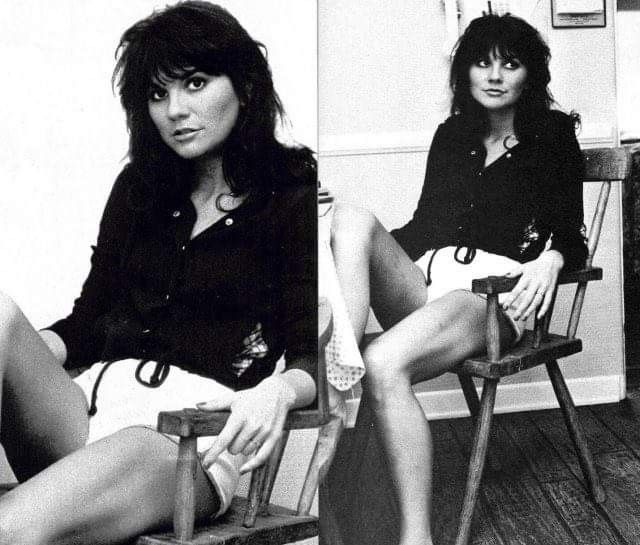
My Dear Companion was never the loudest moment in Trio, but on Dolly in 1987 it became something rarer: a televised reminder that the quietest songs often carry the deepest human truth.
There are performances that entertain, and then there are performances that seem to lower the temperature in the room, asking everyone present to listen a little more carefully. “My Dear Companion”, sung by Dolly Parton, Emmylou Harris, and Linda Ronstadt as Trio on Dolly’s 1987 TV series, belongs in that second category. It did not arrive with the force of a chart-topping single, and it was never meant to. Instead, it arrived like an old sorrow remembered properly. In the setting of a network television variety show, that restraint made the moment even more striking.
It is important to say this clearly: “My Dear Companion” was not one of the major charting singles from the 1987 album Trio. The album itself, however, was a major event. Released in 1987 after years of anticipation, Trio reached No. 1 on Billboard’s Top Country Albums chart and climbed to No. 6 on the Billboard 200, an impressive crossover showing for a record built on harmony, tradition, and taste rather than trend-chasing. The album also produced the No. 1 country hit “To Know Him Is to Love Him”, and it confirmed that these three distinct voices could create something larger than any one of them alone. So when “My Dear Companion” appeared on television in that same season, viewers were not just hearing a lovely deep cut. They were seeing one of the emotional centers of a landmark collaboration.
The song itself came from Jean Ritchie, the great Appalachian singer-songwriter whose work carried the plainspoken ache of mountain balladry into the modern folk era. That matters, because Trio’s version never treats the song as a museum piece. It is reverent, yes, but never stiff. The lyric speaks in direct, almost unguarded language about love, distance, and the helplessness of watching affection slip beyond reach. There is no need for grand rhetoric in a song like this. Its power lies in the way it accepts sorrow without dressing it up.
That emotional honesty fit Dolly Parton, Emmylou Harris, and Linda Ronstadt beautifully. Each singer brought a different shade of feeling. Dolly carried the old-country intimacy, the kind that sounds lived in from the first phrase. Emmylou brought that hovering, haunting stillness that could make even a simple line feel timeless. Linda, whose voice had long been celebrated for its strength and purity, gave the harmony a bright emotional spine. Together, they did not compete for the spotlight. They leaned into blend, and in doing so they honored the song’s emotional humility.
The backstory of Trio makes the performance even more meaningful. These three women had wanted to record together for years, with early attempts stretching back to the 1970s, but business complications and scheduling delays kept the project from fully materializing. By the time Trio finally arrived in 1987, it felt less like a novelty and more like a promise fulfilled. Under producer George Massenburg, the album found a sound that was polished enough for its era yet deeply respectful of older American roots traditions. On Dolly’s television series, that same balance was visible: the setting was national television, but the spirit of “My Dear Companion” remained intimate, almost front-porch in feeling.
What makes this 1987 performance so memorable is that it trusted the audience. It did not overplay the sadness. It did not rush toward a dramatic finish. It let stillness do some of the work. That can be risky on television, where so much depends on quick impact. But this song was never about immediate applause. It was about recognition. Anyone who has ever heard tenderness and regret occupying the same space could understand it at once.
There is also something quietly radical in the sight of three already established stars choosing restraint over display. In another context, a performance like this might have been turned into a showcase of individual power. Here, the meaning came from surrendering to the song. That is one reason “My Dear Companion” has endured so well among listeners who return to Trio for more than just its hits. It preserves the album’s deeper purpose: not simply to prove that three famous artists could sing together, but to show what happens when musical intelligence, emotional maturity, and reverence for tradition meet in the same breath.
Seen now, the Dolly TV Series 1987 rendition feels like a small treasure from a brief television era. Dolly as a series did not last long, but moments like this gave it lasting value. In a medium that often favors the obvious, Trio brought something patient, rooted, and almost sacred. “My Dear Companion” may not have climbed the singles chart, but it did something finer. It reminded listeners that music does not have to shout to stay with us for decades. Sometimes three voices, held in careful balance, can tell the whole story.
