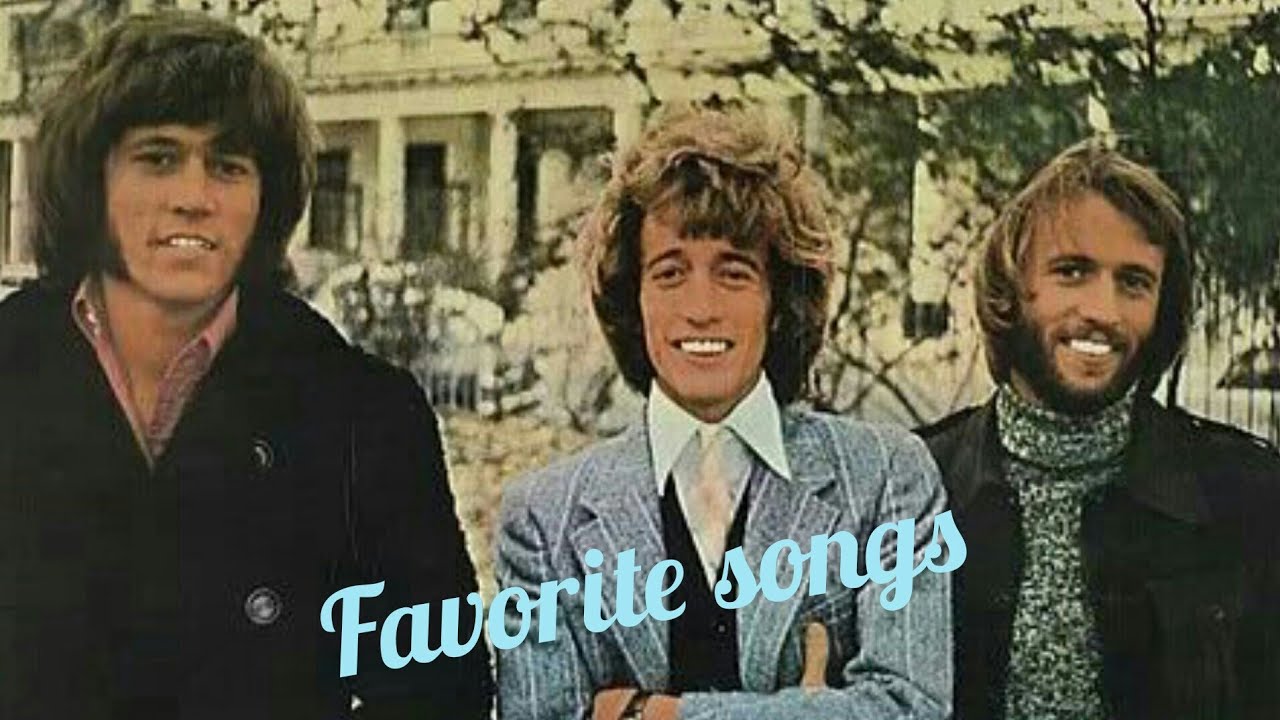
Before it became Yvonne Elliman’s breakthrough ballad, Bee Gees gave “Love Me” a quieter first life through Robin Gibb’s fragile, pleading lead vocal.
“Love Me” first appeared on the Bee Gees album Children of the World, released in 1976, at a moment when the Gibb brothers were moving with remarkable confidence between blue-eyed soul, pop melodrama, and the sleek dance pulse that would soon define a generation. The album is often remembered for the commercial force of “You Should Be Dancing”, but tucked within it is a different kind of Bee Gees achievement: a tender ballad led by Robin Gibb, written by Barry Gibb and Robin Gibb, and later carried into wider public memory by Yvonne Elliman.
That path matters. Some songs arrive fully dressed for history, loud enough to announce their own importance. “Love Me” did not need that kind of entrance. On Children of the World, it feels almost private beside the album’s more rhythm-driven material, a reminder that the Bee Gees’ 1970s reinvention was never only about disco brightness or falsetto hooks. Beneath the famous sheen was still the old Gibb gift: melody shaped like confession, harmony used as emotional weather, and a lyric that could turn a simple request into something exposed and uneasy.
Robin Gibb was especially suited to that kind of song. His voice had always carried a strange, beautiful tension — direct but not plain, vulnerable but not weak, almost operatic in its ache without ever losing the human grain. In “Love Me”, he does not perform romance as triumph. He sings it as dependence, as an appeal made by someone who knows tenderness can be both shelter and risk. The title phrase is simple, almost childlike, but Robin’s delivery gives it adult consequences. It is not merely a lover asking to be loved; it is a voice standing at the edge of being answered or left waiting.
Placed in the context of Children of the World, the recording also shows how carefully the Bee Gees understood contrast. The group was in a transitional high point, working in the Miami-centered sound world that would become increasingly central to their late-1970s success. The grooves were cleaner, the production more polished, the rhythmic instincts sharper. Yet “Love Me” reaches back toward the emotional architecture of earlier Bee Gees ballads: the sense of longing suspended in air, the feeling that the melody is trying to hold together what the words cannot fix.
Its later life through Yvonne Elliman reveals another part of the Gibb brothers’ legacy. Elliman, already admired for her expressive voice and stage and recording work, released “Love Me” as a single in the mid-1970s, and her version became a major hit, reaching the Top 20 in the United States and strengthening her connection to Gibb-written material before “If I Can’t Have You” brought her even greater chart success in the Saturday Night Fever era. Her recording gave the song a different emotional silhouette. Where Robin’s version feels inward and tremulous, Elliman’s interpretation opens the song outward, allowing its vulnerability to become more expansive, more radio-ready, more immediately accessible.
That does not make one version more truthful than the other. It shows the strength of the writing. A lesser song collapses when removed from its first voice; “Love Me” changes shape and survives. In the Bee Gees’ hands, it is intimate almost to the point of secrecy. In Elliman’s, it becomes a polished plea that could reach listeners who may never have known its origin on Children of the World. The song’s journey from album track to hit single is a small but revealing example of how the Gibbs operated as songwriters: they did not merely create records for themselves, they built emotional structures sturdy enough for other singers to inhabit.
That songwriter legacy is easy to miss because the Bee Gees became such recognizable performers. Their voices, harmonies, and image were so distinct that it can be tempting to think of their songs as inseparable from them. But “Love Me” reminds us that Barry, Robin, and Maurice Gibb were also craftsmen of material that could travel. Their melodies had doors in them. Another artist could step inside, bring a different light, and reveal a room that had always been there.
Listening back now, the Bee Gees’ original “Love Me” feels less like a rough draft of Elliman’s success than the hidden first chapter of the song’s public life. Robin’s lead vocal gives it a trembling center. The arrangement keeps enough softness around him that the plea never hardens into melodrama. And because the song later found such a strong second voice, the original gains an added poignancy: it sounds like a private letter before it became a public message.
That is the quiet power of “Love Me” within the Bee Gees story. It stands at the crossroads of authorship and interpretation, of family harmony and solo vulnerability, of a band reshaping pop music while still trusting the old emotional force of a well-written ballad. Long after the brighter hits from the era fill the room, this song lingers differently. It asks for less attention, then rewards the listener who stays close enough to hear what Robin Gibb placed inside it.
