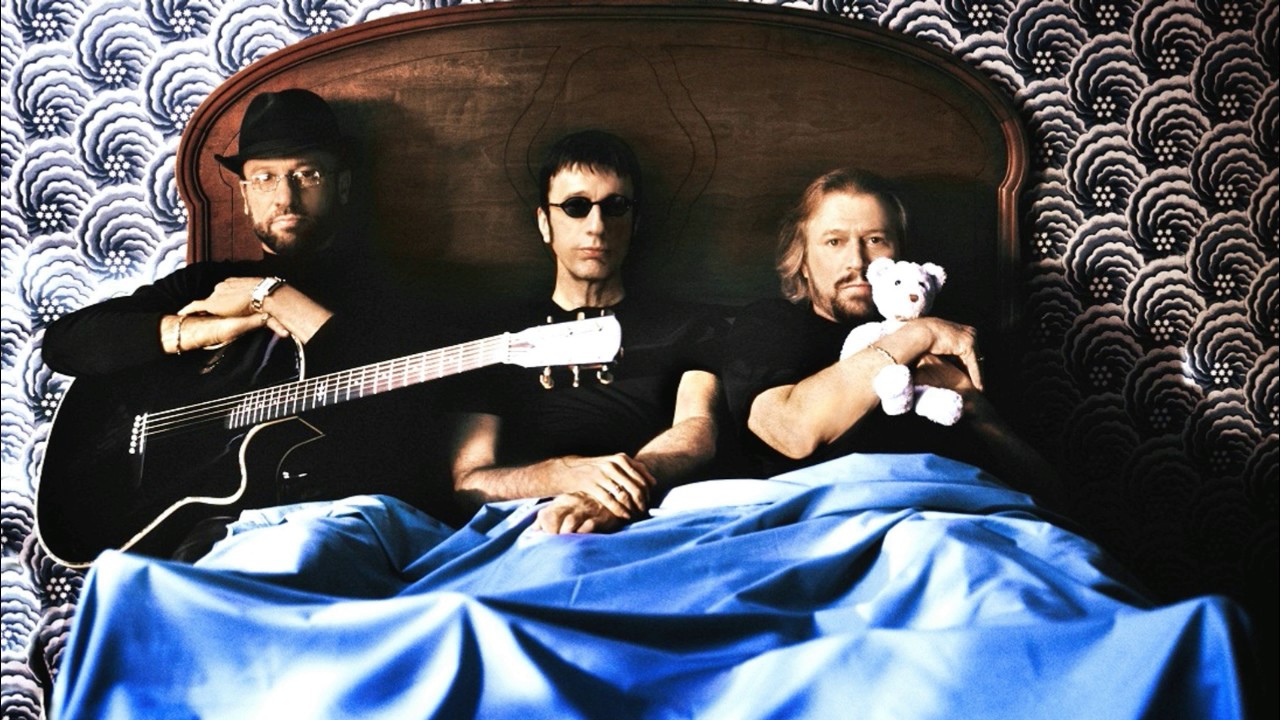
On Every Second, Every Minute, the Bee Gees made reunion sound less like repair work than a sudden burst of shared motion.
Every Second, Every Minute appeared on the Bee Gees album 2 Years On, released in 1970 during one of the most important reset moments in the brothers’ early career. After the strain and separation that followed the late-1960s period around Odessa, Barry Gibb, Robin Gibb, and Maurice Gibb found their way back into the same creative frame. The album is often remembered first because it contained Lonely Days, a major international hit that helped reintroduce the group to pop audiences. But tucked inside that same reunion-era record, Every Second, Every Minute offers another kind of clue: not the grand statement, not the obvious comeback anthem, but an upbeat, harmonically busy track that shows how quickly the brothers could turn friction into musical movement.
By 1970, the Bee Gees were still several years away from the disco-era transformation that would make their name inseparable from a different sound, a different wardrobe, and a different kind of cultural electricity. On 2 Years On, they were operating in a landscape closer to baroque pop, soft rock, British balladry, and post-Beatles studio imagination. Their greatest instrument was still the family blend: those voices folding into one another with an ease that could make even a modest album track feel intricately carved. Every Second, Every Minute captures that gift in a brighter register, pushing forward with a bounce that gives the song its charm while the vocal architecture keeps revealing how much craft is happening underneath.
What makes the track stand out is the way it refuses to sit still. Its title suggests devotion measured in the smallest units of time, but the recording does not treat affection as something slow or solemn. Instead, it moves with a kind of nervous delight, as if the feeling is too lively to be contained by a simple ballad shape. The harmonies arrive not merely as decoration, but as the song’s internal engine. Lines overlap, voices lift the melody at the edges, and the arrangement carries that unmistakable Bee Gees quality: polished but slightly eccentric, sweet on the surface yet full of unexpected turns.
That matters because 2 Years On was not just another release in the catalog. It was the sound of a family group trying to become a group again. In music history, reunions are often described in practical terms: contracts, sessions, releases, a return to the marketplace. But in a band built around siblings, especially siblings whose voices were so closely identified with one another, a reunion carries a more intimate charge. The listener hears more than professional competence. There is a sense of people relearning the shape of a shared language. Every Second, Every Minute does not announce that struggle directly, yet its buoyancy feels meaningful because of the moment it came from.
The song’s harmonic density also points to the Bee Gees’ particular musical intelligence. They were never only melody writers, though melody was one of their strongest gifts. Their early recordings often built emotional color through chord movement and vocal placement, allowing a song to feel richer than its basic premise might suggest. Here, the upbeat surface keeps the track accessible, but the vocal and harmonic turns prevent it from becoming lightweight. It is not a dramatic centerpiece like some of the group’s more mournful ballads, nor does it carry the cultural footprint of their later dance-floor work. Its pleasure is smaller and more revealing: three brothers finding lift, texture, and momentum together after a period when that togetherness had been uncertain.
Heard today, Every Second, Every Minute can feel like a snapshot from a corridor between two famous versions of the Bee Gees. Behind them was the ornate, sometimes fragile 1960s pop identity that produced songs of high melodrama and strange beauty. Ahead of them were the sharper rhythmic reinventions of the mid-to-late 1970s. In between sits 2 Years On, an album that sounds transitional in the best sense: searching, uneven in places, but alive with the energy of musicians trying to locate each other again. This track benefits from that in-between quality. It has the looseness of a band not yet locked into its next image, and the confidence of writers who knew harmony could still carry them across uncertain ground.
There is something quietly touching about an upbeat song emerging from a reunion period. Not every return has to be framed by sadness. Sometimes the most telling evidence of renewal is speed, brightness, a chorus that seems to step forward before doubt can slow it down. Every Second, Every Minute stands as one of those album cuts that deepens the larger story around a famous group. It reminds us that a comeback is not only measured by the single that climbs the charts. It is also measured by the surrounding songs, the ones where musicians test the air, smile through the arrangement, and prove that the old blend still knows how to breathe.
For fans who know the Bee Gees mainly through their biggest ballads or their late-1970s dominance, this track is a rewarding glimpse into another room of the house. It is young enough to feel restless, polished enough to show command, and warm enough to carry the emotional residue of reunion without naming it. Every Second, Every Minute may not be the most famous moment on 2 Years On, but it helps explain why the album matters: because inside its grooves, the brothers were not simply returning to a brand. They were returning to each other, one harmony at a time.
