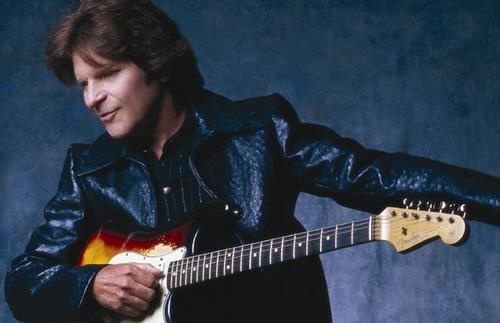
In the stillness of 2020, John Fogerty brought “City of New Orleans” into the family room and let an American travel song become a song about staying together.
John Fogerty’s cover of “City of New Orleans”, recorded with his family band for the 2020 quarantine album Fogerty’s Factory, belongs to a very particular moment in music history. It was not simply another established artist revisiting a beloved folk-country standard. It came from the strange, suspended season of lockdown, when stages went dark, tours vanished from calendars, and musicians who had spent their lives projecting sound outward suddenly found themselves playing inward, at home, surrounded by the people closest to them.
Fogerty’s Factory grew out of that domestic setting. During the COVID-19 quarantine, Fogerty performed with members of his family, turning the home into a loose, spirited workshop of songs. The album title nodded warmly to Cosmo’s Factory, the 1970 Creedence Clearwater Revival album whose cover had shown the band in an informal rehearsal space. Half a century later, the idea of a “factory” was no longer a room where a rock band hammered out swampy radio anthems at full force. It was a family space, a place where songs could be kept alive while the larger world waited outside.
That context matters deeply for “City of New Orleans”. Written by Steve Goodman and first released in the early 1970s, the song became widely known through Arlo Guthrie’s 1972 recording and later reached another broad audience through Willie Nelson’s country version in the 1980s. Its subject is simple on the surface: a train ride from Chicago toward New Orleans on the Illinois Central line. But the song has always carried more than scenery. It is about movement, memory, working people, disappearing rituals, and the way America looks when seen from a window between stations.
Fogerty has always understood American geography as sound. In Creedence Clearwater Revival, he sang of bayous, riverboats, back roads, rain, work, and restlessness with such conviction that listeners often heard entire landscapes in his voice. He was not a folk singer in the same mold as Goodman or Guthrie, yet he shared their instinct for songs that feel rooted in place. His best-known work often moves like a vehicle at night: direct, rhythmic, unadorned, carrying ordinary people through weather and uncertainty.
That is why his family-band reading of “City of New Orleans” feels so natural inside Fogerty’s Factory. The song already had a long public life before Fogerty touched it, but the 2020 setting changed the emotional temperature. A train song recorded during quarantine becomes almost a paradox. It sings of travel at a time when travel had become restricted, cautious, or impossible. It imagines passengers, towns, conductors, card games, rails, and motion while the performers themselves are gathered at home. The contrast gives the cover a quiet ache without requiring any dramatic reinvention.
Fogerty does not need to overpower the song. The strength of “City of New Orleans” lies in its plainspoken flow, its gentle accumulation of images, and its chorus that feels both communal and solitary. In a family performance, those qualities become even more pronounced. The song is not presented as a museum piece or a showpiece for nostalgia. It sounds like something handed across a room, shared because it still works, because its melody still invites voices to join, and because its story still carries emotional freight.
There is also something moving about hearing Fogerty, an artist whose career is tied to amplified confidence and sharp rhythmic drive, meet this song in a smaller frame. The home-recorded quarantine atmosphere softens the edges around the performance. Instead of the roar of a crowd, the listener senses closeness. Instead of a touring band pushing toward the back wall of an arena, there is the feeling of family members listening to one another, finding the pocket, keeping the song moving with affection rather than force.
That intimacy does not make the recording slight. If anything, it reveals how durable the song is. Steve Goodman built “City of New Orleans” with enough detail to feel documentary and enough melody to feel communal. John Fogerty brings to it a different American memory: the rock-and-roll craftsman who spent decades turning regional images into radio language. On Fogerty’s Factory, those traditions meet in a room shaped by crisis, patience, and family presence.
The result is not a definitive version in the competitive sense. It does not need to replace Guthrie’s warmth or Nelson’s country ease. Its meaning comes from timing. In 2020, a song about a train crossing the country could remind listeners of connection when connection felt fragile. It could summon the idea of shared public life when so much of life had moved indoors. It could turn the image of rolling southbound through towns and stations into something almost hopeful: the belief that motion would return, songs would keep traveling, and families could carry old music through a difficult season.
Fogerty’s family cover of “City of New Orleans” is therefore more than a respectful nod to a famous song. It is a small document of how music survived a closed-in year. It shows an artist with a long history of American songs finding comfort not in spectacle, but in participation. The train in the lyric keeps moving, but the deeper movement is quieter: from one generation to another, from public stage to private room, from a national standard into a family’s shared act of keeping time.
