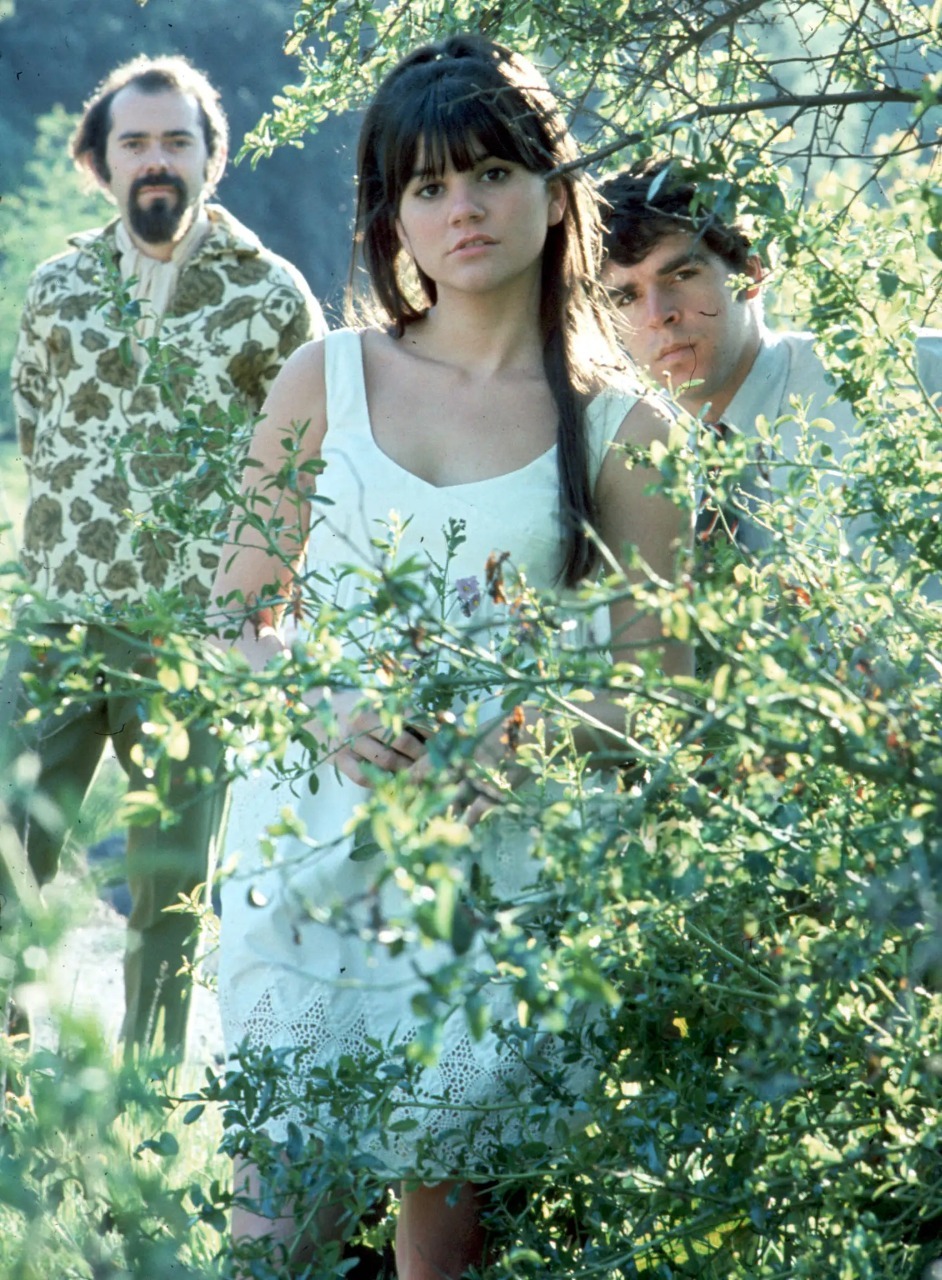
In Tú Sólo Tú, Linda Ronstadt let a classic ranchera become something larger than interpretation: a return to family memory, language, and the emotional discipline of Mexican song.
Released in 1987, Canciones de Mi Padre was not a casual stylistic detour for Linda Ronstadt. It was a historic Spanish-language album made by one of the most successful American singers of her generation, and it brought traditional Mexican songs into the center of a mainstream pop conversation that had often kept them at the edges. Within that album, her performance of Tú Sólo Tú stands as one of its most revealing moments: a ranchera standard, written by Felipe Valdés Leal, sung not as an artifact but as living inheritance.
The album title translates as Songs of My Father, and that matters deeply. Ronstadt was born in Tucson, Arizona, into a family whose cultural memory crossed borders long before the music business learned how to categorize such things neatly. Her father, Gilbert Ronstadt, was part of a Mexican-American family history in which Spanish-language songs were not exotic repertoire; they were household sound, family sound, music carried through gatherings, memory, and affection. When Ronstadt recorded Canciones de Mi Padre, she was not simply proving that she could sing in another language. She was stepping toward a part of herself that had always been there.
By 1987, Ronstadt had already moved with unusual ease through rock, country, folk, pop, operetta, and the orchestral American standards associated with her Nelson Riddle recordings. She had nothing left to prove in the ordinary sense. That is part of what gives Tú Sólo Tú its quiet power. The performance does not sound like an artist chasing novelty. It sounds like someone accepting the demands of a tradition that asks for emotional truth, vocal strength, and restraint all at once.
Tú Sólo Tú is built on a beautifully severe idea: love narrowed down to one person, one wound, one name that will not release its hold. In ranchera music, such emotion is not whispered away or disguised behind irony. It is carried openly, but with form. The singer must stand in the center of feeling without letting the feeling dissolve the song. Ronstadt understood that balance. Her voice, famous for its clarity and range, does not merely soar here; it bends into the shape of the music, honoring the vowels, the phrasing, and the dramatic pauses that give Mexican song its particular authority.
The mariachi setting surrounding her is not background decoration. The brass has the ceremonial force of public emotion, while the strings and rhythm instruments give the song its forward pull, that sense of dignity moving through pain. Ronstadt meets that arrangement with a voice that feels both commanding and exposed. She does not over-sing the sorrow. Instead, she lets the melody carry the ache, trusting the old architecture of the song to do what it has always done: turn private longing into something communal, something a roomful of people can recognize even if each person remembers a different name.
That is one reason Canciones de Mi Padre became such an important record. It reached listeners who may not have known the history of these songs, but it also spoke to families who knew them intimately. The album went on to become one of the most commercially successful non-English-language albums in the United States and earned the Grammy Award for Best Mexican-American Performance. Yet its importance cannot be measured only by sales or trophies. Its real significance lies in the way Ronstadt used her stature to open a door without treating the music behind that door as secondary. She presented these songs with seriousness, elegance, and scale.
In Tú Sólo Tú, that seriousness becomes especially personal. The song does not need a modern arrangement to justify it. Ronstadt does not soften its ranchera identity to make it more comfortable for a pop audience. She enters the tradition on its own terms, and that choice gives the performance its moral center. The drama remains Mexican, the language remains central, the emotional code remains intact. What changes is the frame: suddenly, an American audience that knew Ronstadt from Heart Like a Wheel, Blue Bayou, or her standards albums was hearing her through a deeper ancestral lens.
There is a kind of courage in that. Not the noisy kind, but the kind that comes from refusing to divide a life into tidy categories. Ronstadt’s career often crossed boundaries, but Canciones de Mi Padre was more than a crossover album. It was a reminder that heritage is not a costume put on for an occasion; it is a room in the house of memory. Sometimes a singer spends years traveling through the world only to discover that one of the richest songs was waiting at home.
Hearing Tú Sólo Tú now, the performance feels less like a period piece than a restoration of connection. The voice is unmistakably Linda Ronstadt’s, but the song asks her to belong to something older than fame. She answers not by making the ranchera smaller, but by letting herself be shaped by it. That is why the recording still carries weight. It is not only a beautiful performance from a historic 1987 album; it is the sound of an artist honoring the music that helped form the ground beneath her.
