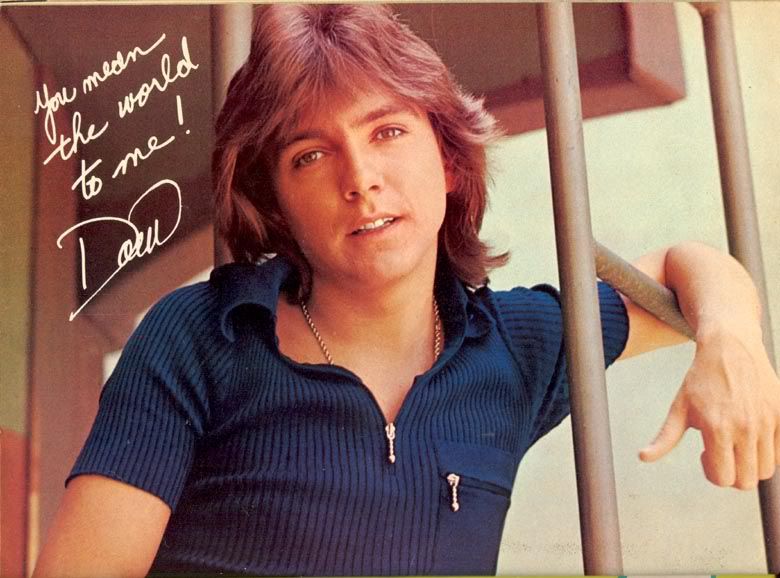
On David Cassidy’s 1992 comeback trail, “For All the Lonely” sounded less like a return to fame than a grown man meeting the ache behind it.
David Cassidy recorded “For All the Lonely” for his 1992 Scotti Brothers album Didn’t You Used to Be…, a project whose very title seemed to understand the strange weight of being remembered before being heard. The song was co-written by Cassidy with Sue Shifrin, his wife and songwriting partner, and that authorship matters. It places the track not simply in the category of another polished adult-pop album cut, but inside a moment when Cassidy was trying to speak from somewhere beyond the glare of the image that had followed him since the early 1970s.
By 1992, Cassidy was no longer the boyish face attached to The Partridge Family phenomenon or the early teen-idol hysteria that made his name unavoidable. He had lived long enough with fame to know its aftertaste. He had also worked long enough as a performer to know that the public often keeps a simplified version of an artist, even when the artist himself has moved into other rooms of his life. Didn’t You Used to Be… played almost like a self-aware answer to that question people ask when they recognize a face before they recognize a person. It was not a debut, not a reinvention from nowhere, but a return shaped by memory, pride, and a need to be taken seriously on adult terms.
That is why “For All the Lonely” carries a different kind of pressure. Its title is broad enough to sound communal, almost like a dedication, but in Cassidy’s voice it also feels personal. He was always a more complicated singer than the easy teen-magazine mythology allowed. At his best, there was a fine edge in his tone: bright enough for pop, but capable of strain, doubt, and a certain wounded urgency. In a comeback setting, that voice could not help but gather extra meaning. Every phrase seemed to arrive with an invisible second line underneath it: this is the person I was, and this is the person still trying to be heard.
The collaboration with Sue Shifrin gives the song an intimate frame without requiring listeners to treat it as a diary. Shifrin had her own established songwriting life, and writing with Cassidy allowed the track to sit at the crossroads of craft and closeness. The lyric’s attention to loneliness is not unusual in pop music, but here it feels especially tied to the paradox of celebrity. Cassidy knew what it meant to be surrounded and isolated at the same time. He had experienced the kind of fame that fills arenas and hotel lobbies, yet can leave the artist trapped inside a role everyone else has already finished writing.
Musically, “For All the Lonely” belongs to the early-1990s adult-pop landscape, where rock textures, smooth studio production, and earnest melodic writing often met in the same room. It does not need to posture as rougher than it is. Its strength comes from its openness. The song gives Cassidy space to sing not as a nostalgia act, but as a man addressing people who know the quiet after the applause, the empty space after a call ends, the way a familiar face can still feel far away from the world around it. In that sense, the recording is less about theatrical sadness than recognition. It reaches outward, but it does so from a place that sounds lived-in.
The album title Didn’t You Used to Be… remains one of the most revealing pieces of context around the song. It suggests humor, defensiveness, and honesty all at once. For a former teen idol, comeback albums can carry a cruel kind of double burden: the artist must satisfy memory while proving growth. Too much resemblance to the past, and the work is dismissed as nostalgia. Too much distance from it, and listeners complain that the familiar spark has disappeared. “For All the Lonely” finds its value in that in-between place. It does not erase the past; it lets the past stand in the doorway while Cassidy sings from the other side of it.
There is also something moving about hearing Cassidy in this era because the usual shorthand around him often misses the labor behind the name. He was not only a television star who sang. He was a working vocalist, a stage performer, and a musician who kept returning to songs as a way of arguing for his own dimensions. “For All the Lonely” may not be the first title people mention when his career comes up, but that is part of its quiet importance. It asks to be heard without the noise of screams, posters, and old assumptions. It asks for a smaller room, a closer listen, and a little patience.
He did not have to sound like a young idol anymore. In fact, the song becomes more affecting because he does not. The emotional grain comes from maturity, from the sense that the singer understands loneliness not as a pose but as part of the human weather. On a comeback album built around the problem of being remembered too quickly, “For All the Lonely” offers a more generous answer. It reminds us that an artist’s return is not always about reclaiming the spotlight. Sometimes it is about stepping into it with a different truth, hoping that this time, people will listen past the name.
