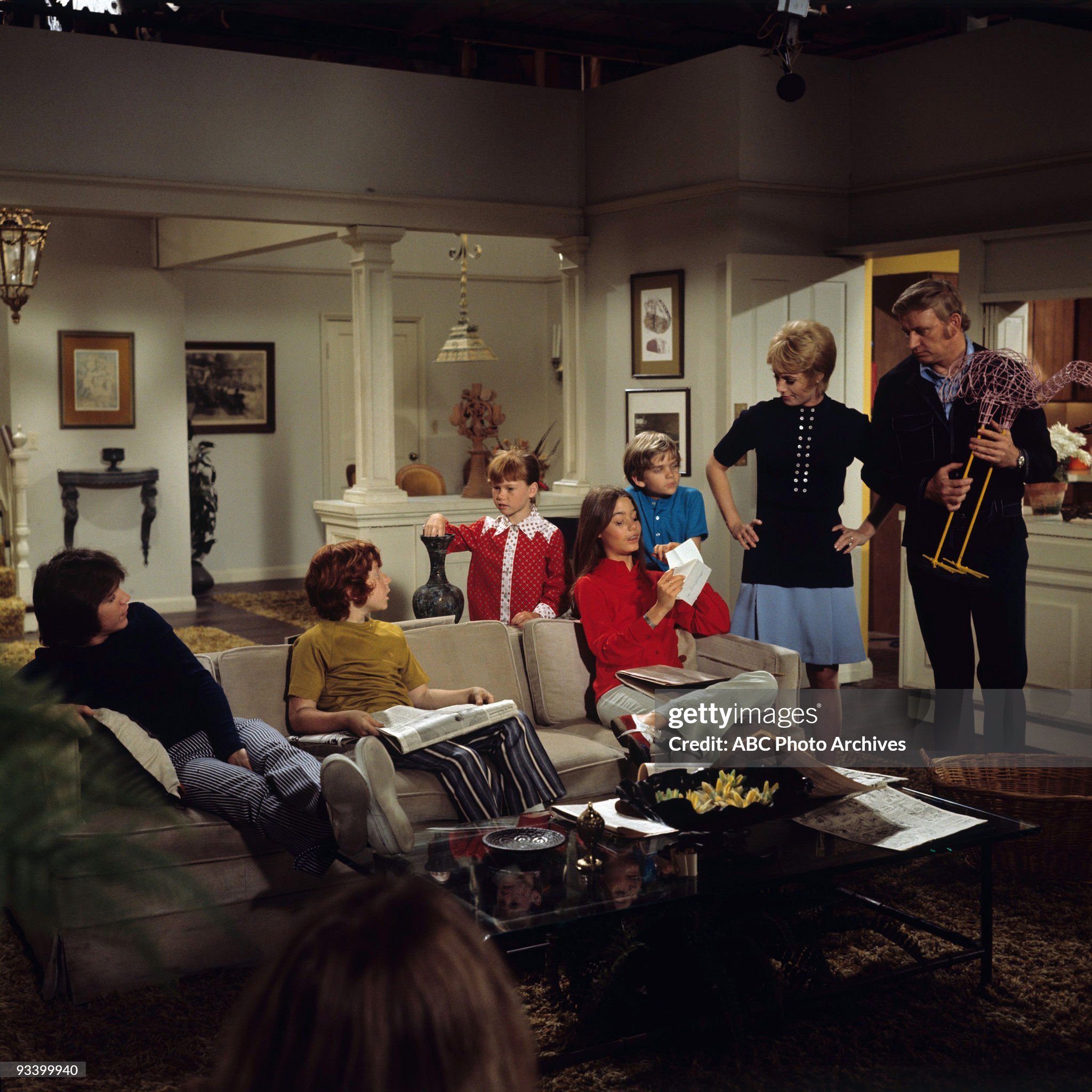
Inside the polished pop world of The Partridge Family, “Lay It on the Line” feels like a quiet revelation — a 1971 album track where David Cassidy’s voice is joined, at last, by his own writing credit.
On The Partridge Family’s 1971 album Up to Date, “Lay It on the Line” carries a detail that changes the way the record is heard. The song was co-written by David Cassidy, and in the context of The Partridge Family that is no small footnote. This was a world powered by television visibility, expertly shaped pop production, and professional songwriters who knew how to deliver instantly memorable material. Cassidy’s name in the writing credits does not make the track louder or rougher or more rebellious than the rest of the album. What it does is give the song a different weight. Suddenly the voice at the center of the performance belongs, in part, to the mind helping form it.
Up to Date arrived at a moment when The Partridge Family had become more than a clever TV premise. The series was booming, the records were selling, and Cassidy had become the figure audiences responded to most intensely. On screen he was Keith Partridge, the good-looking young frontman in a fictional family band. Off screen he was rapidly turning into a real pop star, with all the attention, projection, and simplification that kind of fame brings. By 1971, the public was often responding to the character and the person at the same time, and the line between the two could blur very quickly. That is part of what makes “Lay It on the Line” so interesting. It catches Cassidy inside the machinery, but not passively inside it.
That matters because The Partridge Family was never presented as a rough, self-contained band writing everything in a garage or on the road. Its music came from a highly organized pop system, and that was part of the design. But polished systems can still contain real feeling, and Cassidy’s singing was often the reason those records landed with more force than their bright surfaces suggested. He had an ability to put urgency into clean pop lines, to sound eager and slightly strained in a way that hinted at emotion pressing against the format. When a song like “Lay It on the Line” also carries his co-writing credit, that familiar vocal charge takes on another shade. The performance stops sounding like something merely assigned. It starts to feel more inhabited.
The song is not typically discussed as one of the group’s biggest calling cards, and that may be exactly why it deserves attention. Hit singles tell one kind of story. Album tracks often tell another. They can reveal where an artist is stretching, where a persona becomes less tidy, where the catalogue opens a small side door and lets a more personal current move through. “Lay It on the Line” works that way. Its importance is not really chart-based; its importance is interpretive. It gives listeners a rare chance to hear David Cassidy not only delivering the emotional surface of a Partridge Family song, but helping define its shape from the inside.
He was still very young then, and that is worth remembering. The early 1970s were full of performers trying to claim seriousness through authorship, just as the singer-songwriter movement was reshaping what pop audiences admired. In that atmosphere, a co-writing credit could mean more than a line of small print. It could signal appetite, ambition, or simply the wish to be more than an image carried by other people’s decisions. There is no need to turn “Lay It on the Line” into a grand statement of artistic independence. The song is more delicate than that. It is better understood as a clue — a modest but revealing sign that Cassidy wanted to participate in the work at a deeper level than many casual observers assumed.
Listening to it now, that clue feels even more poignant. So much of David Cassidy’s early fame was built on surfaces the culture found easy to consume: the smile, the hair, the weekly television glow, the neatness of the fantasy. Yet the records also preserved a young performer with sharper instincts than the packaging allowed. On Up to Date, “Lay It on the Line” quietly complicates the usual story. It suggests that behind the teen-idol frenzy there was already an artist trying to edge closer to authorship, to presence, to self-definition. Not in a dramatic break from the project, but within it.
That is why the song lingers. It is not because it overturns the history of The Partridge Family. It is because it deepens it. Beneath the cheerful polish and the efficient pop craftsmanship, the track holds a small but meaningful shift in perspective: David Cassidy is not just the one singing the line, he is part of the reason it exists. For anyone who has ever sensed that there was more to him than the poster, more to this music than the sitcom frame, “Lay It on the Line” feels like proof hiding in plain sight.
