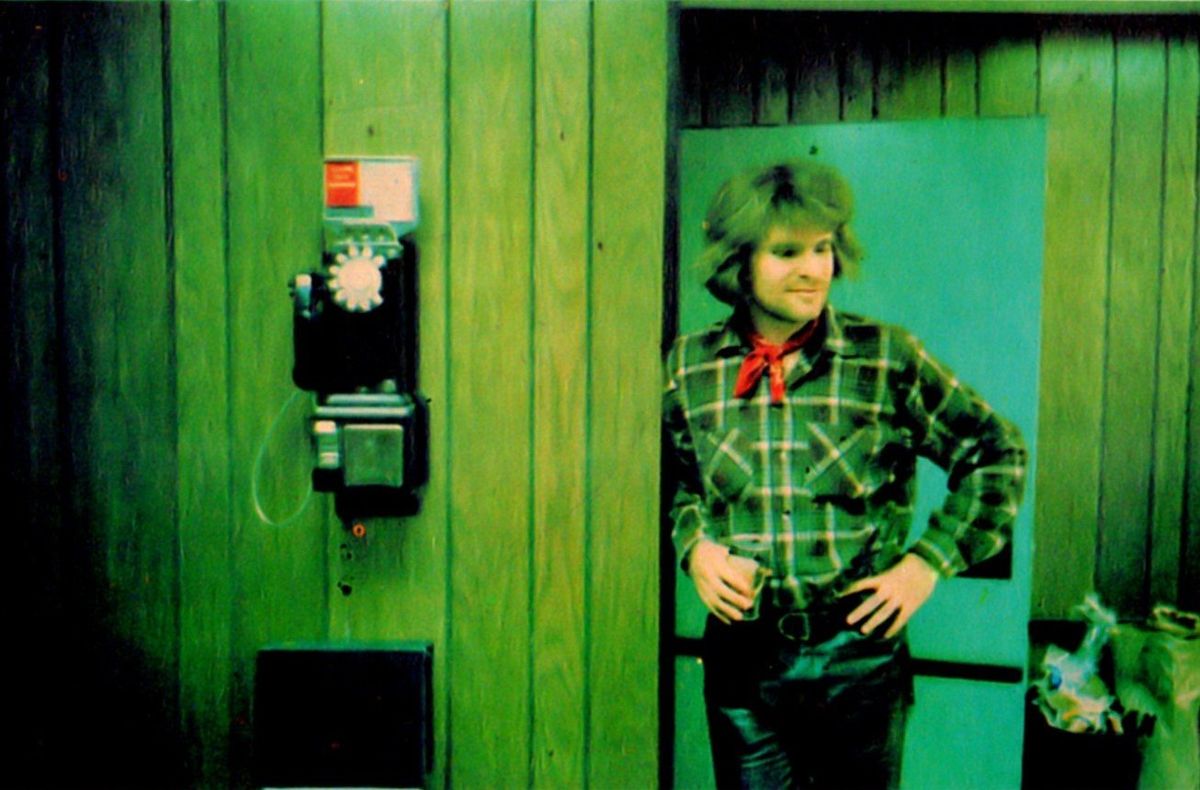
“Porterville” is the moment when John Fogerty stopped sounding like a young musician chasing trends and began sounding like the restless American storyteller who would define Creedence Clearwater Revival.
Released in January 1968 on Fantasy Records, “Porterville” was the first single issued under the name Creedence Clearwater Revival, arriving just after the long and often frustrating transition away from The Golliwogs. In pure chart terms, it was modest: the single did not enter the Billboard Hot 100. But that quiet commercial beginning now feels almost poetic. Long before “Suzie Q” became the band’s first national hit later in 1968, “Porterville” had already announced something more important than chart action. It announced a voice, a setting, and a worldview.
To understand why this record matters so much, it helps to remember where the band had been. Before they were Creedence Clearwater Revival, the four musicians from Northern California had spent years recording as The Golliwogs—an unfortunate, label-driven name attached to a run of singles that often leaned toward the British Invasion sound of the mid-1960s. Those records had energy, but they did not yet sound fully inhabited. John Fogerty, his brother Tom Fogerty, Stu Cook, and Doug Clifford were learning in public, trying on shapes that the era demanded. By 1968, that phase was ending. The new name—famously assembled from bits of personal association, the phrase “clear water,” and the feeling of a “revival”—was more than a rebrand. It was a declaration of musical independence.
“Porterville”, backed with “Call It Pretending”, sits right on that fault line between the old band and the real one. You can still hear traces of the garage-rock years, but the center of gravity has shifted. The record feels leaner, moodier, more rooted in an American landscape than in London-inspired pop. Even before the swampy force of “Born on the Bayou” or the rolling authority of “Proud Mary”, John Fogerty was already reaching toward dusty roads, hard luck, family burden, and the longing to break free. That is the emotional country of “Porterville”.
Lyrically, the song is striking for how early it reveals Fogerty’s gift for creating characters trapped by circumstance. The narrator is “born in Porterville,” the son of a jailhouse man, carrying inherited trouble like a weight he never chose. That theme—of a person pressed in by history, class, place, and fate—would return again and again in Fogerty’s writing. In later songs, he could make that pressure sound mythic. Here, it is still raw, almost skeletal, and perhaps all the more moving for that reason. “Porterville” is not just about one town, or even one man. It is about what it feels like to be handed a life already narrowed before you begin.
That is one reason the song still lands with unusual force. It carries a kind of pre-fame honesty. There is no grand polish, no attempt to make the story fashionable. Instead, John Fogerty sings with a tight, urgent edge, as though he already knows that restraint can be more powerful than ornament. His voice does not beg for sympathy. It pushes forward against the song’s walls. That tension would become one of Creedence Clearwater Revival’s great strengths: the sense that the music is moving hard, but the people inside it are still struggling to get loose.
Musically, “Porterville” also points toward the band’s future in subtle but important ways. It is more direct than much of the psychedelic rock rising around San Francisco in 1968. Creedence Clearwater Revival would never truly belong to the era’s more ornate musical fashions, and “Porterville” is one of the first clear signs of that independence. Rather than drifting outward into abstraction, the song leans inward toward rhythm, atmosphere, and narrative. It feels built from motion and grit. In hindsight, it sounds like a young band instinctively moving away from the moment’s trends and toward something older, deeper, and more enduring.
There is also something moving about where the single sits in the group’s chronology. It was not the hit. It was not the record that transformed them into stars. That honor belongs more visibly to “Suzie Q”, which later reached No. 11 on the Billboard Hot 100 and opened the national door. But “Porterville” may be the more revealing record if one wants to hear the actual birth of CCR. It is the sound of the mask slipping off. The borrowed colors are fading. The real band is stepping forward.
Even its afterlife tells a story. “Porterville” was not included on the original U.S. edition of the 1968 self-titled debut album Creedence Clearwater Revival, which has sometimes left casual listeners with an incomplete picture of the band’s beginning. Later reissues helped restore its place in the narrative, and rightly so. Without “Porterville”, the jump from The Golliwogs to the fully formed majesty of CCR can seem almost too sudden. This single reminds us that greatness often arrives not with a spotlight, but with a small, tense, determined record that only later reveals what it was starting.
For listeners who care about origins, “Porterville” is indispensable. It may not have climbed the charts in 1968, but it gave Creedence Clearwater Revival something more lasting than an early hit: a direction. In that lonely town name, in that hard family history, in that voice straining toward escape, you can hear John Fogerty discovering the terrain he would soon make his own. And once you hear that, “Porterville” no longer sounds like a footnote. It sounds like the first true page.
