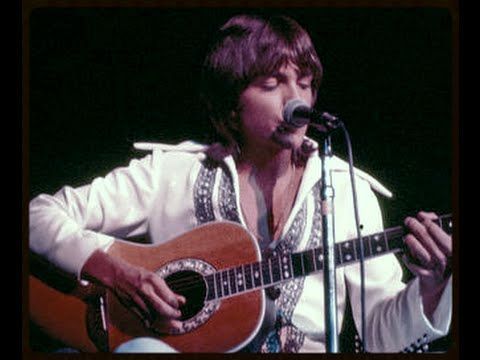
In 1971, The Partridge Family slipped a rain-soaked, emotionally shaded song into a pop world still associated with bright smiles, and ‘She’d Rather Have the Rain’ quietly sounded older than its moment.
There is something striking about The Partridge Family recording a song like ‘She’d Rather Have the Rain’ in 1971. On the surface, this was the very group many listeners associated with cheerful television energy, polished harmonies, and the commercial sparkle of early-70s pop. Yet this song carries a different emotional weather. It does not rush toward easy reassurance. It leans into uncertainty, into melancholy, into that peculiar kind of emotional maturity that arrives when a song understands that not every heart wants sunshine simply because sunshine is available.
In chart terms, ‘She’d Rather Have the Rain’ was not one of the group’s major U.S. hit singles, so it did not claim its own Billboard Hot 100 peak. That matters, because its reputation has grown more through memory and close listening than through chart statistics. During the same broad period, however, The Partridge Family remained a powerful commercial force. ‘Doesn’t Somebody Want to Be Wanted’ reached No. 6 on the Billboard Hot 100 in 1971, and ‘I Woke Up in Love This Morning’ climbed to No. 13. Those records helped define the group’s public image: melodic, accessible, youthful, and instantly catchy. Against that backdrop, ‘She’d Rather Have the Rain’ feels almost like a private confession hidden inside a very public pop phenomenon.
What makes the song feel unusually mature is not that it abandons melody. Quite the opposite. Its maturity comes from how it uses melody to hold emotional contradiction. The title alone is revealing. To say someone would rather have the rain is to reject the expected symbol of happiness. It suggests that bright appearances can feel false, even oppressive, when the heart is not in the same place. That idea is more complex than the ordinary architecture of bubblegum pop. It carries the sadness of someone who does not want to be talked out of what they feel. It allows for inner weather, and that is a subtle but meaningful difference.
By 1971, that difference mattered. The culture had shifted quickly from the late-60s promise of endless brightness into something more reflective and emotionally layered. The optimism of sunshine pop was not gone, but it no longer stood alone at the center of youth culture. Radio was opening itself to more inward voices, more adult feeling, more lived-in vulnerability. Records by artists such as Carole King, James Taylor, Bread, and Harry Nilsson spoke in quieter, more intimate tones. The world of pop was not just asking young listeners to dance anymore; it was beginning to ask them to think, remember, and feel the ache inside ordinary life. In that atmosphere, ‘She’d Rather Have the Rain’ sounded less like a leftover from a happier era and more like a sign that even the most polished pop brands understood the weather was changing.
That is why the song feels so interesting in the hands of The Partridge Family. The group was, of course, a television creation, with David Cassidy as its unmistakable vocal center and top Los Angeles studio players helping shape the records behind the scenes. Producer Wes Farrell knew how to make songs move with clarity and radio appeal. But within that carefully managed framework, a track like ‘She’d Rather Have the Rain’ reveals that emotional depth could still slip through. Cassidy’s voice, so often celebrated for its youthful immediacy, also had an undercurrent of ache when the material allowed it. He could sound eager, but he could also sound wounded, reflective, even quietly resigned. That tension gives the song much of its staying power.
It also helps explain why some listeners return to this track with more affection than they might have expected. The song does not announce itself as a grand artistic turning point. It is not trying to be revolutionary. Its power lies in restraint. It sounds like a moment when commercial pop briefly stopped smiling for the camera and admitted that sadness had dignity too. In the early 70s, that was no small thing. The country was living through social strain, generational fatigue, and the fading glow of 60s idealism. Even listeners too young to describe that shift in political language could feel it in the records they embraced. Music was becoming softer in texture, but often deeper in feeling.
So when people say ‘She’d Rather Have the Rain’ felt unusually mature for 1971, they are hearing more than a pretty melody. They are hearing a song that understood its historical moment. It arrived from a group associated with bright, family-friendly pop, yet it carried a more complicated emotional truth. It suggested that the old language of constant sunshine was beginning to sound incomplete. Sometimes the honest song was the one willing to sit under gray skies and stay there a while.
That is the quiet achievement of The Partridge Family here. ‘She’d Rather Have the Rain’ may not be their biggest hit, but it remains one of those revealing catalog moments when a familiar act suddenly sounds wiser than its label. In a year when pop was growing inward, softer, and more human, this song caught the turn with remarkable grace.
