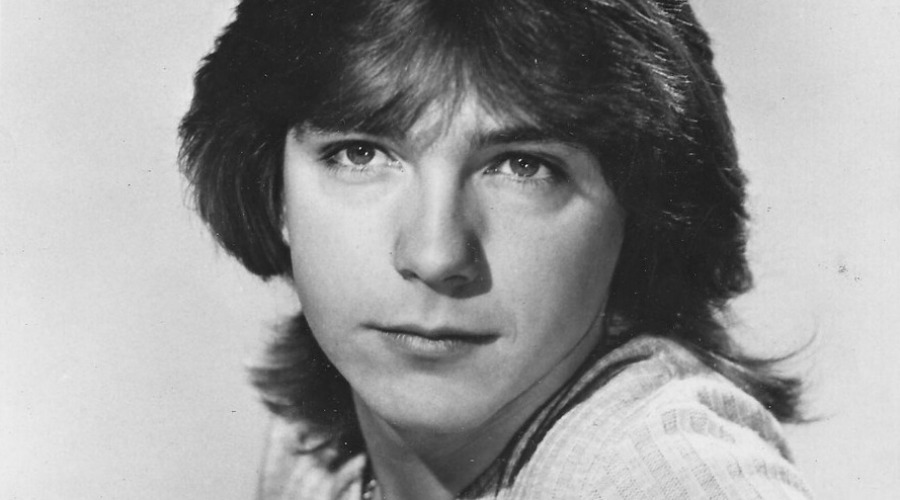
In “One Night Stand”, The Partridge Family still sounded like television pop on the surface, but David Cassidy‘s maturing voice gave the song a wistful weight that the old family-band dream could no longer completely hold.
There is something quietly moving about hearing The Partridge Family in their final 1973 stretch, when the bright colors were still there, the harmonies were still neatly arranged, and the format still promised easy pleasure, yet the emotional center had begun to shift. “One Night Stand” belongs to that late period especially well. It did not become one of the group’s big chart-defining hits, and by then the commercial storm that had carried “I Think I Love You” to No. 1 on the Billboard Hot 100 in 1970 was already behind them. That matters, because the song lands differently when heard in context: not as a triumphal arrival, but as part of the long, soft comedown of a phenomenon that had once seemed unstoppable.
What makes the recording linger is not simply the tune itself, but the sound of David Cassidy inside it. In the earliest Partridge Family records, his voice had that clean, eager, youthful sheen that fit the television fantasy almost perfectly. He could sound fresh, breathless, and beautifully immediate, as if the whole idea of a family bus rolling from town to town really might carry the future with it. By 1973, that tone had changed. He was only in his early twenties, but years of recording, touring, interviews, and the strain of being both a TV idol and a real pop star had deepened his instrument. On “One Night Stand”, he already sounds older than the scripted dream around him.
That is where the bittersweet feeling begins. The arrangement still comes out of the well-made, radio-friendly pop craft associated with the show, and the production remains polished in the familiar Wes Farrell style that helped define the group’s records. But Cassidy’s phrasing carries more grain, more wear, more inner weather. He does not sound broken, and he certainly does not sound weak. He sounds experienced. That is a very different thing. Once you notice it, the whole performance changes color. The song stops feeling like simple TV pop and starts feeling like a document of transition, caught between adolescence and adulthood, between fantasy and fatigue.
That tension had always been built into The Partridge Family, of course. The television series sold a cheerful family-band image starring Shirley Jones, David Cassidy, and the rest of the cast, while the records themselves were built largely by top Los Angeles session professionals, with Cassidy providing the voice that listeners most strongly identified with the group. It was a carefully made illusion, but a very effective one. For a while, America gladly accepted it. Yet by the time the show moved through its fourth and final season in 1973-74, that illusion had become harder to sustain without a trace of melancholy. Cassidy himself had outgrown the role more quickly than the brand had outgrown him.
Even the title “One Night Stand” feels revealing in that late context. It is a more adult phrase than the innocent rush of the early hits, and even if the performance remains controlled and accessible, the mood carries a fleeting, passing quality. This is not the wide-eyed pop of first discovery. It feels closer to the recognition that moments vanish, phases end, and certain kinds of stardom do not remain untouched by time for very long. That may not have been how every listener heard it in 1973, but it is hard not to hear it now. Songs often gather meanings as years pass, and this one gathers them almost line by line through the sound of the singer alone.
There is also something especially poignant about hearing such a mature vocal still framed by the machinery of a sitcom-born pop act. The show was still asking audiences to believe in the smiling, self-contained world of the family bus, the rehearsed charm, the ready-made optimism. But the lead voice had begun to betray reality. David Cassidy had already become larger, more pressured, and more complicated than the role that introduced him. His solo fame was immense, his public image was intense, and the emotional demand placed on him was far heavier than the easygoing television setup ever suggested. In that sense, “One Night Stand” is not just a late Partridge Family song. It is one of those recordings where the person inside the machine starts to become audible.
That is why the song feels more bittersweet now than it may have seemed at the time. It captures a very particular moment when the smile still had to stay in place, but the voice had already crossed into another season. Many pop acts from television fade because the concept expires. The Partridge Family are more interesting than that, because their records sometimes preserved the exact instant when the concept and the human being inside it began pulling in different directions. “One Night Stand” is one of those moments. It lets us hear the distance between the dream America bought and the young man who was already singing from just beyond it.
And perhaps that is the deepest reason the track still resonates. Not because it was the biggest hit, or the defining anthem, but because it reveals something subtler and, in some ways, more lasting. It reminds us that pop history is not only written in No. 1 singles and famous debuts. Sometimes it is written in twilight recordings, in voices that have changed before the image has caught up, in songs that seem modest until time gives them back their true weight. Heard that way, “One Night Stand” becomes one of the most human records in the late Partridge Family catalog: polished, catchy, undeniably of its era, and touched by a sadness the sitcom frame could never fully conceal.
