
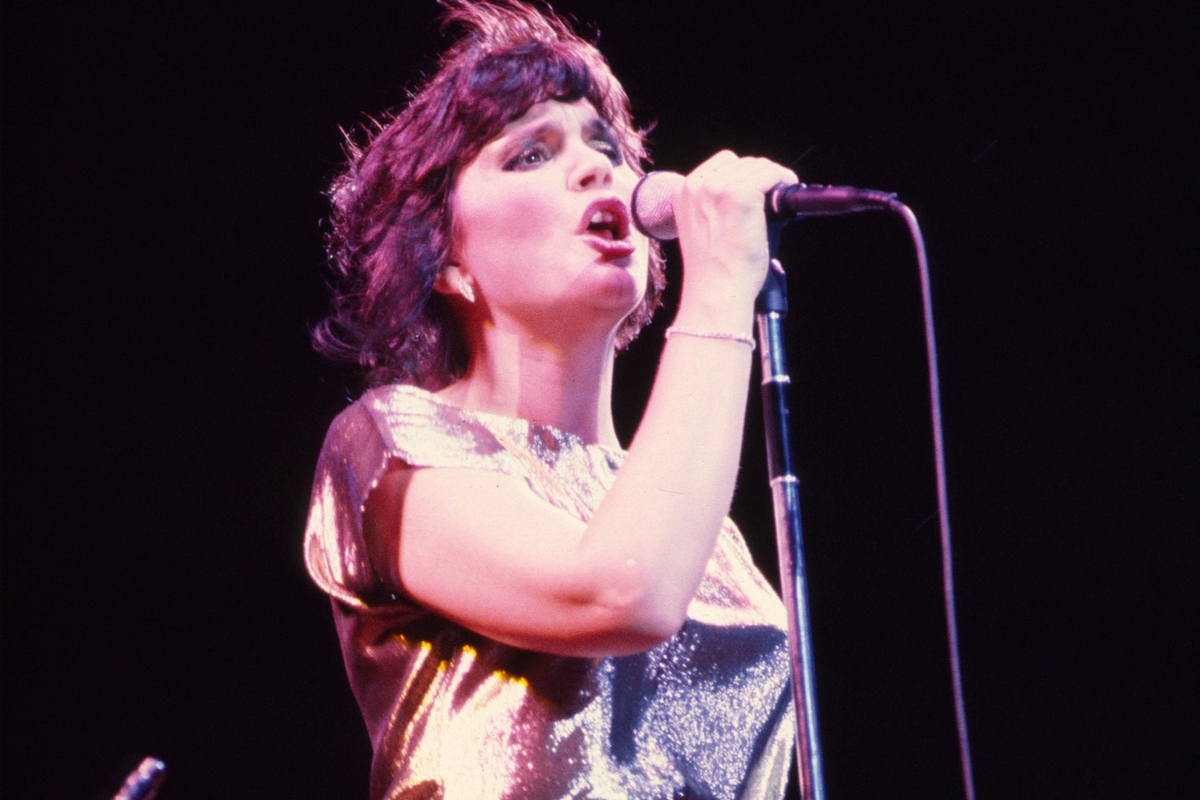
Linda Ronstadt turned You Tell Me That I’m Falling Down into an early confession of ache, doubt, and quiet strength long before superstardom arrived.
Long before Linda Ronstadt became one of the defining voices of the 1970s, there was a song like You Tell Me That I’m Falling Down quietly waiting in the shadows of her early catalog. It was not one of her giant radio signatures, and it did not become a major chart hit on its own. Yet its place in her story is far more important than chart numbers alone might suggest. Ronstadt recorded the song for her first solo album, Hand Sown… Home Grown, released in 1969 on Capitol Records. That album reached No. 159 on the Billboard 200, modest by later Ronstadt standards, but historically meaningful now because it captured her at a turning point: no longer simply associated with The Stone Poneys, not yet the full-blown star who would dominate American popular music, but already unmistakably herself.
You Tell Me That I’m Falling Down was not originally a Ronstadt composition. It was written by Allan Clarke, Tony Hicks, and Graham Nash of The Hollies, a songwriting trio better known for bright British harmonies than for the dusty emotional terrain Ronstadt would bring to the material. In their hands, the song had a distinctly mid-1960s pop melancholy. In Ronstadt’s voice, it feels more intimate, more earthbound, and somehow lonelier. That is one of the great gifts she had from the beginning: the ability to take a song from another tradition and make it feel as if it had been living in her heart all along.
What makes this recording so moving is the contradiction at its center. The lyric speaks from a place of uncertainty, where someone is being told that love is slipping, that balance is failing, that emotional gravity is taking hold. But Ronstadt never sings it like a collapse. She sings it with poise. There is sadness in the performance, yes, but also self-command. That tension became one of the signature qualities of her art. She could sound wounded without sounding defeated. She could sound exposed without ever losing dignity. In You Tell Me That I’m Falling Down, listeners can hear the early shape of that gift before the world fully recognized it.
The song also fits beautifully within the spirit of Hand Sown… Home Grown, an album often cited as one of the pioneering records of the country-rock movement. That phrase can sound almost too neat now, because the music itself is warmer and more personal than any label suggests. Ronstadt was drawing together folk, country, rock, and West Coast sensitivity in a way that felt natural rather than strategic. She was not chasing a fashionable sound. She was following her instincts. On this track, those instincts led her toward restraint. Instead of overpowering the lyric, she lets it breathe. Instead of turning the song into a showcase, she lets it ache.
That is part of the reason the performance lingers. Some songs announce themselves with drama; this one stays with you because of its honesty. Ronstadt sounds young here, but not naive. There is already weather in the voice. Even in these early years, she understood how to lean into emotional ambiguity, how to give a line just enough tremble to suggest an inner storm without ever pushing too hard. It is the sound of an artist learning that understatement can break the heart more deeply than display.
The deeper story behind the recording is tied to Ronstadt’s moment in 1969. American popular music was changing quickly. The late-1960s scene was full of experimentation, reinvention, and the pulling apart of old categories. For a singer like Ronstadt, that could have been a time to chase noise, style, or novelty. Instead, she moved toward songs with roots, songs with emotional grain, songs that could carry memory. You Tell Me That I’m Falling Down feels like a quiet declaration of that direction. Even though the song came from British writers, her interpretation places it in the emotional landscape she would later own so completely: part country sorrow, part California twilight, part private conversation after the room has gone still.
Its meaning, then, goes beyond the lyric alone. In the hands of Linda Ronstadt, the song becomes a portrait of emotional recognition. It is about hearing bad news from the heart and understanding that the real pain lies not in surprise, but in the fact that some part of you already knew. That is why the song feels so mature. It is not merely about romantic disappointment. It is about that difficult human moment when someone names what has been quietly unraveling inside you. Ronstadt gives that realization a softness that makes it all the more piercing.
For listeners who know Ronstadt mainly through later landmarks like Heart Like a Wheel, Simple Dreams, or her great run of radio classics, this recording can be a revelation. It shows that the emotional architecture of her greatest work was present from the start. The scale would grow. The fame would grow. The hits would come. But the essential truth was already there in songs like this one: the empathy, the ache, the clarity, and that rare ability to make sorrow sound not theatrical, but lived.
That is why You Tell Me That I’m Falling Down still matters. It is not simply an early track from a future star. It is evidence. Evidence that before the awards, before the arena-sized recognition, before Linda Ronstadt became a household name, she was already singing with the emotional intelligence that would define her career. Sometimes the earliest recordings tell the truth most plainly. This one certainly does.
