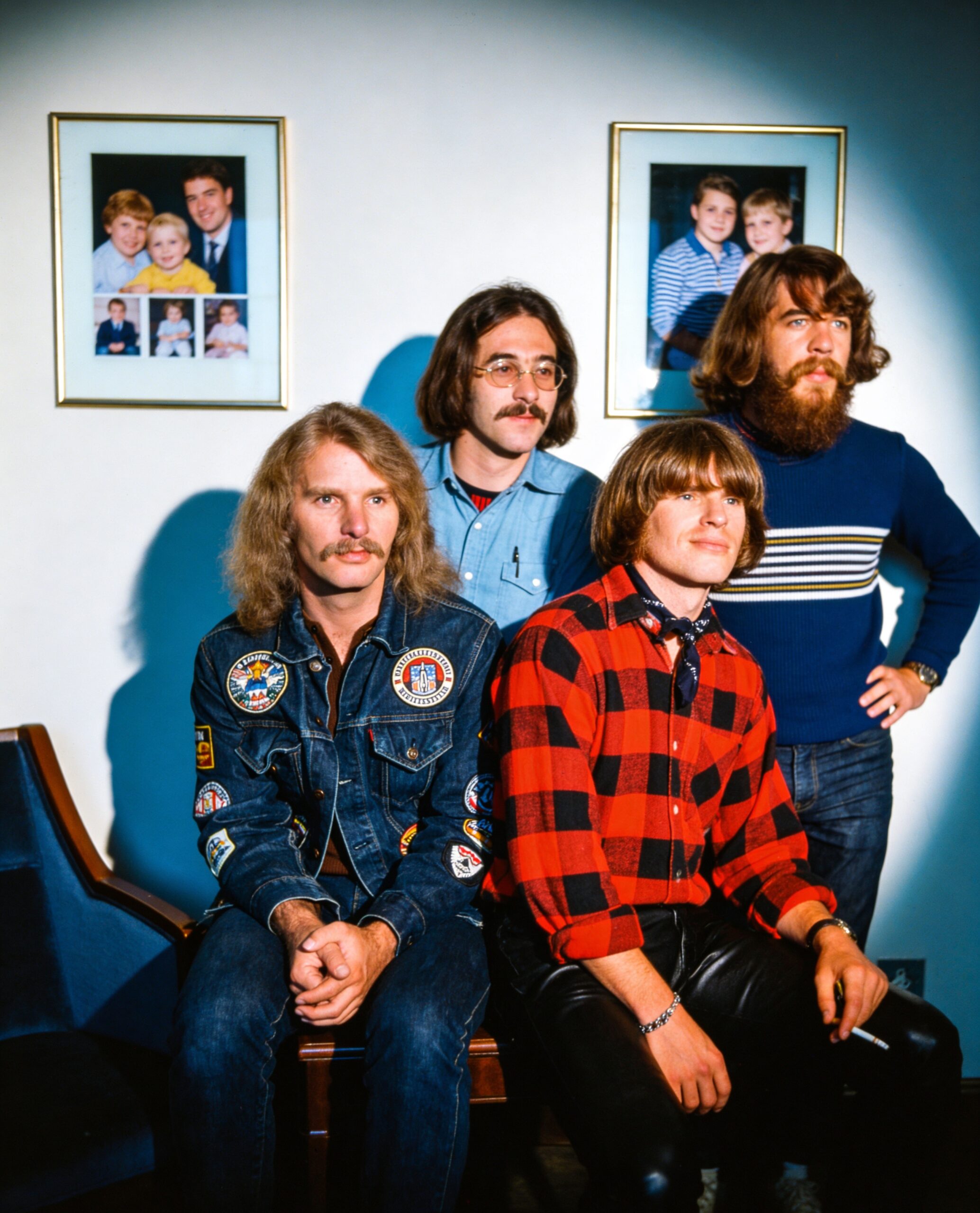
Behind its easy, rolling groove, Cotton Fields remembers hard work, distance, and the kind of home that lives longer in memory than on any map.
Creedence Clearwater Revival recorded Cotton Fields for their 1969 album Willy and the Poor Boys, a record that rose to No. 3 on the Billboard 200 and arrived during one of the most astonishing creative runs in American rock. Although Cotton Fields was not one of the band’s main U.S. hit singles at the time, the song steadily built a life of its own. In later overseas single releases, it charted far more strongly than it did in America, becoming one of those tracks that quietly proved how wide the reach of CCR really was. That alone tells part of the story: this was never just a casual album cut. It was a song with older roots, deeper shadows, and a feeling that outlasted trends.
The song itself goes back long before Creedence Clearwater Revival. It was written by Huddie Ledbetter, better known as Lead Belly, and recorded in 1940 as In Them Old Cottonfields Back Home. That matters, because when CCR picked it up, they were not inventing its emotional center. They were stepping into a song already filled with memory, labor, and the Southern past. Lead Belly’s version carries the plainspoken force of folk music at its purest: a few simple lines, a melody that seems almost childlike at first, and under that surface, the weight of land, work, and longing. Those are not small things. In American music, songs about home are often really songs about loss, distance, and the price of survival.
That is what makes Cotton Fields so powerful. On the page, the lyric can seem almost innocent. It recalls childhood, family, and the place where one came from. But the very image of cotton fields carries history with it. It suggests labor, heat, poverty, and a whole world of struggle that earlier generations knew too well. So the song lives in a fascinating emotional contradiction: it remembers home warmly, yet the place being remembered is not untouched by hardship. John Fogerty understood that tension better than most singers of his era. He did not perform the song like a museum piece. He gave it motion.
And that motion is everything in the CCR version. Where an older folk arrangement might lean into reflection, Creedence Clearwater Revival gives the song a brisk, bright, almost wind-in-your-face momentum. Doug Clifford keeps the beat moving with that familiar locomotive push, Stu Cook anchors the groove, and the guitars frame the track with the lean directness that defined the band’s best work. Over all of it comes Fogerty’s voice, raw and urgent, never too polished, never too pretty. He sings as if memory is not soft at all, but alive, pressing forward, refusing to stay in the past. That is why their Cotton Fields never feels dusty or academic. It feels lived in.
There is also a beautiful irony in CCR singing this song. They were a California band, not a Southern group raised in the cotton country of the lyric. Yet very few artists of that era could summon an American landscape so vividly. That was one of Creedence Clearwater Revival’s rare gifts. They could take older forms—blues, rockabilly, country, folk—and reshape them into something that felt immediate without stripping away the past. They did not imitate the South so much as translate it into their own musical language. In Cotton Fields, they honored the old song while letting it run on their own wheels. The result was not nostalgia for its own sake. It was memory with rhythm, history with bite.
The placement of the song on Willy and the Poor Boys is important too. That album already carried a deep conversation with American roots music. It included songs of social unease, simple pleasures, and working-life imagery, all filtered through CCR’s compact, unpretentious brilliance. In that setting, Cotton Fields feels perfectly at home. It sits beside the band’s original material as if to remind the listener that the best rock and roll never truly severed itself from older traditions. It came from them. It argued with them. It carried them forward.
For many listeners, that is why the song still lingers. It is upbeat, yes, but not lightweight. It moves quickly, but it carries old dust in its shoes. It sounds like a drive through open country, yet underneath it is the deeper ache of remembering a place that may never have been as gentle as memory makes it. That emotional doubleness is where Cotton Fields earns its staying power. It is not simply about fields. It is about the way people look back—selectively, tenderly, sometimes painfully—toward the places that formed them.
In the end, Creedence Clearwater Revival did what only great interpreters can do: they took a song many already knew and made it sound newly necessary. Their version of Cotton Fields is not grand or ornate. It does not need to be. It survives because it captures something older than fashion and stronger than novelty: the restless American habit of turning memory into music, then letting that music carry us down the road one more time.
