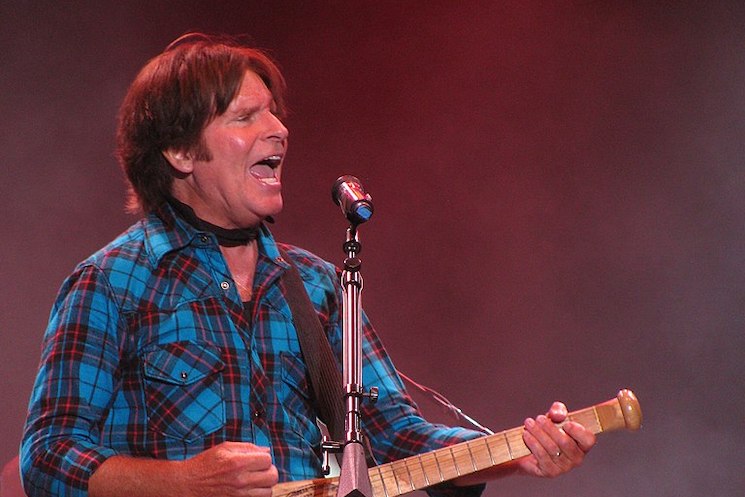
More than a revisit, Legacy: the Creedence Clearwater Revival Years (John’s Version) feels like John Fogerty stepping back into songs he helped define and finally hearing them on terms that sound emotionally his own.
In 2025, John Fogerty released Legacy: the Creedence Clearwater Revival Years (John’s Version), and the title alone told listeners that this was not meant as a routine nostalgia package. It was a statement. It was authorship made audible. The album went on to reach No. 11 on the UK Albums Chart, a strong showing for a record built not on trend or novelty, but on memory, identity, and a long overdue sense of return. For anyone who has followed Fogerty’s complicated history with the Creedence Clearwater Revival catalog, that chart position carried a little extra weight. It suggested that these songs still matter, but also that the story behind them still matters.
What gives this album its emotional charge is the phrase John’s Version. In recent years, listeners have become familiar with rerecordings as a way for artists to reclaim work that had drifted away from them in business terms. In Fogerty’s case, the gesture carries decades of pain, pride, and unfinished history. During the original CCR years, he was not simply the lead singer standing at the microphone. He was the principal songwriter, the distinctive voice, the lead guitarist, and the studio mind who shaped much of the band’s compressed, swampy, unforgettable sound. When people think of Proud Mary, Bad Moon Rising, Green River, Fortunate Son, or Who’ll Stop the Rain, they are hearing songs that came through Fogerty’s writing and vision, even as the band’s chemistry gave them muscle and motion.
The original chart record of those years remains remarkable. Proud Mary climbed to No. 2 on the Billboard Hot 100 in 1969. Bad Moon Rising also reached No. 2 in the United States and went all the way to No. 1 in the UK. Green River peaked at No. 2 on the Hot 100, and the single pairing of Travelin’ Band and Who’ll Stop the Rain likewise hit No. 2 in America. These were not cult favorites discovered years later. They were major records in their own time, immediate, radio-dominating, era-defining songs. And yet behind their success sat one of the more painful ironies in rock history: the man most closely associated with writing them spent years feeling distanced from them by legal and business battles.
That shadow is impossible to ignore when discussing Legacy. Fogerty’s long conflict with Fantasy Records and label boss Saul Zaentz became one of the defining offstage dramas of his career. For a long time, the catalog that had helped make him famous was also tangled up with bitterness, loss of control, and the feeling that artistic ownership had been severed from artistic creation. In 2023, Fogerty announced that he had secured a majority interest in his publishing rights, a development that gave this 2025 project deeper resonance. Legacy: the Creedence Clearwater Revival Years (John’s Version) is therefore not just an album of rerecorded performances. It is the sound of a creator walking back into a room that once felt locked from the outside.
There is also something moving about hearing these songs in an older voice. Age changes phrasing. It changes breath. It changes the emotional weather around a lyric. A younger Fogerty could sound urgent, wiry, almost feral in his attack. The 2025 Fogerty sounds steadier, warmer, sometimes more reflective, but no less convincing. That difference matters. These songs are no longer being sung from inside the moment that created them; they are being sung across time, by someone who has carried them through triumph, estrangement, and eventual reclamation. Because of that, familiar lines can land with new force. The swagger remains, but now it shares space with gratitude and hard-earned calm.
To say this record reclaims the CCR years does not mean it erases the band. That would be unfair to the original chemistry of Tom Fogerty, Stu Cook, and Doug Clifford, whose playing helped turn concise songs into records that sounded lean, relentless, and instantly recognizable. Creedence Clearwater Revival was a real band, not a legal slogan. But Legacy does clarify something that history sometimes blurs: at the center of those songs was a singular authorial presence. Fogerty wrote most of the signature material, sang it in that unforgettable rasp, and pursued a sonic identity that made CCR sound unlike the psychedelic excess surrounding them in the late 1960s. They were direct when others were sprawling. They were earthy when others were abstract. That clarity is part of why the records have lasted.
There is a quiet dignity in the way Legacy: the Creedence Clearwater Revival Years (John’s Version) approaches this material. It does not feel like an argument shouted across the room. It feels more like a correction made in full view, without panic and without apology. The title tells you what is happening, and the performances do the rest. Instead of trying to outmuscle the originals, the album lets time become part of the arrangement. That is why the project lands so differently from a standard remake album. It is not chasing youth. It is acknowledging history. It is saying that songs can remain famous while their meaning to the writer continues to evolve.
And that may be the deepest reason this album connected. Reclaiming songs is never only about contracts, percentages, or catalog value, though those things matter. It is also about memory. It is about hearing the work of your own life and feeling that your name, your labor, and your spirit are still attached to it. For listeners, Legacy offers the pleasure of reunion with some of the most durable songs in American rock. For John Fogerty, it sounds like something more intimate: a conversation with the years when everything changed, now retold with the authority of the man who lived them and wrote so many of their unforgettable lines. That is why this UK No. 11 album feels larger than its chart position. It is not simply a return to old songs. It is a return to ownership, in every sense that word can hold.
