
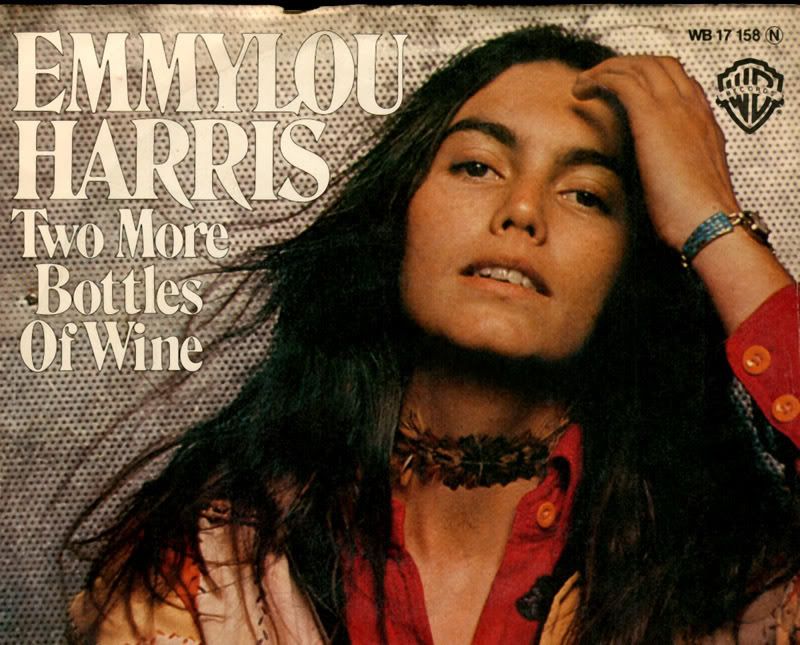
“(You Never Can Tell) C’est la Vie” reminds us that love can sound light on its feet and still carry a lifetime of feeling. In Emmylou Harris’ hands, Chuck Berry’s sly little story became a glowing country memory.
There are songs that arrive like thunder, and then there are songs that drift in with a smile, a bounce, and a kind of lived-in wisdom that lingers long after the final note. “(You Never Can Tell) C’est la Vie”, as recorded by Emmylou Harris, belongs firmly in that second category. Released in 1977 from her album Luxury Liner, the song climbed to No. 6 on Billboard’s Hot Country Singles chart, proving once again that Harris had a rare gift: she could take material from another musical world and make it sound as though it had always been waiting for her voice.
That was never a small thing. By the time Luxury Liner arrived, Emmylou Harris had already earned a reputation as one of the most tasteful and emotionally intelligent interpreters in modern country music. She did not simply sing songs; she restored them, polished them, and somehow found the tender human pulse inside them. And with “(You Never Can Tell) C’est la Vie”, she did something especially delightful. She reached back to a song first made famous by Chuck Berry in 1964 and recast it with country grace, rhythmic sparkle, and just enough twang to make it feel both familiar and entirely new.
The song itself had an unusual history long before Harris touched it. Chuck Berry wrote “You Never Can Tell” while he was in prison, and that fact alone gives the song an extra layer of fascination. It is such a buoyant, quick-stepping piece of storytelling, built around a young couple starting their life together with modest means, deep affection, and a little bit of style. There is humor in it, movement in it, and that unforgettable phrase, “C’est la vie,” which gives the whole thing a shrug of worldly acceptance. Berry’s original version was clever, vivid, and full of motion. But when Emmylou Harris recorded it, she leaned into another side of the song: its warmth.
Her version does not erase the rock-and-roll roots. If anything, it honors them. But she filters the song through the rich blend of country, folk, and roots music that defined her best work in the 1970s. The arrangement on Luxury Liner feels bright and relaxed, never overworked, never too eager to prove itself. It swings naturally. And Harris, with that clear, high, unmistakable voice, sings the story as if she knows these people—not as characters in a pop tune, but as flesh-and-blood newlyweds making do, dancing in the kitchen, and building joy from ordinary things.
That may be the hidden strength of Emmylou Harris as an artist. She could find dignity in simplicity. In “(You Never Can Tell) C’est la Vie”, the young couple’s life is not grand in a glamorous sense. They furnish a home, buy records, dance to music, and discover that love often grows best in the small rituals of everyday life. Harris lets that truth shine. She does not oversell the sentiment. She never needs to. Her phrasing is gentle but assured, playful without becoming cute, affectionate without losing control. The result is a recording that feels both effortless and deeply considered.
There is also something quietly moving about where this song sat in her career. The 1970s were a golden period for Harris, but they were also years in which she carried the memory of Gram Parsons while steadily building her own artistic identity. Record by record, she was proving she was no one’s footnote. She was becoming one of the defining voices in country music, and part of that achievement came from her instinct for repertoire. She could take a Chuck Berry classic, place it beside country material, and make the connection feel natural rather than clever. That was artistry, not novelty.
On Luxury Liner, that instinct is everywhere, but “(You Never Can Tell) C’est la Vie” stands out because it captures her lighter side without sacrificing intelligence. Many listeners remember Emmylou for the ache in her ballads, for the lonesome shimmer in songs that seemed to carry dusk in their bones. This track reminds us that she could also radiate joy. Not loud joy, not flashy joy—something sweeter than that. A graceful joy. The kind that arrives with a fiddle phrase, a dancing rhythm, and a singer who knows that life’s most lasting pleasures are often the least complicated.
The meaning of the song, especially in Harris’s version, lies in that balance between modesty and romance. It tells us that love does not need to announce itself with grand speeches. Sometimes it lives in shared records, in a meal, in a room with music playing, in the ordinary miracle of two people figuring life out together. That is why the song still feels fresh decades later. It is not trapped in nostalgia, even though it carries plenty of nostalgic charm. It survives because its emotional center is timeless.
And perhaps that is why this recording continues to charm those who return to it. Emmylou Harris did not merely cover “(You Never Can Tell) C’est la Vie”; she translated it into her own emotional language. She kept the wit, the movement, and the storytelling, but added warmth, poise, and a country soulfulness that made the song glow in a different light. It is one of those performances that seems to smile without ever straining, and that is rarer than it sounds.
In the end, the song leaves behind more than a catchy refrain. It offers a little philosophy wrapped in melody: life unfolds, love surprises us, and the simplest scenes often become the ones we remember longest. In the voice of Emmylou Harris, that truth feels not only believable, but beautiful.
