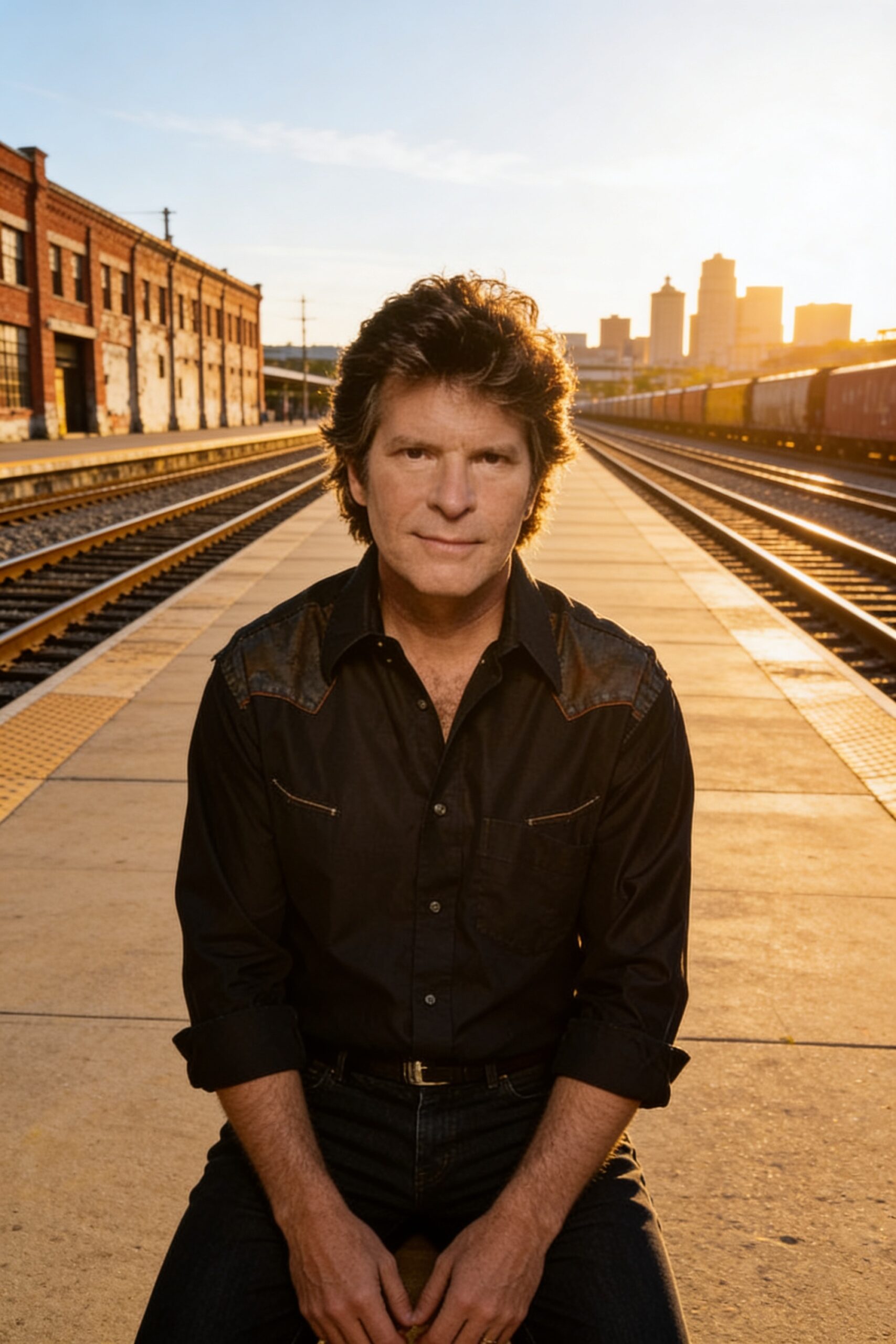
In a song about connection becoming emptiness, John Fogerty and Mark Knopfler let two guitars speak where conversation has gone missing.
Released in 2004 on John Fogerty’s album Deja Vu All Over Again, Nobody’s Here Anymore is one of the record’s most telling collaborations. Its defining guest is Mark Knopfler, credited with second lead guitar, a role that sounds modest on paper but changes the emotional weather of the track. This is not a vocal duet, not a marquee summit designed to announce itself. It is a conversation between two guitar languages inside a song about the strange silence that can arrive in the middle of constant communication.
The album appeared in a tense early-2000s moment, when Fogerty was again writing with a public conscience as well as a craftsman’s ear. The title track of Deja Vu All Over Again carried the unease of historical repetition, and other songs moved between humor, domestic observation, and social worry. Nobody’s Here Anymore belongs to that restless landscape. Instead of looking only at politics or memory, it turns toward the private room: the glow of technology, the promise of access, the person who seems connected to everything except the people nearby.
The lyric’s images of hardware, software, and modern gadgets place it firmly in the era when the internet was becoming ordinary household life rather than a novelty. Heard now, the song can feel less like a period piece than an early sketch of a familiar condition. Fogerty does not need to overstate the point. The title itself carries the ache. Nobody’s Here Anymore suggests not physical disappearance but human absence: attention pulled elsewhere, speech replaced by interface, the room occupied but emotionally vacant.
Fogerty’s vocal approach is central to that effect. He sings with the directness that has long made his writing feel cut from plain American speech, but there is a dryness here that suits the subject. The warning is not dressed up as grandeur. His delivery stays close to the beat, almost reportorial at times, which makes the satire sharper and the sadness less theatrical. The band sound supports that stance: compact, rhythmic, and purposeful, with enough edge to keep the song from becoming a lecture.
Knopfler’s presence gives the track its second shadow. As a guitarist, he is often recognized for lines that seem to speak in complete sentences, bending around the vocal rather than crowding it. On Nobody’s Here Anymore, his second lead guitar works best when understood as a companion voice. It does not turn the track into a display of technique. Instead, it adds a lean, melodic intelligence, a tone of reply. Fogerty states the condition; Knopfler’s guitar seems to circle it, measure it, and leave space around it.
That restraint matters because the two players come from different but compatible traditions. Fogerty’s guitar identity is tied to force, economy, and rhythmic conviction: riffs that move like engines, parts that serve the song before serving the player. Knopfler’s public sound, shaped through Dire Straits and his solo work, often leans toward fingerstyle clarity, narrative patience, and melodic understatement. Bringing them together on a track about disconnection creates a subtle irony. The song worries about a world losing conversation, while the guitars model one.
The collaboration also avoids the common trap of famous guests competing for attention. There is no sense that the arrangement has been widened just to make room for a name. Knopfler’s contribution is integrated into Fogerty’s framework, and that makes the track feel more durable. The pleasure is in hearing the different temperaments meet without blurring. Fogerty brings the clipped urgency; Knopfler brings a cooler, more winding reply. Between them, the song gains dimension without losing its compact shape.
Within Deja Vu All Over Again, that compactness is important. The album is brief by modern standards, and its songs often make their points quickly. Nobody’s Here Anymore benefits from that discipline. It does not attempt to explain the whole technological age. It chooses a smaller frame: a person surrounded by tools of connection, and a title that quietly announces what has been lost. The guitars then do what good arrangements do. They make the idea audible before the listener has finished naming it.
Time has made the track’s subject feel less remote. In 2004, its digital imagery belonged to a recognizable cultural shift; today, the condition it describes is woven into daily life. That does not make the song prophetic in a grand way, and it does not need that kind of claim. Its strength is more modest and more human. It catches the moment when convenience begins to feel like distance, when the screen does not merely entertain but absorbs, and when presence becomes something that must be protected.
What lingers most is the dignity of the collaboration. John Fogerty and Mark Knopfler do not try to solve the loneliness inside Nobody’s Here Anymore. They answer it with musicianship that listens. One voice sings the warning; another guitar voice answers without stealing the room. In a song about absence, that mutual restraint becomes its own quiet form of presence.
