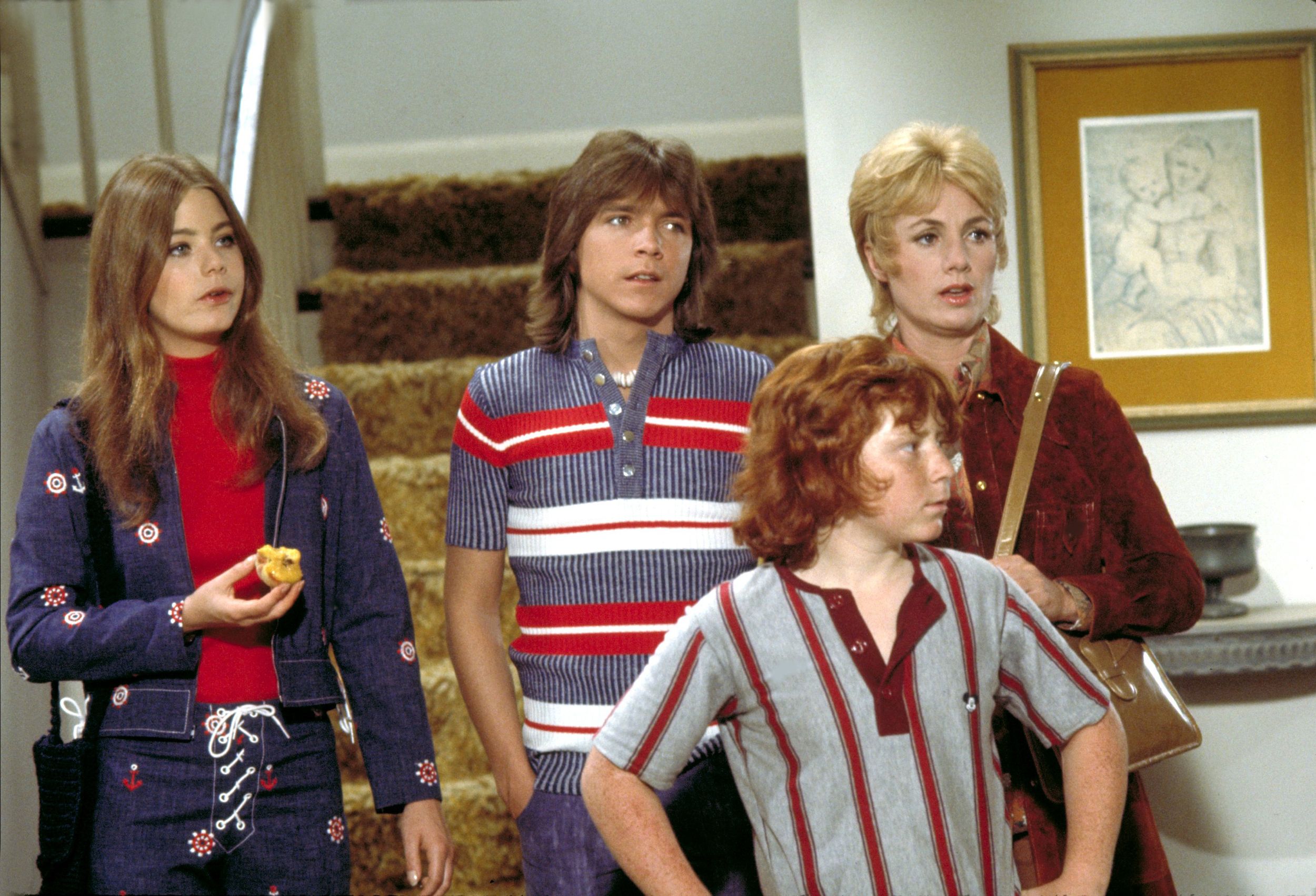
On Up to Date, a Buddy Holly standard became a bright 1971 pop charge, with David Cassidy giving The Partridge Family a sharper edge than their polished image suggested.
The Partridge Family recorded That’ll Be the Day for their 1971 Bell Records album Up to Date, with David Cassidy carrying the track on a lively lead vocal. That context matters because this was not simply a television-pop group borrowing a famous old rock-and-roll title. It was a prime-era Partridge Family album cut reaching back to Buddy Holly and The Crickets, whose 1957 version had already become one of the defining sounds of early rock. Written by Holly and Jerry Allison, with Norman Petty also credited, the song originally turned a phrase of wounded pride into something quick, lean, and defiant.
By 1971, that early rock-and-roll spark had already passed through more than a decade of transformation. The Beatles had reshaped the possibilities of pop songwriting, folk-rock had moved into the mainstream, soul records had changed the emotional grammar of radio, and television had become a powerful stage for manufactured yet deeply felt pop phenomena. Up to Date, the group’s second album, arrived while the ABC series had made the fictional family a very real presence on Top 40 radio. The same album included the hit singles Doesn’t Somebody Want to Be Wanted and I’ll Meet You Halfway, songs that leaned into the group’s romantic, melodic, youth-driven appeal. In the middle of that world, That’ll Be the Day plays like a quick glance backward with the engine still running forward.
Buddy Holly’s original recording had a particular kind of toughness: clipped, dry, compact, and full of rhythmic nerve. It did not need grand gestures. Its power came from the way the vocal held a smirk over a bruise, as if the singer were daring heartbreak to prove him wrong. The Partridge Family version does not chase that exact weather. It smooths the corners, brightens the room, and brings the song into the cheerful propulsion of early-70s AM pop. That choice could have turned it into a novelty, but Cassidy’s vocal keeps it awake. He sings with forward motion, less interested in imitation than in acceleration. The old lyric’s dare—one day you will miss me, one day you will learn—still has its sting, but here it is delivered with a grin and a flash of impatience.
That is where the cover becomes revealing. Cassidy was often framed by the sweetness of the show’s image: the family bus, the coordinated glow, the clean television fantasy of pop stardom. Yet on records, especially when he had something rhythmic to push against, his voice could be more forceful than the packaging implied. On That’ll Be the Day, he does not sound like a singer handling a museum piece; he sounds like someone enjoying the chance to drive a song that was built before his own pop mythology existed. There is a quickness in the performance, a sense that he is leaning into the beat rather than merely decorating it.
The arrangement also says something about how early rock was being remembered at the beginning of the 1970s. The first wave of rock and roll had become source material, not ancient history but already part of pop’s shared memory. Rather than treating Buddy Holly as sacred glass, The Partridge Family absorb the song into their own studio language: bright backing parts, crisp pop timing, clean surfaces, and a rhythm that keeps smiling even when the lyric carries a little threat. It is affectionate but not frozen. The cover respects the song by letting it move inside a different room.
For listeners who come to The Partridge Family mainly through I Think I Love You, this track widens the picture. The group’s records were carefully made pop productions, shaped by professional writers, producers, singers, and studio players, but Cassidy’s presence was not merely decorative. He gives this cover a point of view. There is an almost theatrical clarity to the way he leans into the title phrase, making the dismissal sound less like a cruel line than a young performer testing how much confidence he can put into three minutes of pop.
Heard now, the 1971 cover does not replace the original, and it does not need to. Holly’s recording belongs to the birth language of rock and roll; The Partridge Family version belongs to a later moment when that language was being translated for color television, studio sheen, and a huge youth audience learning its pop history in fragments. Its charm lies in the translation. You can hear a 1950s rhythm passing through a 1971 filter, and you can hear David Cassidy refusing to treat it as merely cute.
That small act of reinterpretation gives the album cut its lasting interest. That’ll Be the Day on Up to Date is not the first song people name when they think of The Partridge Family, but it is one of those side-door moments that reveals the machinery and the spirit at the same time. A famous rock-and-roll challenge becomes a polished pop performance, and inside that polish Cassidy finds movement, nerve, and a little flash of independence.
