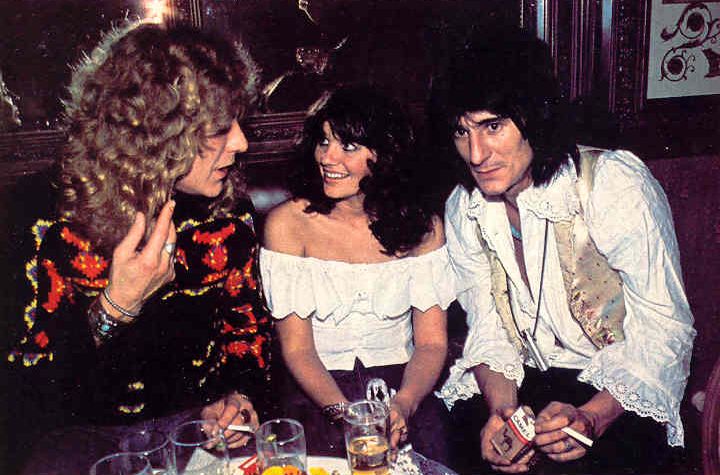
On Don’t Cry Now, Linda Ronstadt let Randy Newman’s Sail Away unfold as a beautiful song with a terrible shadow inside it.
Linda Ronstadt recorded her interpretation of Randy Newman’s Sail Away for her 1973 album Don’t Cry Now, and that setting matters. The track was not the obvious center of the record, not a radio-ready showcase in the manner of the songs that would soon turn her into one of the defining American voices of the decade. It sits deeper in the album, where listeners discover it almost by turning a corner, and that placement gives the performance a strange power: it feels less like a declaration and more like a room suddenly going quiet.
Newman had released Sail Away in 1972 on the album of the same name, and the song already carried one of the most unsettling contradictions in American songwriting. Its melody moves with graceful assurance, almost like a hymn or parlor ballad, while its lyric adopts the voice of a slave trader describing America as a promised land. The invitation sounds sweet on the surface, but the sweetness is the trap. Newman’s irony is not casual cleverness; it forces beauty and horror to occupy the same musical space.
That is why Ronstadt’s version stands apart from ordinary cover material. She was not simply borrowing a strong composition from a celebrated songwriter. She was entering a song whose moral pressure depends on restraint, clarity, and discomfort. A singer could ruin Sail Away by overplaying its darkness, just as easily as another could make it too pretty and lose the danger altogether. Ronstadt finds a narrow path between those failures. She sings with control, but not detachment. She lets the melody breathe, while the words quietly reveal the violence beneath the promise.
Don’t Cry Now arrived at a crucial point in Ronstadt’s development. Released in 1973, just before the breakthrough of Heart Like a Wheel, the album captures her moving through country, folk, rock, and the Los Angeles singer-songwriter world with increasing confidence. With production associated with John Boylan, J.D. Souther, and Peter Asher, the record feels like a bridge between her earlier country-rock roots and the more focused interpretive authority that would soon define her best-known work. Around Sail Away were songs such as Love Has No Pride, Desperado, and Silver Threads and Golden Needles, each showing a different way she could inhabit another writer’s language.
As an album deep cut, Sail Away rewards a slower, more private kind of listening. It is not there to announce itself. It does not ask to be remembered through a chorus everyone can sing from a car window. Instead, it lingers because of the conflict between Ronstadt’s clear tone and the bitter irony of Newman’s lyric. Her voice, so often associated with emotional openness, brings a clean surface to words that should not feel clean. That is the tension. The more poised the singing becomes, the more exposed the cruelty feels.
The performance is also different from Newman’s own reading. Newman’s version carries the authorial sting of a satirist who understands exactly how rotten the narrator is. Ronstadt cannot sound like Newman, and she does not try. Her force comes from contrast: a singer known for warmth, lift, and human directness stepping into a song whose surface beauty is deceptive. The result is not theatrical villainy. It is something colder and more unnerving. She does not act out the evil in the song so much as allow the listener to recognize it.
That choice says a great deal about Ronstadt as an interpreter. She was never merely a beautiful voice placed in front of good songs. At her best, she understood that interpretation is a form of judgment: how much to reveal, how much to hold back, when to lean into feeling, and when to let the song’s own contradictions do the work. On Sail Away, she does not simplify Newman’s writing into protest, parody, or lament. She lets it remain morally uncomfortable, which is precisely why it keeps its power.
Hearing this track within Don’t Cry Now sharpens the sense of an artist still becoming herself in public. The album shows Ronstadt before fame had fully hardened into expectation, but already with the instincts that would make her one of the great song interpreters of her era. Sail Away proves that her depth was not limited to heartbreak ballads or country laments. It was also in her willingness to carry a difficult song without sanding down its edges.
That is what makes the cut linger. It is beautiful enough to invite you in, but it refuses to let comfort survive unchecked. Ronstadt’s singing does not solve the moral tension in Newman’s composition; it holds it, steady and clear, until the loveliness of the music becomes part of the discomfort. Many singers can make a pretty melody sound pretty. Fewer can make beauty sound accountable. On Don’t Cry Now, Linda Ronstadt did exactly that with Sail Away, and the song remains one of the album’s quietest demonstrations of her interpretive courage.
