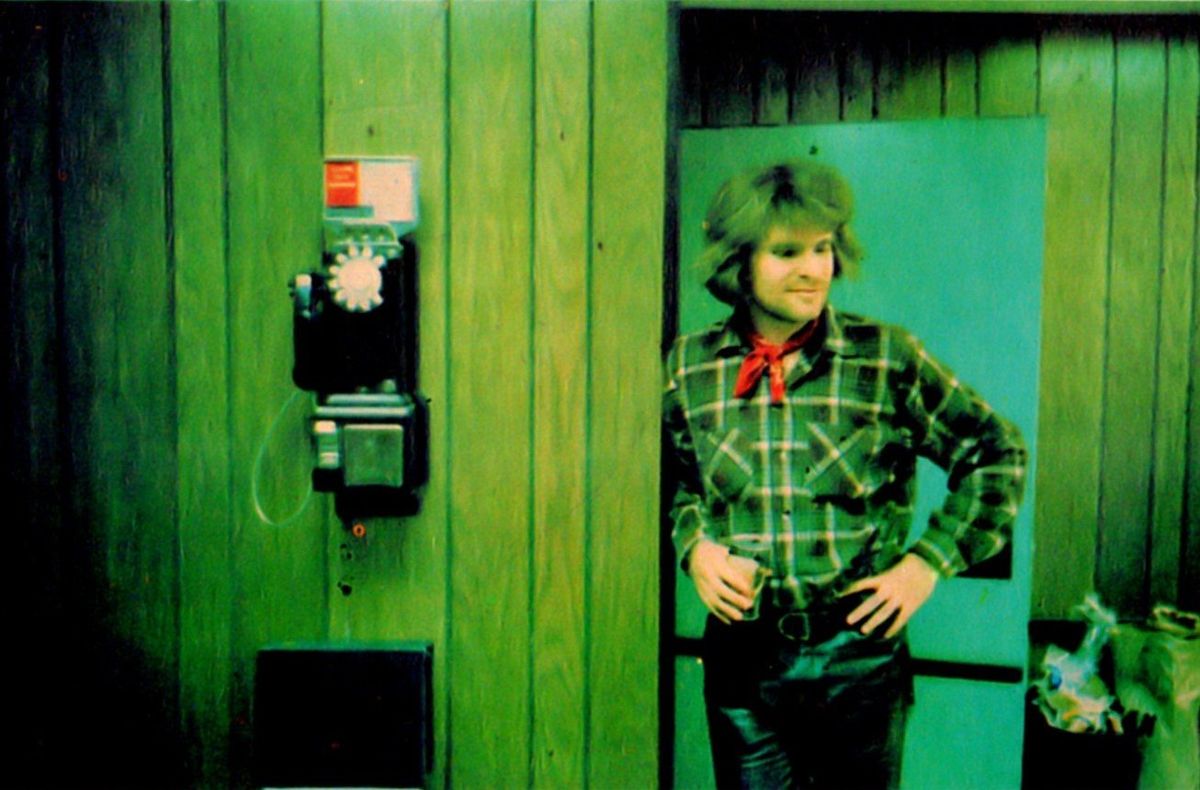
On The Blue Ridge Rangers Rides Again, John Fogerty hears Never Ending Song of Love as both a cheerful promise and a return to the roots music that shaped his voice.
John Fogerty recorded his cover of Never Ending Song of Love for The Blue Ridge Rangers Rides Again, the 2009 album that revisited one of the most revealing ideas of his post-Creedence Clearwater Revival life: stepping into the old songs not as museum pieces, but as living material. The original The Blue Ridge Rangers, released in 1973, was famously a kind of one-man roots-band project, with Fogerty singing and playing his way through country, gospel, and traditional-minded material at a moment when he was moving beyond the enormous shadow of Creedence. More than three decades later, The Blue Ridge Rangers Rides Again returned to that same territory with a warmer, more open spirit, letting the music feel like a shared room rather than a solitary workshop.
That context matters for Never Ending Song of Love. Written by Delaney Bramlett and first brought to wide attention by Delaney & Bonnie & Friends in the early 1970s, the song sits in a bright borderland between country-rock, gospel feeling, folk simplicity, and communal pop. Its power is not hidden in complicated lyrics or dramatic turns. It works because it circles around a declaration so direct that it almost becomes a chant. The phrase returns, the melody opens its arms, and the song seems designed for more than one voice. It is less a confession whispered in private than a promise made where others can hear it.
Fogerty’s version understands that quality. He does not treat the song as delicate nostalgia or as a relic from another artist’s catalog. Instead, he places it inside the same American musical landscape he had been exploring since the Creedence years: front-porch rhythm, lean guitar, country ease, rock-and-roll drive, and a voice that carries weather even when the words are happy. Fogerty has always had a gift for making familiar forms feel urgent. In Never Ending Song of Love, that urgency is not angry or restless. It is steadier than that. It sounds like a man leaning into a song that has survived because it asks for very little and gives back a great deal.
The cover also reveals something about The Blue Ridge Rangers Rides Again as a project. The album was not simply a sequel for the sake of revisiting a name. It was a return to the musical soil that had always been beneath Fogerty’s writing: old country phrasing, gospel uplift, honky-tonk clarity, rockabilly snap, and the plainspoken emotional language that made so many American songs travel from radio to kitchen table to memory. Elsewhere on the record, the presence of friends such as Bruce Springsteen, Don Henley, and Timothy B. Schmit helped underline the album’s communal character. Even when Fogerty is the central force, the record feels built around the pleasure of passing songs from one generation of musicians to another.
In that sense, Never Ending Song of Love is a particularly fitting choice. It is a cover of a song that already sounded like a gathering. Delaney & Bonnie’s world was full of musical fellowship, where blues, soul, country, gospel, and rock musicians moved through the same doorway. Fogerty, coming from a different but related branch of American roots rock, brings his own grain to it. His voice has never been polished smooth, and that is part of the appeal here. The roughness keeps the sweetness from floating away. The joy has boots on. The melody smiles, but the singer sounds like he has lived long enough to know that simple promises are often the ones worth holding onto.
What makes Fogerty’s cover linger is the way it refuses to over-explain itself. There is no need to reinvent the song beyond recognition. There is no attempt to turn it into a grand statement. The emotional force comes from recognition: a songwriter and singer known for swampy rock intensity, protest-edged anthems, and sharp rhythmic instincts finding comfort inside an old love song that moves with unguarded cheer. By 2009, Fogerty’s relationship with his own past had become part of the story surrounding his music. A song like this does not solve that history, but it softens the frame around it. It lets him sound connected, relaxed, and rooted.
Heard within The Blue Ridge Rangers Rides Again, Never Ending Song of Love becomes more than a pleasant cover. It becomes a small act of continuity. Fogerty is not merely borrowing from the past; he is acknowledging the songs that helped form the landscape he has walked through for decades. The result is easy to enjoy on the surface, but its deeper charm lies in the way it makes roots music feel circular. A song begins with one writer, travels through many voices, and eventually returns in another form, carrying traces of every road it has crossed. Fogerty’s version reminds us that some songs endure not because they are complicated, but because they leave room for people to keep joining in.
