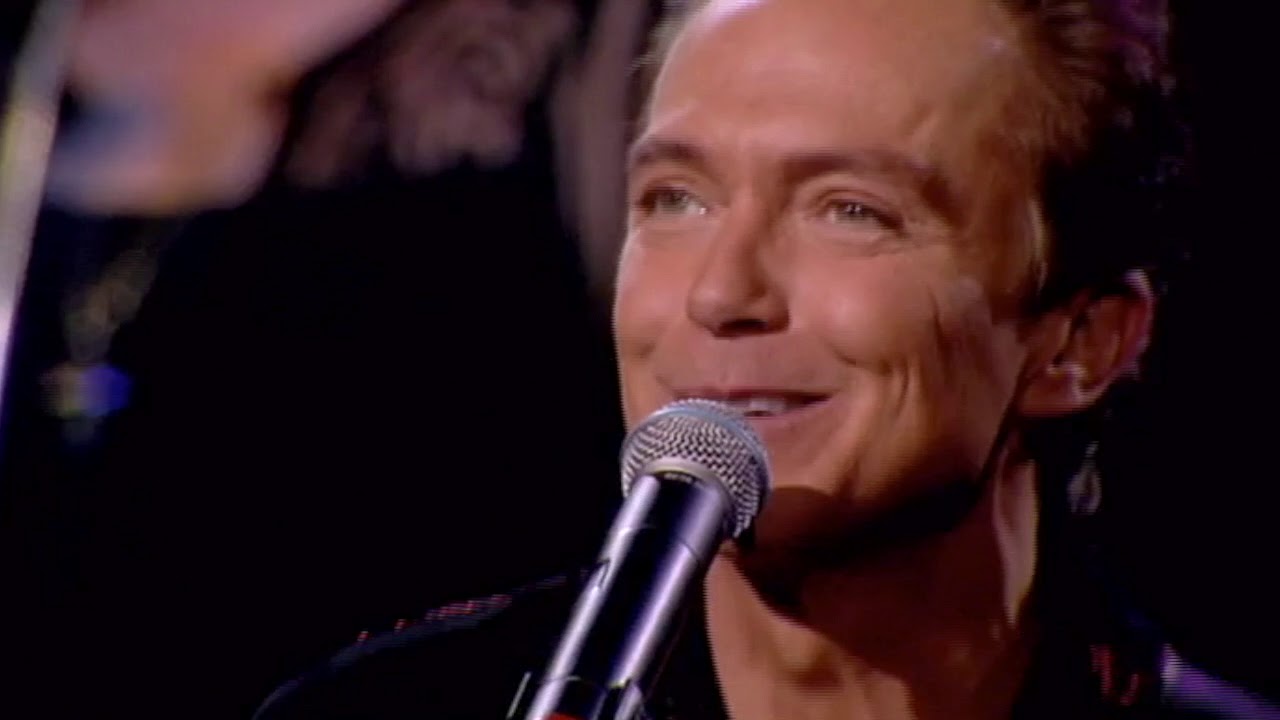
At the close of Rock Me Baby, David Cassidy lets Song For Love turn a bright 1972 pop-soul album toward something quieter, more exposed, and harder to dismiss.
Released in 1972 on Bell Records, Rock Me Baby found David Cassidy standing in a complicated kind of spotlight. He was already one of the most visible young performers in popular culture, known to millions through The Partridge Family and through the clean, camera-ready charm that made him a pop phenomenon. But Song For Love, placed as the closing track on this blue-eyed-soul-leaning solo album, invites a different kind of listening. It is not the obvious entrance point, not the radio-ready declaration, not the song most casual fans reach for first. Its importance comes from where it sits: at the end, after the record has tried on rhythm-and-blues feeling, adult pop polish, and a warmer emotional palette than many people expected from Cassidy at the time.
That placement matters. Album closers often act like a final signature, the last emotional color left in the room after the more immediate songs have made their case. On Rock Me Baby, the journey is especially telling because the album was not merely a continuation of teen-idol brightness. It leaned into material connected to soul, R&B, and expressive pop tradition, including Cassidy’s readings of songs associated with The Young Rascals, such as Lonely Too Long and How Can I Be Sure. The latter became one of his defining solo records, especially for listeners who heard in it a more vulnerable and interpretive side of his voice. By the time Song For Love arrives, the album has already suggested that Cassidy wanted to be heard not only as an image, but as a singer moving through feeling, phrasing, and restraint.
In 1972, that was not a simple shift. Cassidy’s fame was enormous, but enormous fame can flatten a performer in the public imagination. The louder the posters, the harder it becomes to hear the person behind the arrangement. For many pop stars of that era, especially those attached to television, the question was not whether they could sing; it was whether audiences would allow them to be heard beyond the role they had been given. Rock Me Baby makes that tension audible. It has the gloss of its time, the studio confidence of early-seventies pop production, and the romantic directness expected from Cassidy’s audience. Yet beneath that surface, the album keeps reaching toward a more soulful vocabulary.
Song For Love benefits from being an album cut. Without the burden of functioning as the big single, it can feel more like a closing thought than a campaign statement. It does not need to announce a new identity with force. Instead, it helps complete the record’s emotional arc. The title itself is plain, almost disarmingly so, but that plainness fits the album’s final mood. After the more recognizable gestures of pop longing and soul-influenced drama, the closing track feels like a return to the simplest subject in popular music: what a voice can offer when it is no longer trying to dazzle, persuade, or compete for attention.
There is something revealing about hearing Cassidy in this context. His voice was often described through the lens of youth and appeal, but on a song like this, what stands out is not glamour so much as control. He did not possess the rough edge of a deep soul shouter, nor did he need to imitate one. His strength was a lighter instrument, a tenor that could sound open, earnest, and carefully shaped. In the blue-eyed soul setting of Rock Me Baby, that quality becomes useful. Rather than overpowering the material, he moves through it with a kind of pop delicacy, allowing the emotion to sit close to the surface without turning theatrical.
That is why the end of the album deserves attention. Song For Love is not remembered in the same public way as Cassidy’s biggest singles, and it does not carry the cultural shorthand of his television fame. But tucked at the back of Rock Me Baby, it shows the value of listening past the familiar mythology. The album’s soul-inflected choices were part of a broader early-seventies pop language, when singers, arrangers, and producers often crossed between soft rock, R&B, orchestral balladry, and radio pop without treating those borders as fixed walls. Cassidy, sometimes dismissed too quickly because of the machinery around him, found moments inside that language where his voice could feel more human than manufactured.
As a closing track, Song For Love leaves Rock Me Baby with a gentler afterimage. It does not erase the teen-idol context; in fact, it becomes more interesting because of it. The listener hears the distance between the public face and the musical gesture, between the fame that arrived loudly and the performance that asks to be considered quietly. That contrast gives the song its lingering pull. It is a small doorway at the end of a polished record, but through it, Cassidy sounds less like a phenomenon being managed and more like a young singer trying to let the material speak back to him.
In that sense, Song For Love is not just the final track on a 1972 album. It is the moment when Rock Me Baby exhales. The title song may carry the album’s energy, and the better-known covers may carry its commercial memory, but the closer gives it a softer landing. It suggests that behind the shine of the period, behind the fan magazines and the television frame, there was a performer searching for songs that could hold a little more weight. Sometimes an album cut survives not because it dominated the airwaves, but because it quietly tells us where an artist wanted the listener to end up.
