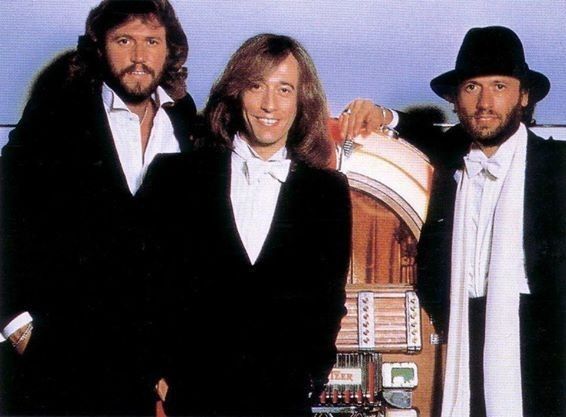
On E.S.P., the Bee Gees were not simply returning to the charts; in “Live or Die (Hold Me Like a Child)”, they were letting a wounded falsetto speak from the quiet center of their comeback.
Released in 1987 on the album E.S.P., “Live or Die (Hold Me Like a Child)” belongs to a fascinating moment in the story of the Bee Gees: the late-1980s comeback that reminded listeners that Barry Gibb, Robin Gibb, and Maurice Gibb were far more than the sound of one celebrated era. After the commercial disappointment of Living Eyes in 1981 and several years spent away from the group’s front line, the brothers returned with a record that carried new studio textures, modern production, and one enormous hit in “You Win Again.” Yet tucked inside that album was this overlooked ballad, a song that did not need to announce its importance loudly in order to reveal something essential about the group’s emotional range.
E.S.P. was the Bee Gees stepping back into public view after a period in which fashion had not always been kind to them. The backlash against disco had unfairly reduced a remarkably versatile songwriting team to a single cultural image: white suits, dance floors, and the afterglow of Saturday Night Fever. But long before and long after that peak, the brothers had written songs of loss, devotion, uncertainty, and strange private weather. In 1987, they had to return not as museum pieces from the 1970s, but as working artists trying to sound present without erasing who they were.
That tension is part of what gives “Live or Die (Hold Me Like a Child)” its pull. The song sits within the polished late-1980s sound world of E.S.P., yet its emotional center feels older and more vulnerable than its production surfaces. The title itself carries a striking contrast: the dramatic weight of “live or die” set against the almost defenseless plea of “hold me like a child.” It is not a song of swagger. It is a song of need. In the Bee Gees’ catalog, where desire often arrives wrapped in harmony and melodic grace, this track feels like a moment when pride has thinned out and the voice is left to ask plainly for shelter.
At the center is Barry Gibb’s falsetto, a sound so famous that it can be easy to forget how expressive it could be when used with restraint. In the 1970s, that upper register helped define a global pop phenomenon. By 1987, it carried history with it. When Barry rises into that familiar height on “Live or Die (Hold Me Like a Child)”, the effect is not merely nostalgic. It is dramatic in a quieter way, because the voice now seems to carry both confidence and memory. It does not sound like a gimmick being revived. It sounds like a singer returning to a weapon he knows well, but using it to trace a more fragile line.
The arrangement helps frame that feeling. The album’s production reflects its period, with sleek electronic textures, carefully shaped drums, and the clean architecture of 1980s pop recording. Yet the brothers’ melodic instincts remain unmistakable. Even when surrounded by contemporary studio choices, the song depends on the old Bee Gees gifts: a rising melodic ache, a chorus built for emotional lift, and harmonies that seem to gather around the lead vocal like figures stepping closer in a dim room. The music does not abandon modernity, but neither does it surrender to it completely. It becomes a meeting place between the group’s past and the sound of their renewed present.
What makes the track especially interesting in the comeback era is that it did not become the public symbol of that return. “You Win Again” carried the banner, becoming one of the major triumphs of the album and restoring the Bee Gees to prominence in several countries. A song like “Live or Die (Hold Me Like a Child)” lived in the deeper spaces of the record, where listeners who stayed with the album could hear another side of the comeback. This was not only the Bee Gees proving they could still write a hit. It was the Bee Gees proving they could still inhabit emotional uncertainty with the same melodic instinct that had shaped their best work across decades.
The ballad also shows how carefully the brothers understood the drama of a voice. Barry’s falsetto is not isolated from Robin and Maurice’s presence; it is part of a family language. One reason the Bee Gees could make even highly stylized pop feel personal is that their harmonies carried the feeling of blood relation, of voices that had learned one another before fame, before backlash, before reinvention. On this song, the lead vocal may draw the ear, but the larger emotional atmosphere belongs to the group. The brothers’ combined sound gives the plea in the title a communal depth, as if private longing is being held inside a shared musical memory.
Heard today, “Live or Die (Hold Me Like a Child)” feels like a reminder that comebacks are not only measured by chart positions or public applause. Sometimes the truest evidence of renewal is found in an album track that reveals an artist’s inner continuity. The Bee Gees did not return in 1987 by pretending the past had never happened. They returned with the past still inside their voices, reshaped by time, filtered through new technology, and set against a pop landscape that had changed around them.
That is why this overlooked ballad deserves a closer listen. It catches Barry Gibb in a register the world already knew, but it asks that register to do something tender and exposed. It catches the Bee Gees during a comeback, but not in the triumphant pose most often remembered. Instead, it finds them in a more human posture: reaching, pleading, still crafting melody as if it were a way to survive the distance between pride and need. In that space, “Live or Die (Hold Me Like a Child)” becomes more than a deep cut from E.S.P.. It becomes a small but revealing chapter in the story of three brothers learning, once again, how to be heard.
