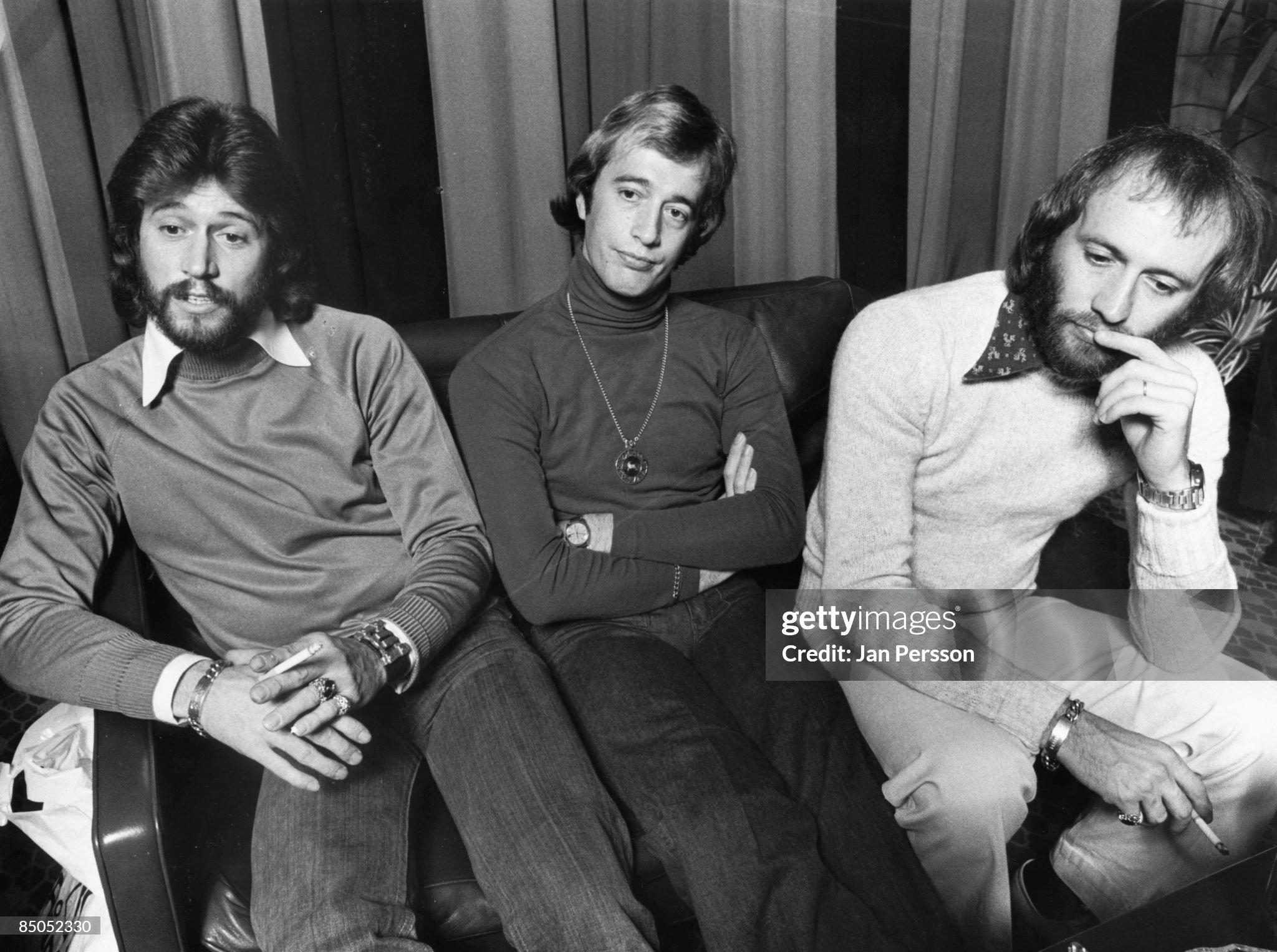
Before it traveled into Olivia Newton-John’s world, Come on Over caught the Bee Gees at a crossroads, carrying country tenderness inside the bright reinvention of Main Course.
Released on the Bee Gees album Main Course in 1975, Come on Over sits in a revealing place in their catalog: not one of the record’s famous singles, not the sound most casual listeners associate with their late-1970s explosion, but a quietly important album track that shows how wide their musical instincts still were. Written by Barry Gibb and Robin Gibb, the song would soon find a larger public life when Olivia Newton-John recorded it, made it the title track of her 1976 album Come On Over, and carried it into the country-pop and adult contemporary world where her voice felt naturally at home.
That later success can make the Bee Gees’ original easy to overlook, but it is precisely the earlier version that feels so telling. Main Course, produced by Arif Mardin during the group’s Miami period, is often remembered as the album that helped redirect the Bee Gees toward the sleek, rhythmic language that would soon define a massive new chapter. Songs such as Jive Talkin’ and Nights on Broadway pointed toward a sharper, funkier, more urban sound, with falsetto, groove, and studio polish beginning to change the public idea of who the brothers could be. Yet tucked within that same record, Come on Over keeps one hand on an older thread: acoustic guitars, melodic restraint, and a country-pop softness that had never been far from the Gibbs’ songwriting.
The Bee Gees were always more flexible than the shorthand around them suggests. Before disco became the word that followed them everywhere, they had already written in the language of folk balladry, orchestral pop, soul, and country-leaning melancholy. Their harmonies could sound grand, but their best songs often began from something smaller: a simple turn of phrase, a lonely melodic climb, a domestic ache that did not need spectacle. Come on Over belongs to that more intimate lineage. It is a song of invitation, but not a loud one. It does not demand. It waits with the door open.
The acoustic drive gives the track its character. Rather than pushing emotion with dramatic force, the arrangement lets the feeling move in a steady, unhurried way. The song has a porch-light quality, as if it is built around the hope that someone might return before the night grows too still. The country-pop element is not costume or imitation; it is in the plainspoken movement of the melody, the warmth of the chords, and the way the vocal line leans toward sincerity without forcing it. This is the Bee Gees sounding less like architects of a new pop future and more like craftsmen of a small, human plea.
That quality explains why the song suited Olivia Newton-John so naturally. By the mid-1970s, Newton-John had become one of pop and country’s most graceful crossover voices, able to soften a lyric without weakening it. Her version of Come on Over did not simply borrow a Bee Gees album cut; it reframed the song. In her hands, the invitation became more openly tender, less shadowed by the brothers’ harmonic tension and more illuminated by her clear, intimate delivery. The song helped title her 1976 album and reached listeners across pop, country, and adult contemporary formats, confirming how well the Gibbs’ writing could travel when placed in another singer’s emotional climate.
That journey from Main Course deep cut to Olivia Newton-John hit also says something about the Bee Gees as writers. They were not only performers with a signature sound; they were songmakers whose melodies could survive translation. A Gibb song could become silkier, earthier, more country, more soul, or more theatrical depending on who carried it. Come on Over is a modest but beautiful example of that gift. It does not need the dramatic history of their biggest records to matter. Its importance lies in the way it reveals a bridge: from the Bee Gees’ earlier melodic roots to their mid-1970s reinvention, and from their own voices to another artist’s defining crossover moment.
Listening to the Bee Gees’ original now, the song feels like a quiet room inside a famously transitional album. Around it, the future is arriving: brighter grooves, sharper production, new vocal identities, the first outlines of an era that would soon become enormous. But Come on Over keeps its gaze lowered and its pulse human. It reminds us that even during reinvention, artists carry their earlier selves with them. Sometimes the most revealing track is not the one that announces a new direction, but the one that preserves the older heart still beating beneath it.
