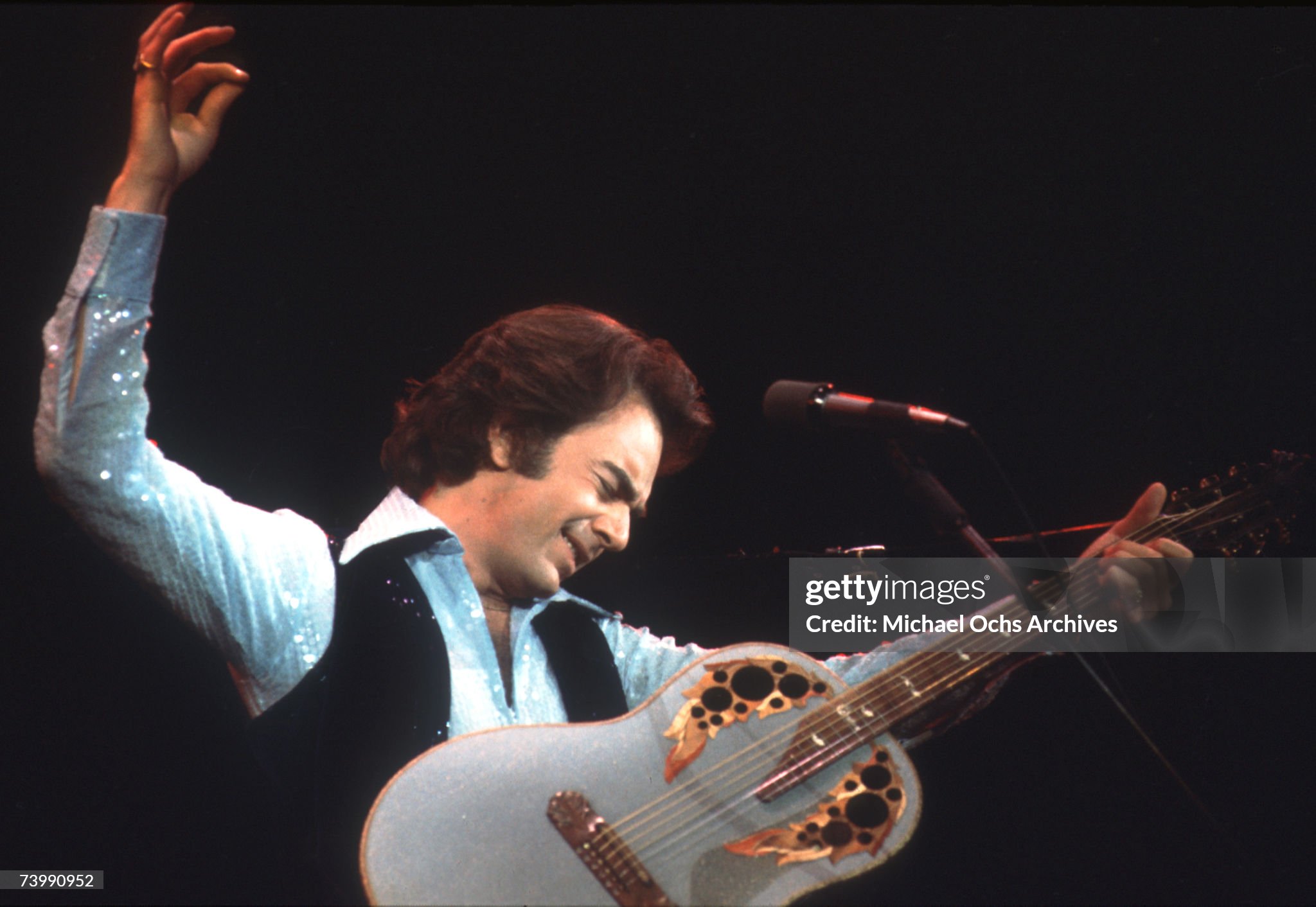
On September Morn, Neil Diamond used The Shelter of Your Arms as a quiet refuge inside a polished 1979 pop album.
Neil Diamond recorded The Shelter of Your Arms for his 1979 Columbia album September Morn, a record that arrived near the end of a decade in which his voice had become both familiar and grand-scaled. Released during Diamond’s mature Columbia period, with Bob Gaudio helping shape the album’s refined adult-pop sound, September Morn is often remembered first for its title track. But The Shelter of Your Arms belongs to a more inward corner of the album. It is not the song that demands the brightest light. It is the one that seems to ask the room to grow still.
The song itself was not new in 1979. Written by Jerry Samuels, The Shelter of Your Arms had been strongly associated with Sammy Davis Jr. in the 1960s, when Davis gave it a dramatic, deeply controlled reading and made it the title piece of a major album in his catalog. Diamond’s version does not treat that earlier association as something to imitate. Instead, he brings the song into his own late-seventies world, where orchestration, close vocal phrasing, and a sense of theatrical restraint often sat side by side.
That context matters. By the time September Morn appeared, Diamond had already traveled a long road from Brill Building songwriter to arena-level performer, from the sharp pop instincts behind early hits to the sweeping ballad style that made him one of the most recognizable voices of his generation. The late 1970s found him working in a landscape where pop, soft rock, and adult contemporary music often favored elegance, polish, and emotional directness. Around this period, his recordings could be large without being loud, sentimental without becoming fragile, and dramatic without needing to rush.
On an album that moved through covers, pop craft, and personal echoes, The Shelter of Your Arms carries a particular stillness. The title alone suggests sanctuary, but the performance gives that idea its weight. Diamond’s voice has always had a grain of authority in it, a way of making even a tender line sound like it has been carved from experience rather than simply sung. Here, that authority softens. He does not need to conquer the melody. He lets it open slowly, allowing the song’s plea for safety to feel less like ornament and more like confession.
There is also something revealing about its placement within the September Morn album era. Diamond was not merely revisiting other people’s songs; he was placing them inside a record that reflected his own shifting relationship with memory and performance. The album included material associated with other voices, and it even brought Diamond near his own past through I’m a Believer, the song he had written years earlier before it became famous through The Monkees. In that company, The Shelter of Your Arms feels less like a simple cover and more like a chosen emotional posture. It tells us something about the kind of singer Diamond was becoming: not only a writer of big choruses and crowd-sized declarations, but an interpreter willing to stand inside another song and find a private temperature there.
The beauty of the track is in its refusal to overexplain itself. The lyric speaks in the language of protection and need, but Diamond’s reading gives it a grown-up gravity. It is not youthful desperation. It is not melodrama. It sounds more like a person who has seen enough noise to understand the value of calm. That may be why the recording lingers differently than the album’s more immediately recognizable moments. A title song can define a record’s public identity, but an album track can sometimes preserve its deeper emotional weather.
Heard today, Neil Diamond singing The Shelter of Your Arms on September Morn feels like a small but telling chapter in his catalog. It reminds us that albums are not only built from singles and signature moments. They are also built from side roads, from covers chosen at a certain hour, from performances that reveal how an artist hears himself through someone else’s melody. In this 1979 track, Diamond does not simply sing about shelter. He creates a space where strength lowers its voice, and the need to be held becomes part of the music’s quiet dignity.
