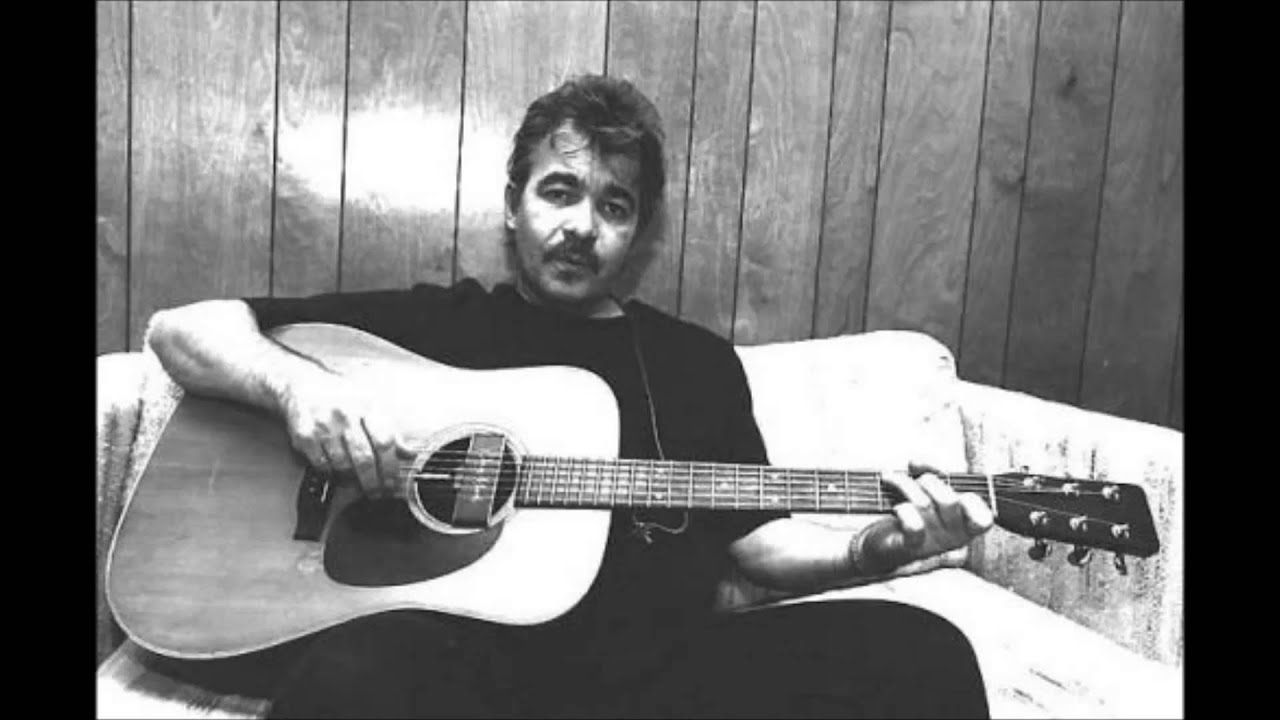
In John Fogerty’s 2009 return to The Blue Ridge Rangers, “Paradise” became less a borrowed folk song than a river of memory running through American roots music.
John Fogerty recorded his cover of John Prine’s Paradise for the 2009 album The Blue Ridge Rangers Rides Again, a project that deliberately looked backward without feeling trapped in the past. The album was a sequel in spirit to Fogerty’s 1973 solo debut The Blue Ridge Rangers, the roots-minded record on which he stepped away from the sound and machinery of Creedence Clearwater Revival and immersed himself in country, gospel, rockabilly, and old American song forms. More than three decades later, The Blue Ridge Rangers Rides Again found him returning to that same idea with a wider circle of music behind him and a lifetime’s worth of road dust in his voice.
Choosing Paradise was no casual gesture. Prine’s song first appeared on his 1971 debut album John Prine, a record that introduced one of American songwriting’s most observant and plainspoken voices. Paradise is rooted in the landscape of western Kentucky, where the town of Paradise became tied in public memory to coal mining, family history, loss, and environmental change. In Prine’s hands, the song never needed grand language to make its point. It moved with the simplicity of a front-porch story, but inside that simplicity sat a whole country’s argument with itself: what gets taken, what gets called progress, and what memory is left to carry after the land has changed.
That is part of why Fogerty’s version feels so natural inside The Blue Ridge Rangers Rides Again. Fogerty has always had a remarkable instinct for songs that sound as if they came from somewhere older than the recording studio. Even when he was writing new rock and roll with Creedence, his best work seemed lit by rivers, trains, back roads, bad weather, small towns, and uneasy American dreams. He was a California musician who could make the Mississippi feel like a living character. He understood that a song did not need to explain everything if the rhythm, the phrasing, and the landscape were strong enough.
Prine’s Paradise gives Fogerty that kind of landscape. The song’s beauty lies in its restraint. It does not shout its sorrow. It remembers. It names places. It lets the image of the coal train do what a sermon could not. Fogerty’s cover respects that original architecture. He does not try to decorate the song into something larger, nor does he attempt to imitate Prine’s wry, conversational tenderness. Instead, he brings the grain of his own voice to it: a familiar edge, a country-rock firmness, and that weathered urgency that has always made him sound as if he is singing from the edge of a story already in motion.
In the context of the 2009 album, Paradise also becomes part of Fogerty’s wider conversation with the music that shaped him. The Blue Ridge Rangers Rides Again was not a nostalgic souvenir. It was an act of selection, a musician looking across the American songbook and choosing pieces that still had breath in them. The record included songs from country, folk, pop, and early rock traditions, and the project’s title itself suggested motion rather than preservation. The Rangers were not merely being remembered; they were riding again, carrying old songs into a new room.
That cover-context matters because Paradise is not simply another well-loved folk composition. It is a song that asks each singer to decide how close to stand to its grief. Too much theatrical weight can flatten it. Too little involvement can make it sound like a lesson. Fogerty finds his way by leaning into the song’s movement. His performance lets the melody travel, and the familiar roots textures around him place the song somewhere between a country lament and a road song. The result is not the dry porch-light intimacy of Prine’s original, and it should not be. It is Fogerty hearing Prine through his own map of American music.
There is a quiet kinship between the two writers, even though their styles are distinct. Prine often approached sorrow sideways, with humor, understatement, and a devastating eye for ordinary detail. Fogerty often approached American unease through momentum, groove, and the sound of a band pushing forward. But both understood that the most durable songs are usually built from concrete things: a river, a train, a town name, a family memory, a place you can picture even if you have never stood there. Paradise survives because it never turns its subject into an abstraction. Fogerty’s cover honors that by keeping the song close to the ground.
Listening to John Fogerty sing Paradise on The Blue Ridge Rangers Rides Again, one hears more than a famous rocker paying respect to a beloved songwriter. One hears a meeting of two American imaginations. Prine gave the song its scar and its grace. Fogerty gives it another road to travel. The cover does not erase the original shadow; it walks beside it, carrying the tune into the larger roots tradition that both men helped keep alive in different ways. And when the song settles, what remains is the feeling that some places disappear from maps long before they disappear from music.
