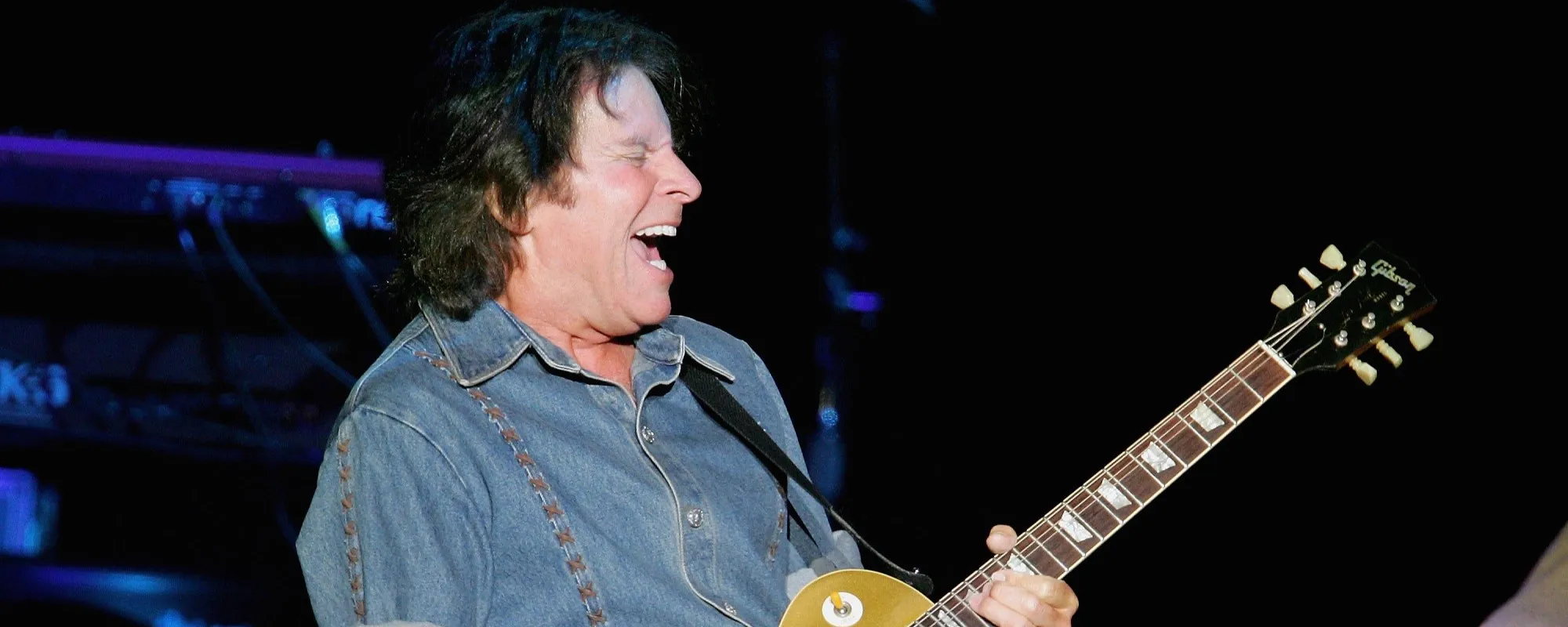
In a season of louder comebacks, John Fogerty found power in an acoustic-driven wish that sounded both simple and deeply earned.
When John Fogerty released Don’t You Wish It Was True on his 2007 album Revival, the song arrived with a quiet confidence that felt different from the usual noise surrounding a veteran artist’s return. It was not built to overwhelm. It did not lean on grand studio spectacle or try to disguise the years behind it. Instead, it moved on acoustic warmth, a bright melodic lift, and the unmistakable grain of Fogerty’s voice, carrying a hopeful question that sounded less like fantasy than moral imagination. The track’s rise to No. 11 on the Billboard Adult Alternative Songs chart gave it a meaningful milestone: a reminder that Fogerty’s songwriting still had room to breathe on contemporary radio, especially in a format that valued craft, feeling, and songs with something human at their center.
Revival, released in 2007, was an important chapter in Fogerty’s long story. The title alone carried history. It echoed the name that first made him one of American rock’s most recognizable voices, Creedence Clearwater Revival, while also suggesting something personal: a return of energy, clarity, and purpose. Fogerty had spent decades navigating the weight of his past, the shadows of legal disputes, the expectations attached to his catalog, and the impossible task of being measured against songs that had already become part of the American bloodstream. On Revival, he did not sound like a man running from that history. He sounded like someone choosing which parts of it still belonged to him.
That is what gives Don’t You Wish It Was True its special charge. On paper, it is a hopeful song, almost disarmingly plain in its longing for a better world. But Fogerty’s best writing has often worked through plain language sharpened by rhythm, voice, and conviction. In the Creedence years, he could make a river, a roadside, a factory whistle, or a storm cloud feel like part of a larger national argument. Here, the acoustic-driven arrangement softens the edges without weakening the message. The guitar does not push the singer into battle; it gives him a porch, a pulse, a place to speak from. The result is music that feels open-handed rather than naïve.
The No. 11 showing on the Adult Alternative Songs chart matters because it locates the song in a very particular listening world. By 2007, radio was no longer the unified cultural force it had been when Fogerty’s voice first came blasting out of AM speakers in the late 1960s. Music had scattered into formats, downloads, satellite choices, and personal libraries. For a new Fogerty song to find real traction at adult album alternative radio meant that listeners were still responding to the old virtues: a memorable chorus, a ringing guitar figure, a voice that sounded lived-in, and a lyric that made room for conscience without turning into a lecture. The chart milestone was not just a number. It was evidence of connection.
There is also something fitting about the way the song reaches outward. Fogerty has always been a writer of motion: trains, roads, rain, bayous, marches, wheels turning somewhere in the distance. Don’t You Wish It Was True moves differently. Its motion is inward and upward, as if the singer is looking at the world as it is and then, for a few minutes, allowing himself to imagine the world as it might be. The acoustic texture helps that imagining feel intimate. The song does not demand belief. It invites it. It lets the listener sit with the question in the title and feel how much is contained in those few words.
As a performance, it also benefits from Fogerty’s mature voice. He no longer sings as the young man who seemed to compress swamp rock, protest, country twang, gospel urgency, and garage-band bite into one relentless sound. In Don’t You Wish It Was True, the voice has age in it, but not defeat. There is lift in the phrasing, and there is restraint. He does not overplay the hope; he places it in front of the listener and lets the melody carry the rest. That restraint is part of why the song holds up. Big promises can date quickly. A sincere question can keep returning.
Within Revival, the track stands as one of the album’s clearest statements of emotional intent. Fogerty was not simply revisiting a sound associated with his past. He was reconnecting with a way of writing that made moral clarity feel musical. The acoustic drive, the accessible chorus, and the clean melodic architecture all point back to the roots of American popular song, where country, rock and roll, folk, and rhythm all blur into something sturdy enough for ordinary people to carry around in memory.
That may be why its No. 11 Adult Alternative peak still feels worth remembering. Not every chart milestone is about dominance. Some are about endurance, about a song finding the right listeners at the right time, about an artist with nothing left to prove still managing to sound engaged with the present. Don’t You Wish It Was True did not need to shout to make its mark. It asked a simple question in a familiar voice, and for a moment in 2007, enough people leaned closer to hear it.
