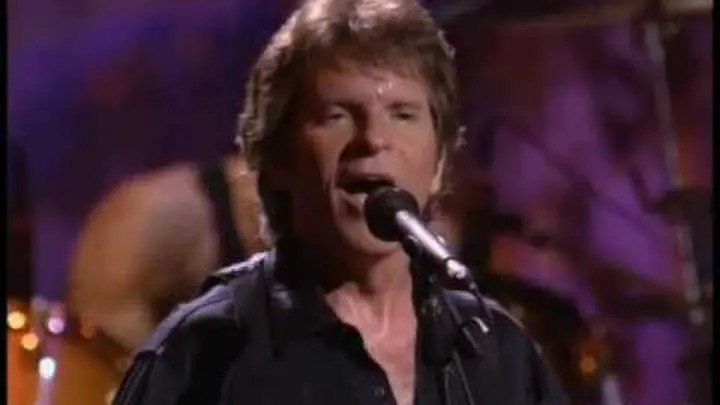
Before Creedence Clearwater Revival became a sound of American grit, “Where You Been” caught John Fogerty with the fire still gathering in his voice.
The Golliwogs’ “Where You Been” stands in that revealing, half-lit chapter before fame, before the bayou imagery, before the run of Creedence singles that seemed to roll out of radios like weather. It was recorded during the group’s Fantasy Records years, when the same four musicians who would become Creedence Clearwater Revival were still working under a different and uneasy name: John Fogerty, Tom Fogerty, Stu Cook, and Doug Clifford. Heard today, the song is less a finished monument than a map line, pointing toward the place where the band’s identity would soon harden into something unmistakable.
The importance of “Where You Been” is not that it sounds exactly like the Creedence records that later filled jukeboxes and car dashboards. It matters because it does not. The recording belongs to the young-band world of mid-1960s garage rock, rhythm-and-blues borrowing, small-label urgency, and musicians trying to find a voice in public while still learning what made them different. The Golliwogs were not yet the plainspoken American rock band that would cut through the late-sixties haze with songs like “Proud Mary”, “Bad Moon Rising”, and “Fortunate Son”. They were still close enough to their roots to sound hungry, local, and unvarnished.
That is what makes a pre-fame John Fogerty vocal so compelling here. The later Fogerty voice is one of rock’s most recognizable instruments: sharp-edged, nasal, urgent, and strangely old-souled, as if it carried dust from roads he had only imagined. On “Where You Been”, you can hear that instrument before it fully settles into its famous shape. There is already pressure in it. There is already bite. But there is also the sense of a young singer pushing against the limits of the song, testing how much authority he can put into a line without the weight of a public reputation behind him.
The group’s story before Creedence is essential to the feeling of the record. The musicians had roots in the Bay Area, far from the Southern landscapes Fogerty would later evoke so convincingly. Before the name Creedence Clearwater Revival, there had been earlier versions of the band, including the Blue Velvets, and then the Golliwogs, a label-era identity that was commercially awkward and has not aged kindly. Yet inside that ungainly name was a band tightening its grip. Cook and Clifford were forming the rhythmic bedrock that would later give Creedence its blunt, marching momentum. Tom Fogerty, John’s older brother, was part of the group’s early balance and ambition. John was still emerging, but the center of gravity was beginning to move toward him.
“Where You Been” is valuable because it lets us hear that movement before history cleaned it up. There is no grand mythology attached to the track, no sweeping chart story that needs to be inflated, no familiar chorus that generations can sing from memory. Its appeal lies in the roughness of the evidence. The record catches a band in transition, and transition often tells us more than arrival does. A finished sound can feel inevitable after the fact; an early recording reminds us that nothing was guaranteed. Creedence did not appear fully formed. It was built in rehearsal rooms, small studios, local stages, uncertain singles, and moments when a young band had to decide whether to imitate the world around it or strip itself down to something truer.
One of the pleasures of returning to The Golliwogs is hearing how much of Creedence was already present in fragments. The economy is there: no wasted elegance, no decorative excess. The energy is direct rather than ornate. Even when the musical language still belongs partly to the garage and R&B vocabulary of the time, the instinct is pointed forward. Fogerty would later become known for songs that sounded as if they had existed forever, but in a recording like “Where You Been”, he is still close to the workshop. You can almost hear the tools on the table.
That workshop quality gives the song its human pull. It is easy to admire the polished run of Creedence’s late-sixties and early-seventies records, but there is a different kind of intimacy in hearing the pre-fame material. The stakes are smaller on the surface, yet somehow more personal. A singer is not yet protected by legend. A band is not yet surrounded by expectation. The voice simply has to make its case in the moment. In “Where You Been”, Fogerty’s delivery suggests not the settled confidence of a star, but the impatience of someone who knows there is a stronger sound inside him and has not yet found the final door to it.
By 1967, the band would leave the Golliwogs name behind and become Creedence Clearwater Revival, a change that was more than cosmetic. The new name seemed to clear the air. What followed was one of the most concentrated creative runs in American rock, with Fogerty writing, singing, producing, and shaping a body of work that sounded both contemporary and older than its decade. But “Where You Been” remains important precisely because it comes before that certainty. It is the sound of the road before the signposts, the voice before the myth, the band before the identity locked into place.
To hear it now is to step into a small room behind a famous house. The walls are not decorated yet. The furniture is spare. The lights are not theatrical. But the foundation is there, and from somewhere inside it comes that unmistakable pressure in John Fogerty’s voice, already leaning toward the future.
