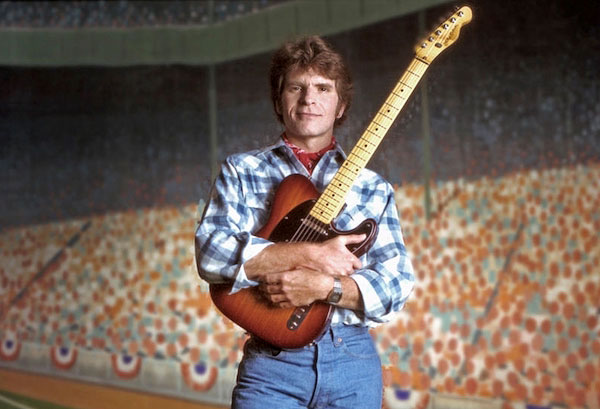
On the surface, “It Came Out of the Sky” is a rollicking flying-saucer tale, but underneath the grin, John Fogerty was sketching a razor-sharp portrait of how America turns fear into spectacle.
Some songs announce their seriousness with a slow tempo, a wounded voice, or a grand chorus. Creedence Clearwater Revival chose another route. On “It Came Out of the Sky”, tucked into the 1969 album Willy and the Poor Boys, John Fogerty took a piece of pop-culture absurdity—a UFO landing near a farm town—and turned it into one of the slyest social commentaries in the CCR catalog. It was not a hit single in the way “Down on the Corner” or “Fortunate Son” became instantly recognizable radio staples, but it arrived on an album that climbed to No. 3 on the Billboard 200, and that matters. This was not a throwaway novelty buried in a minor release. It lived inside one of the defining American rock albums of late 1969.
That year, Creedence Clearwater Revival was operating at a remarkable pace. Willy and the Poor Boys was the band’s fourth studio album and their third released in 1969, following Bayou Country and Green River. Few bands have ever sounded so grounded while moving so fast. Yet what makes “It Came Out of the Sky” special is that it shows how much range Fogerty had beneath the band’s famous swamp-rock drive. He could write protest with blunt force, as he did on “Fortunate Son”, but he could also slip a knife into the culture with a grin.
The setup is unforgettable. Something mysterious drops from the sky just south of Moline, Illinois. A man named Jody is knocked from his tractor, the town reacts, and before long, the story no longer belongs to the witness. It belongs to everybody else: the authorities, the ambitious talkers, the political opportunists, the media voices, the institutional figures eager to name it, frame it, and profit from it. That is the true subject of the song. The “thing” from the sky matters less than the frenzy that follows.
Musically, the track moves with the kind of lean, unfussy energy that made CCR so dependable and so deceptive. The rhythm has that familiar forward pull, the guitars feel tight rather than flashy, and Fogerty sings with just enough bite to make the satire plain without turning the song into a lecture. That balance is crucial. If “It Came Out of the Sky” had been played too broadly, it would have become a novelty number. If it had been played too solemnly, the joke would have died. Instead, it lands in that sweet spot where the song remains fun to hear even as its target becomes clearer with each verse.
And the target is large. The song pokes at the machinery of public life: how quickly a strange event becomes a marketable event, a political event, a theological event, a television event. In a few brisk minutes, Fogerty satirizes a whole national reflex. Nobody pauses long enough to ask what really happened. The scramble is already underway. Someone wants to explain it, someone wants to own it, someone wants to use it, and someone wants to turn it into a platform. That is what gives the song its staying power. The flying saucer is pure fun; the behavior around it is painfully familiar.
There is also something very 1969 about it, though not in a way that traps it in the past. America had just lived through the moon-landing era, Cold War anxiety, television saturation, and a public atmosphere thick with distrust, ideology, and spectacle. Conversations about science, national power, fear, belief, and media authority were everywhere. Fogerty did not need to write a treatise to capture that feeling. He simply imagined a small-town UFO panic and let the culture indict itself. That was one of his gifts as a songwriter: he often wrote in plain, vivid images, but the implications stretched far beyond the immediate scene.
Within Willy and the Poor Boys, the song also plays an important role. This is an album celebrated for its blend of roots-rock strength, social conscience, and American musical memory. It carries the workingman stomp of “Down on the Corner”, the class anger of “Fortunate Son”, and the deep affection for older traditions heard in songs like “The Midnight Special”. In that company, “It Came Out of the Sky” stands out as a reminder that Fogerty was not only a hitmaker and revivalist; he was also a satirist with sharp timing. He could look at the country with affection and skepticism at once.
That duality may be why the song lingers so well with listeners who come back to the album years later. At first, it can seem like one of the record’s lighter moments, almost a comic breather. But with time, it often deepens. The older the media cycle becomes, the more recognizable the song’s pattern feels. We still live in a world where confusion is quickly packaged, where commentary rushes in before understanding, where every strange event becomes a contest of ownership. Fogerty saw that long before the language of “spin” became common currency.
There is a particular pleasure in hearing Creedence Clearwater Revival do this without sacrificing momentum. The song never stops being a rocker. It never abandons the earthy, unpretentious feel that made the band so beloved. That is one reason “It Came Out of the Sky” deserves to be called an album deep cut rather than a mere curiosity. A curiosity entertains and fades. A deep cut keeps opening up. It reveals a different layer when the listener is older, more patient, and more aware of how public stories are built.
So yes, it is a satirical sci-fi rocker. But it is also more than that. John Fogerty used a flying saucer the way a great short-story writer uses a rumor: not to solve a mystery, but to expose character. In three minutes and change, Creedence Clearwater Revival gave us a funny, fast, wonderfully playable song that also says something enduring about power, attention, and the American appetite for spectacle. That is why “It Came Out of the Sky” still feels so alive inside Willy and the Poor Boys. The laugh is real, the groove is real, and the warning hidden inside it may be even more real now than it was in 1969.
